How to start a one person AI business with NotebookLM and Canva
TL;DR
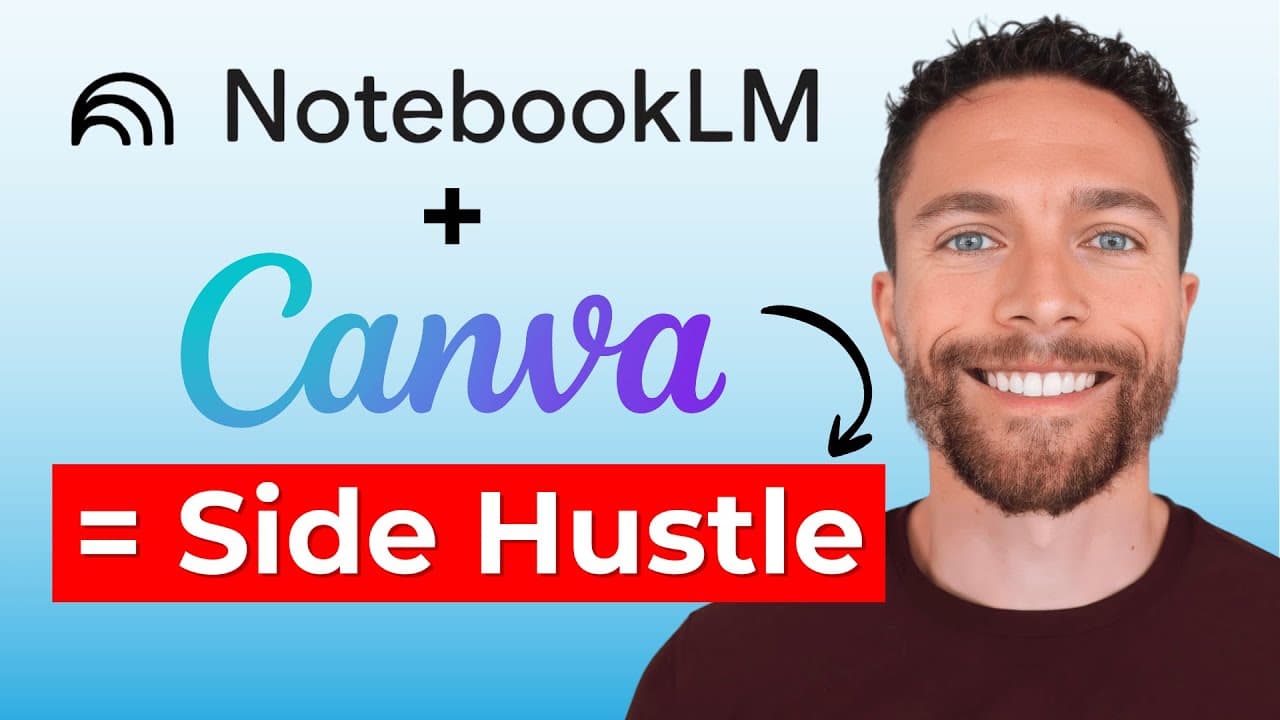
NotebookLM serves as the research brain for gathering insights and ideas, while Canva acts as the hands to turn those insights into tangible products. By combining the two, a solo entrepreneur can create digital products like ebooks and then sell them on platforms such as Etsy, following a repeatable workflow that scales ideas into marketable outputs.
Transcript
So, I just discovered this insane AI workflow that combines the power of Notebook LM with the versatility of Canva. And this, I honestly think is one of the most underutilized ways to make money with AI right now. Now, obviously, I can't promise that you're going to make any money with this. Starting an online business is definitely difficult, and ... Read More
Key Insights
- NotebookLM functions as the brains of the workflow, consolidating sources and enabling chat-based analysis to surface market needs.
- The two-tools workflow leverages data to reduce guesswork, guiding both product direction and feature inclusion.
- Canva acts as the hands of the workflow, converting insights into polished, sellable digital assets.
- The method starts with market research on existing ebooks to identify gaps and opportunities in niches.
- NotebookLM can extract recurring complaints or gaps from sources to shape a new product with competitive advantages.
- A structured outline is generated by NotebookLM, which then informs the ebook’s table of contents and sections.
- The design phase uses Canva templates to rapidly assemble a professional-looking ebook, including a cover and content pages.
- The final steps cover packaging the product for sale, including creating a listing on a major marketplace like Etsy.
- More videos from this channel:
- More from this channel: Paul J Lipsky
Install to Summarize YouTube Videos and Get Transcripts
Explore YouTube Video Summarizer or Get YouTube Transcript Extractor
Questions & Answers
Q: How does NotebookLM help identify market opportunities for digital products?
NotebookLM aggregates and analyzes multiple sources such as competitor offerings, reviews, and educational content to reveal common pain points and gaps. By querying the collected data, you can surface actionable insights like why existing ebooks fall short, what topics are underserved, and how a new guide could rectify those issues, all in a structured way.
Q: What role does Canva play in this solo business workflow?
Canva serves as the design platform where the ideas and outlines produced in NotebookLM are transformed into tangible products. It provides templates and editing tools to create professional ebook covers, tables of contents, and interior pages, enabling rapid production without needing advanced design skills.
Q: What is the recommended starting point for someone new to this workflow?
Begin with NotebookLM to gather and organize sources related to a chosen niche. Use the tool to identify what people dislike or need in existing products. From there, generate an outline and content plan, then switch to Canva to create the final ebook, cover, and layout, followed by listing the product on Etsy.
Q: How can a single person verify demand before investing time building a product?
By researching market chatter and reviews on platforms like Etsy, NotebookLM can help you gauge demand by showing recurring complaints or desires. If a gap appears, you can validate it by creating a minimal viable outline and testing with a pilot ebook, adjusting content based on feedback before broader production.
Q: What is the suggested platform for selling the ebooks in this workflow?
Etsy is highlighted as a practical starting point due to its accessibility and audience for digital products like ebooks. The workflow can extend to other platforms such as Amazon, eBay, or Gumroad, but Etsy is recommended for beginners because it offers straightforward listing creation and a ready marketplace.
Q: How should the ebook content be structured according to the workflow?
NotebookLM can generate an outline with section titles and key bullet points for each chapter. This structure guides the content creation in Canva, ensuring the ebook is comprehensive and organized. A clear table of contents helps buyers navigate the material and reduces production time.
Q: What are best practices for turning insights into a sellable product?
Start with credible sources and a gap analysis to craft unique value propositions. Use NotebookLM to extract insights and Canva to implement them visually. Focus on up-to-date, error-free content, and ensure the final format is polished with a compelling cover and well-designed pages to improve perceived value and sales likelihood.
Q: What are potential risks or disclaimers to consider in this method?
AI-assisted workflow requires careful validation because insights come from data aggregation rather than guaranteed expertise. It is important to verify content accuracy, avoid overpromising results, and acknowledge limitations. Also, platform policies and copyright considerations should be observed when sourcing materials from other sources and creating derivative work.
Summary & Key Takeaways
-
NotebookLM is used as the central research tool to collect and organize sources, enabling data-driven insights for product ideas.
-
Canva is the design surface where ideas become finished digital products, such as ebooks, ready for sale on marketplaces like Etsy.
-
The workflow starts with research on popular products, uses NotebookLM to identify gaps, and then moves to Canva to produce and list the final product.
Read in Other Languages (beta)
Share This Summary 📚
Summarize YouTube Videos and Get Video Transcripts with 1-Click
Try YouTube Summary with ChatGPT & Claude or YouTube Transcript Generator
Explore More Summaries from Paul J Lipsky 📚


Summarize YouTube Videos and Get Video Transcripts with 1-Click
Try YouTube Summary with ChatGPT & Claude or YouTube Transcript Generator