What Were the Goals of the Spanish Inquisition?
TL;DR
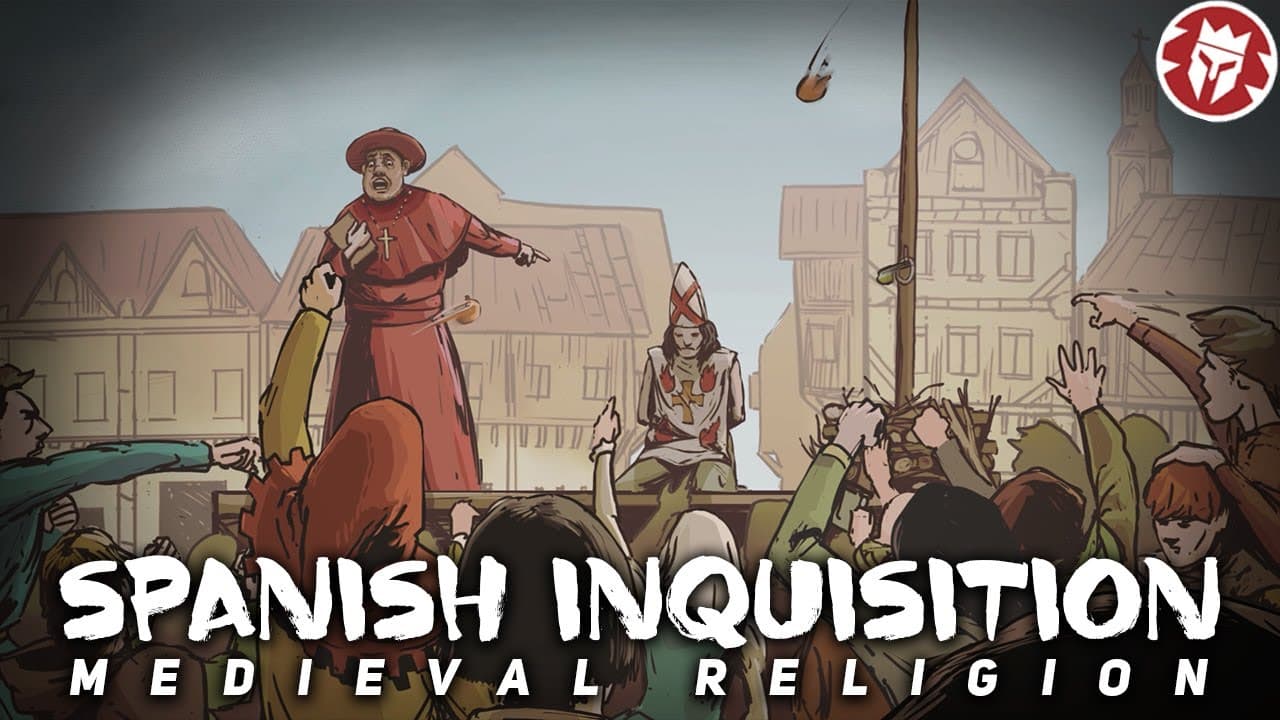
The Spanish Inquisition aimed to uphold Catholicism, enforce religious homogeneity, and maintain the authority of the Spanish crown. It primarily targeted Jews, Muslims, and conversos, conducting interrogations, torture, and public rituals of sentencing to root out heresy and ensure cultural compliance.
Transcript
In the 15th century, the Iberian Peninsula became the focal point of the notorious Spanish Inquisition. Established to uphold Catholicism in Spain and its colonies, it has become infamous for its intolerance. Lasting from 1481 until 1834, the Holy Tribunal tried people for heresy, secret belief in other religions, and witchcraft. What was... Read More
Key Insights
- 🫅 The Spanish Inquisition aimed to uphold Catholicism, create religious homogeneity, and maintain the authority of the Spanish crown.
- 👥 It targeted Jews, Muslims, conversos, and other religious groups, conducting interrogations, torture, and public rituals of sentencing and penance.
- 🥺 The Inquisition's methods, including torture and censorship, were brutal and abusive, leading to fear and paranoia within the population.
- 🧔♀️ The Spanish Inquisition's impact on Spanish society included economic damage, the popularization of discrimination, and major institutional violence towards women and minorities.
- ❓ Historians have debated the extent and brutality of the Inquisition, with revisionist arguments downplaying its severity and Enlightenment critiques highlighting its oppressive nature.
- ☄️ The decline of the Inquisition came with the Enlightenment, and it was formally abolished in 1834 by Queen Regent Maria Christina of Two Sicilies.
Install to Summarize YouTube Videos and Get Transcripts
Explore YouTube Video Summarizer or Get YouTube Transcript Extractor
Questions & Answers
Q: What were the main goals of the Spanish Inquisition?
The Spanish Inquisition aimed to uphold Catholicism, maintain the authority of the Spanish crown, and create a unified religious and cultural identity in Spain. It sought to root out heresy, primarily targeting Jews, Muslims, and conversos.
Q: How did the Inquisition carry out its operations?
The Inquisition had tribunals across different regions and territories, staffed by clergymen, theologians, lawyers, and notaries. They conducted interrogations based on rumors and local politics. Torture and public rituals of sentencing and penance, known as auto-da-fes, were also part of their methods.
Q: Who were the victims of the Spanish Inquisition?
The Inquisition targeted Jews, Muslims, conversos, Moriscos (Muslim converts to Christianity), Protestants, and even local folk religious figures in Iberia. Nobles and individuals accused of having blood ties to these groups were also victims. The Inquisition's victims faced accusations of heresy, practices contrary to Catholicism, and lax belief.
Q: What was the impact of the Spanish Inquisition?
The Inquisition had a profound impact on Spanish society. It instilled fear and paranoia, damaged the economy, and perpetuated discrimination against minorities, setting the stage for future racism. The Inquisition's brutality, censorship efforts, and abuse of power also left a lasting legacy.
Key Insights:
- The Spanish Inquisition aimed to uphold Catholicism, create religious homogeneity, and maintain the authority of the Spanish crown.
- It targeted Jews, Muslims, conversos, and other religious groups, conducting interrogations, torture, and public rituals of sentencing and penance.
- The Inquisition's methods, including torture and censorship, were brutal and abusive, leading to fear and paranoia within the population.
- The Spanish Inquisition's impact on Spanish society included economic damage, the popularization of discrimination, and major institutional violence towards women and minorities.
- Historians have debated the extent and brutality of the Inquisition, with revisionist arguments downplaying its severity and Enlightenment critiques highlighting its oppressive nature.
- The decline of the Inquisition came with the Enlightenment, and it was formally abolished in 1834 by Queen Regent Maria Christina of Two Sicilies.
- The legacy of the Spanish Inquisition continues to provoke discussion and analysis on intolerance, persecution, and resistance.
Summary & Key Takeaways
-
The Spanish Inquisition was established in the 15th century as a state-controlled tribunal to uphold Catholicism in Spain and its colonies.
-
It targeted various religious groups, including Jews, Muslims, and conversos (Jewish and Muslim converts to Christianity).
-
The Inquisition conducted interrogations, torture, and public rituals of sentencing and penance, aiming to root out heresy and enforce religious homogeneity.
Read in Other Languages (beta)
Share This Summary 📚
Summarize YouTube Videos and Get Video Transcripts with 1-Click
Try YouTube Summary with ChatGPT & Claude or YouTube Transcript Generator
Explore More Summaries from Kings and Generals 📚






Summarize YouTube Videos and Get Video Transcripts with 1-Click
Try YouTube Summary with ChatGPT & Claude or YouTube Transcript Generator