How to scale Facebook ads beyond broad targeting traps
TL;DR
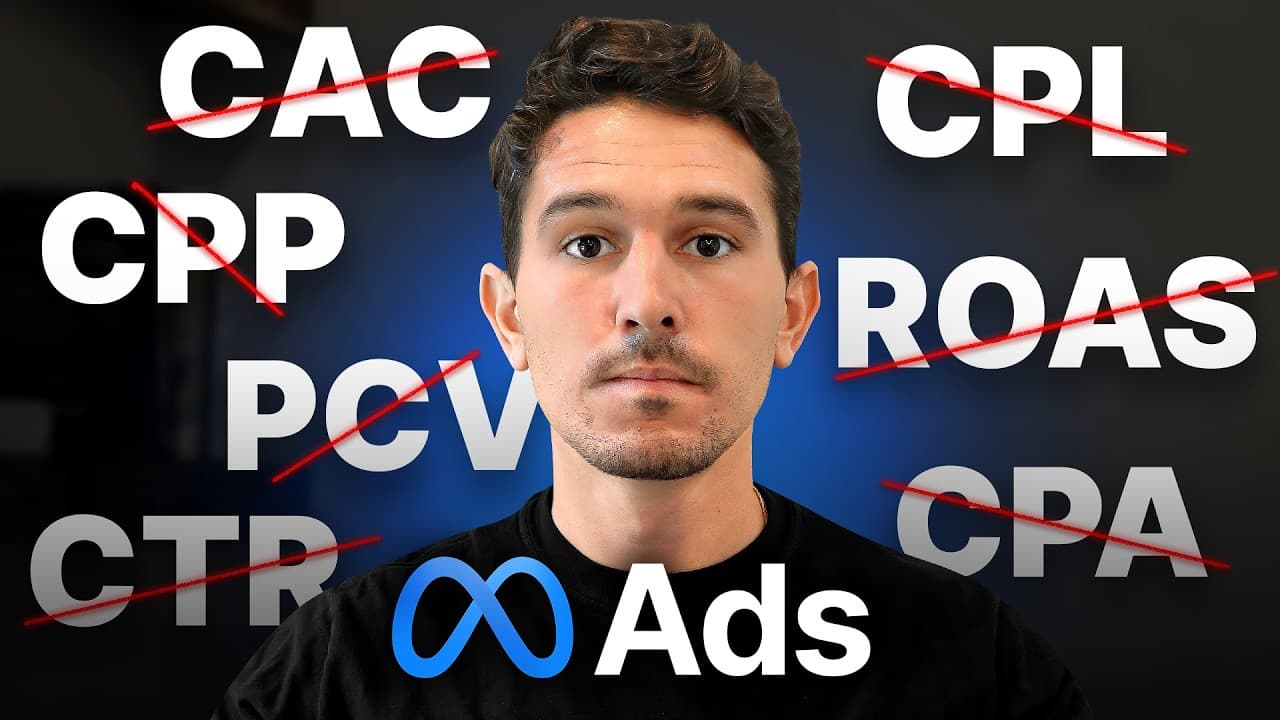
Broad targeting is a trap that limits reach. Use adjacent interest audiences, a structured testing framework, and a clear swim-lane account setup to expand reach and improve efficiency. Allocate spend to the best performing days, and consider cost caps only after stable past performance to scale safely.
Transcript
If you want to be extremely profitable and scale your Facebook ads, I'm going to show you exactly how to do it. Way too many brands are running Facebook ads and are either running it at very small spends profitably or are trying to scale and always getting stuck and hitting a wall. Now, I've managed north of $500 million in ad spend to drive over a... Read More
Key Insights
- Broad targeting is a trap that confines reach to a small pocket within the target market.
- Adjacent interest audiences should be used to widen the total addressable market and improve broad audience performance.
- A structured testing mechanism and killer analytics help allocate spend to winning creatives and scale effectively.
- Swim lanes separate audiences (new, engaged, existing) to protect spending efficiency and optimize lifetime value.
- Creative quality matters, but without a proper structure and testing framework, spending is inefficient.
- Different days of the week perform differently; shifting spend to better days increases ROAS.
- Cost caps are underutilized; they should be used only after the account shows stability and growth potential.
- Automation and algorithmic adjustments reduce manual tweaks and improve scaling efficiency.
- More videos from this channel:
- More from this channel: Sam Piliero
Install to Summarize YouTube Videos and Get Transcripts
Explore YouTube Video Summarizer or Get YouTube Transcript Extractor
Questions & Answers
Q: How to use adjacent interest audiences to expand reach on Facebook Ads
Adjacent interest audiences expand the potential customer pool by targeting related categories that are not the exact brand competitors. Start by moving one step away from your current interests, such as targeting a similar luxury fashion brand if you are a luxury shoe brand. This helps the algorithm learn new, relevant signals and gradually widen the broad audience without instantly drifting into irrelevant segments. Use a staged approach to measure performance and ensure the broad audience grows in a controlled manner, ultimately increasing the total addressable market.
Q: What is the role of swim lanes in Facebook ad accounts
Swim lanes keep audiences separate so you can reliably allocate spend to new customers, engaged audiences, and existing customers. Historically groups were merged, but modern practice emphasizes distinct lanes to avoid overspending on one segment and to protect the efficiency of prospecting, retargeting, and upsell campaigns. This separation enables confident spend decisions and clearer optimization signals for each audience type.
Q: Why is spending the same amount every day not recommended
Not all days perform equally; some days convert better due to user behavior and intent. By shifting budget toward higher performing days rather than evenly distributing across all days, you can improve overall efficiency and ROAS. This approach, often enabled by lifetime budget strategies, allows you to capitalize on peak performance periods and avoid wasted spend on weaker days.
Q: How do cost caps assist scaling and what are the risks
Cost caps can help scale by maintaining a target cost per result while expanding to new audiences. They work best when the ad account has shown stability over an extended period, such as 90 days or more, and when there is enough daily purchase activity. The risk is setting the caps too tight or too loose, which can lead to overspending or targeting the wrong users. Use cost caps as an additive to your current structure and monitor the total account performance.
Q: What makes a proper structure for Facebook ads accounts today
A proper structure emphasizes algorithmic adjustments over manual changes, uses CBO (campaign budget optimization), and kills underperforming ads while scaling those above the threshold. It also involves clear swim lanes, disciplined testing, and a plan to continuously test and optimize creative assets. This structure ensures the best ads receive adequate spend and that the broader account remains scalable.
Q: What is the recommended approach to testing and scaling ads
Testing and scaling should be structured, not random. Identify top-performing creatives and ensure they receive proportionate spend while weaker variants are downshipped or removed. Use a scaling mechanism that adjusts spend based on performance thresholds, rather than brute force spending. Treat new tests as additive to the current, proven campaigns to avoid destabilizing the overall account.
Q: Why is broad targeting still commonly used, and what to change
Broad targeting is popular because it seems simple and scalable, but it often underutilizes the full population by trapping audiences in a small pocket. The recommended change is to insert adjacent interests that expand reach, thereby telling the algorithm there are more potential buyers beyond the usual targets. This expansion should be done progressively to avoid wasted spend and to progressively improve broad audience performance.
Q: How should advertisers think about audience performance over 30, 60, 90 days
Over longer horizons, you should compare how broad audiences and adjacent interest targets improve or degrade performance. If broad audiences expand and interests help, the overall efficiency improves. The key is to measure with a steady baseline, adjust based on data, and ensure the account structure supports swift removal of underperforming ads while promoting top performers to scale consistently.
Summary & Key Takeaways
-
Broad targeting is identified as a trap and is limited in reach. Expanding reach requires adjacent interest audiences and a stepwise approach that informs the algorithm.
-
A structured account with swim lanes and proper testing ensures the best creatives get enough spend while underperformers are excluded.
-
Smart budgeting and selective use of cost caps can help scale gradually without wrecking the core profitable campaigns.
Read in Other Languages (beta)
Share This Summary 📚
Summarize YouTube Videos and Get Video Transcripts with 1-Click
Try YouTube Summary with ChatGPT & Claude or YouTube Transcript Generator
Explore More Summaries from Sam Piliero 📚




Summarize YouTube Videos and Get Video Transcripts with 1-Click
Try YouTube Summary with ChatGPT & Claude or YouTube Transcript Generator