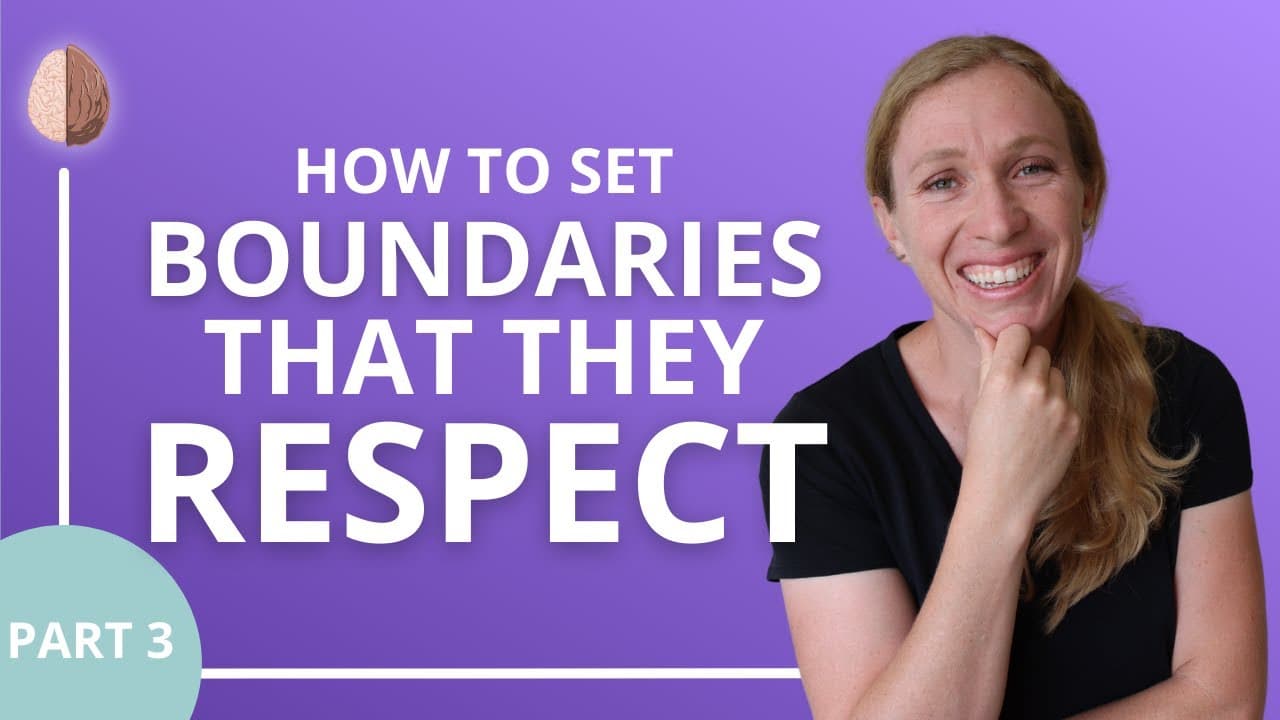
How to Set Boundaries People Will Respect
TL;DR
Healthy boundaries focus on actions within your control, not on forcing another person to change. Build safety and trust, understand the other person’s needs, explain the impact of their behavior, and use invitations whenever possible. When firmness is necessary, state natural or logical if-then consequences that you can enforce, reserving physical intervention for situations where safety is at risk.
Transcript
Let's talk about a few steps to setting good, healthy, assertive boundaries. We can divide our impact on other people into three different areas: our area of control, influence, and concern. The majority of our interactions are relationships of influence, not control. So seeking control is going to backfire. When we want to influence others to make... Read More
Key Insights
- Most interpersonal relationships are relationships of influence rather than control. Attempts to control another person are likely to backfire, while influence develops through a positive relationship and an environment where the person feels safe, loved, trusted, and understood.
- More than 95% of boundary-setting effort should focus on changing yourself and improving the relational environment. Modeling, teaching, listening, inviting, showing care, and understanding another person’s needs can help things go well and reduce how often firm boundaries become necessary.
- Understanding the need beneath a difficult behavior can reveal a workable solution. A residential client who was not eating was experiencing extreme anxiety, and patient relationship-building with staff created enough safety and trust for her to begin eating and speaking with them on day four.
- Assertive impact statements describe behavior, emotion, and personal effect without using guilt or passive aggression. Statements about forgotten dishes or a missed curfew can explain hurt, fear, or reduced trust, but they should be delivered gently while allowing the other person to respond.
- Invitations are appropriate when a healthy relationship provides enough trust to request cooperation. A person can be asked to take a step because it matters to you, but refusal may require more relationship-building, acceptance of what cannot be changed, or ending the relationship.
- Good boundaries regulate both what a person permits into a relationship and what the person keeps out. They cannot guarantee that everyone will change according to personal preferences, so boundary-setting sometimes requires accepting a person or situation despite disliking the behavior.
- Effective firm boundaries rely on consequences that the boundary-setter can personally enforce. If-then statements can connect a missed curfew with losing access to the car, disrespectful speech with canceling a planned favor, or harmful adult behavior with reduced contact or police involvement.
- Physical force is reserved for situations where safety makes it absolutely necessary. Moving a child who is hurting another child, leaving a dangerous situation, calling the police when a law is broken, or obtaining hospital care may be appropriate, but force is not a long-term relational solution.
Install to Summarize YouTube Videos and Get Transcripts
Explore YouTube Video Summarizer or Get YouTube Transcript Extractor
Questions & Answers
Q: How can I set boundaries that people will respect?
Set boundaries by concentrating on choices and consequences that remain within your control. First build safety, trust, and understanding, then explain gently how the behavior affects you and invite the person to make a specific change. If a firmer response is needed, use a clear if-then statement with a natural or logical consequence you can actually enforce. The goal is lasting respect, not short-term control.
Q: What is the difference between control and influence in relationships?
Control concerns actions you can directly take, while influence concerns creating conditions that make another person more likely to choose a positive response. Most interactions are relationships of influence, not control. Seeking to control another person can backfire. Influence instead grows through trust, listening, care, patience, understanding needs, and building an environment where the person wants to act respectfully or healthfully.
Q: Why should boundary-setting focus on changing yourself first?
Boundary-setting works best when your primary effort is directed toward what you can change: your behavior, communication, responses, and the environment you help create. More than 95% of the recommended effort goes toward modeling, teaching, inviting, listening, showing care, and understanding needs. These actions improve the relationship and can decrease the need for firm limits while preserving the long-term goal of voluntary respect.
Q: How do I explain that someone’s behavior is affecting me?
Describe the specific behavior, name your emotional response, and explain its impact without becoming passive-aggressive or using guilt. For example, you might say that a missed curfew makes you feel scared for the person’s safety and reduces your trust. Speak gently and with love, listen carefully to the response, and work to understand how your own actions may have contributed to the problem.
Q: When should I use an invitation instead of a firm boundary?
Use an invitation when the relationship has enough trust for you to request cooperation without trying to control the other person. Ask clearly for the action and explain why it matters to you. If the answer is no, consider whether you can improve the relationship or strengthen trust. You may also need to accept the situation or decide that continued contact is not appropriate for you.
Q: How do if-then statements create enforceable boundaries?
An if-then statement links another person’s behavior to a response that you control. A parent might say that arriving late for curfew means the child cannot use the car next time. An adult might say that continued mistreatment will result in less contact. The consequence should be natural or logical, clearly communicated, and genuinely enforceable by the person establishing the boundary.
Q: When is physical intervention appropriate for a boundary?
Physical intervention is appropriate only when it is absolutely necessary to keep people safe. Examples include moving a child who is hurting another child, physically leaving a dangerous situation, calling the police when a law is being broken, or taking someone to a hospital when refusal of food or medication threatens physical safety. Other relationship-based options should be used first whenever possible.
Q: What is the long-term goal of healthy boundaries?
The long-term goal is a relationship in which a child, employee, spouse, or other person wants to act responsibly, remain healthy, and show respect. Quick fixes that damage the relationship work against that outcome. Healthy boundaries combine understanding with clear firmness, emphasizing modeling, teaching, listening, care, and invitations while reserving enforceable limits for the smaller share of situations that truly require them.
Summary & Key Takeaways
-
Most relationships operate through influence rather than control. Lasting influence grows from creating safety, love, trust, and mutual understanding. The suggested approach directs more than 95% of your effort toward modeling, teaching, inviting, listening, and improving the environment so that another person becomes more willing to make healthy, respectful choices.
-
Assertive communication includes gently explaining how another person’s behavior affects you, listening to their response, and examining your contribution to the problem. Invitations can then request a specific action and explain why it matters. If the person refuses, you can strengthen the relationship, accept the situation, or end the relationship.
-
Firm boundaries should describe actions and consequences that remain within your power. Parents may prevent hitting or refuse purchases, while adults may reduce contact or call the police when necessary. Force should be limited to immediate safety needs because it does not provide a lasting solution to the underlying relationship problem.
Read in Other Languages (beta)
Share This Summary 📚
Summarize YouTube Videos and Get Video Transcripts with 1-Click
Try YouTube Summary with ChatGPT & Claude or YouTube Transcript Generator
Explore More Summaries from Therapy in a Nutshell 📚



Summarize YouTube Videos and Get Video Transcripts with 1-Click
Try YouTube Summary with ChatGPT & Claude or YouTube Transcript Generator