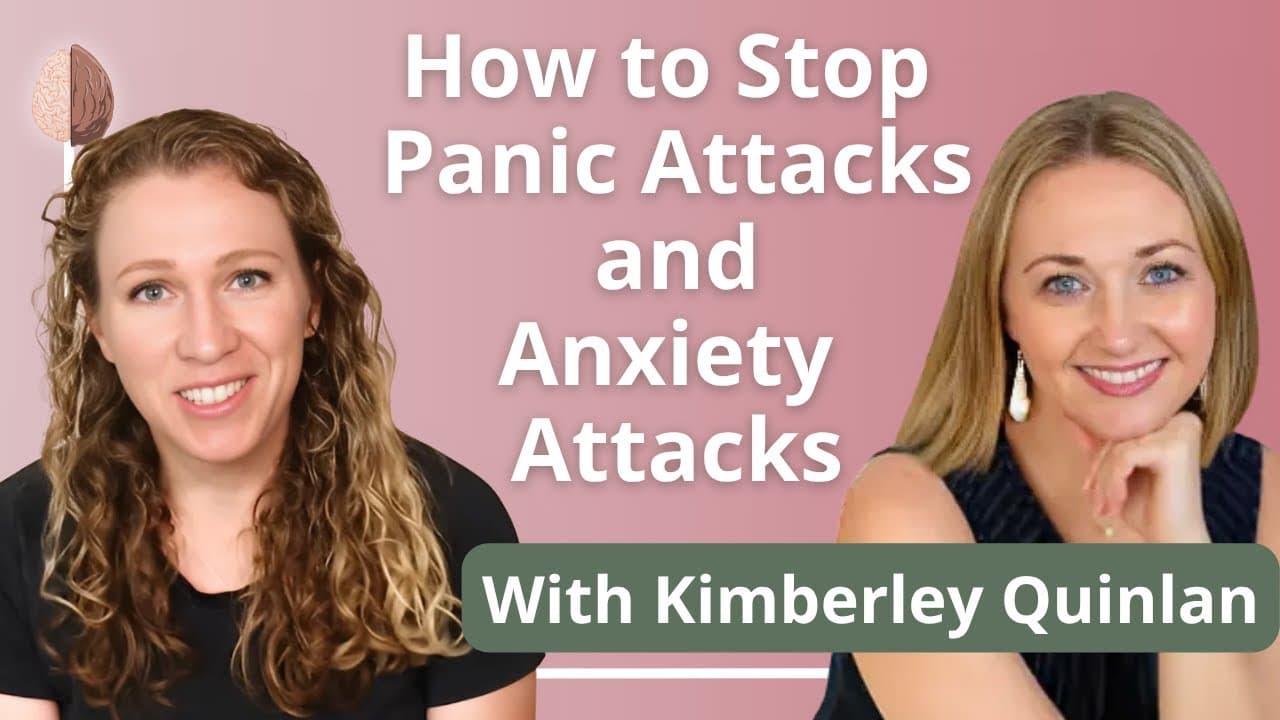
How to Stop Panic Attacks Using CBT Skills
TL;DR
Panic attacks can be interrupted by taking control and using CBT strategies. Start by recognizing panic as a process rather than a threat, then introduce gradual exposure and self compassionate self-talk to reduce anticipatory anxiety. Avoid safety behaviors that reinforce fear, and practice techniques to shift thinking and body responses over time.
Transcript
Kimberley: The biggest panic attack I've ever had was at my mother and father-in-law's house. Emma:That's relatable for me. Kimberley: It was actually because we were going through really bad fires here in California, one of the biggest panic attacks I had, and I knew that if I was gonna fight it, it was going to keep going because there wa... Read More
Key Insights
- Panic attacks are intense fear experiences that feel life threatening but are treatable with CBT.
- Panic disorder develops when fear of future attacks leads to anticipatory anxiety and avoidance behaviors.
- Avoidance and safety behaviors reinforce fear by teaching the brain that panic is dangerous.
- Safety behaviors include reassurance seeking, carrying items for comfort, and excessive Googling for danger signs.
- Reassurance seeking and checking fuel the persistence of anxiety by maintaining vigilance.
- Facing panic with a bring it on mindset can help the brain reframe sensations as manageable.
- Thought suppression and resisting anxiety can paradoxically increase fear and symptoms over time.
- CBT tools build self compassion and gradual exposure to feared situations to reduce avoidance.
Install to Summarize YouTube Videos and Get Transcripts
Explore YouTube Video Summarizer or Get YouTube Transcript Extractor
Questions & Answers
Q: A real search query question about the video (e.g. 'How to...', 'What is...', 'Why does...', 'When should...'). Question 1
What is the difference between a panic attack and panic disorder and how does one become the other over time? Panic attacks are intense fear sensations that can feel life threatening, while panic disorder involves a fear of having more attacks which leads to anticipatory anxiety and avoidance. Over time this cycle strengthens, causing more frequent worry and safety behaviors that reinforce the fear.
Q: Question 2
How do avoidance behaviors contribute to the persistence of panic attacks and panic disorder? Avoidance reduces exposure to feared situations, which prevents new learning that panic sensations are not dangerous. This reinforcement keeps anxiety high, makes panic triggers seem unpredictable, and increases the likelihood of future attacks as the brain maintains a threat response.
Q: Question 3
What are common safety behaviors people use during panic attacks and why are they problematic? Common safety behaviors include reassurance seeking from others, excessive Googling for dangerous symptoms, carrying comfort items, and self criticism. These behaviors provide short term relief but prevent the brain from learning that panic sensations are manageable, prolonging the disorder.
Q: Question 4
How can a bring it on mindset affect a panic attack and long term recovery? Saying bring it on can shift perceived control to the person rather than the panic, allowing the brain to start downshifting cortisol and adrenaline more quickly, and it can reduce the fear response by reframing the event as manageable rather than catastrophic.
Q: Question 5
What role does sleep, stress, and nutrition play in panic attacks according to the video? Stress, lack of sleep, and poor eating can act as triggers for panic attacks. Recognizing these factors helps in planning CBT strategies and self care to reduce the likelihood of an attack and to support recovery.
Q: Question 6
How does CBT help someone begin breaking the cycle of panic attacks? CBT helps by restructuring thoughts, reducing safety behaviors, and gradually exposing individuals to feared situations in a controlled way, which promotes new, non threatening interpretations of bodily sensations and decreases anticipatory anxiety.
Q: Question 7
Why is self compassion emphasized in treating panic and anxiety disorders? Self compassion reduces harsh self criticism that fuels arousal and fear. Treating oneself with kindness helps lower the emotional intensity of panic, supports persistence with exposure, and fosters a healthier relationship with fear rather than avoidance.
Q: Question 8
What practical steps can someone take today to apply CBT principles to panic attacks? Start by labeling the sensation as anxiety not danger, practice slow breathing and grounding, limit safety behaviors like googling, plan brief exposures to feared contexts, and cultivate supportive talk that reinforces capability to cope without panic
Summary & Key Takeaways
-
Panic attacks are described as a 10 out of 10 fear experience, which can escalate into panic disorder if fear of future attacks becomes part of daily life.
-
Avoidance and safety behaviors reinforce the belief that panic is dangerous, creating a cycle that sustains anxiety and makes attacks more likely.
-
CBT based approaches and self compassion are suggested as ways to break the cycle, with emphasis on facing panic and reducing reliance on safety measures.
Read in Other Languages (beta)
Share This Summary 📚
Summarize YouTube Videos and Get Video Transcripts with 1-Click
Try YouTube Summary with ChatGPT & Claude or YouTube Transcript Generator
Explore More Summaries from Therapy in a Nutshell 📚


Summarize YouTube Videos and Get Video Transcripts with 1-Click
Try YouTube Summary with ChatGPT & Claude or YouTube Transcript Generator