How to use 69 advanced words for IELTS writing
TL;DR
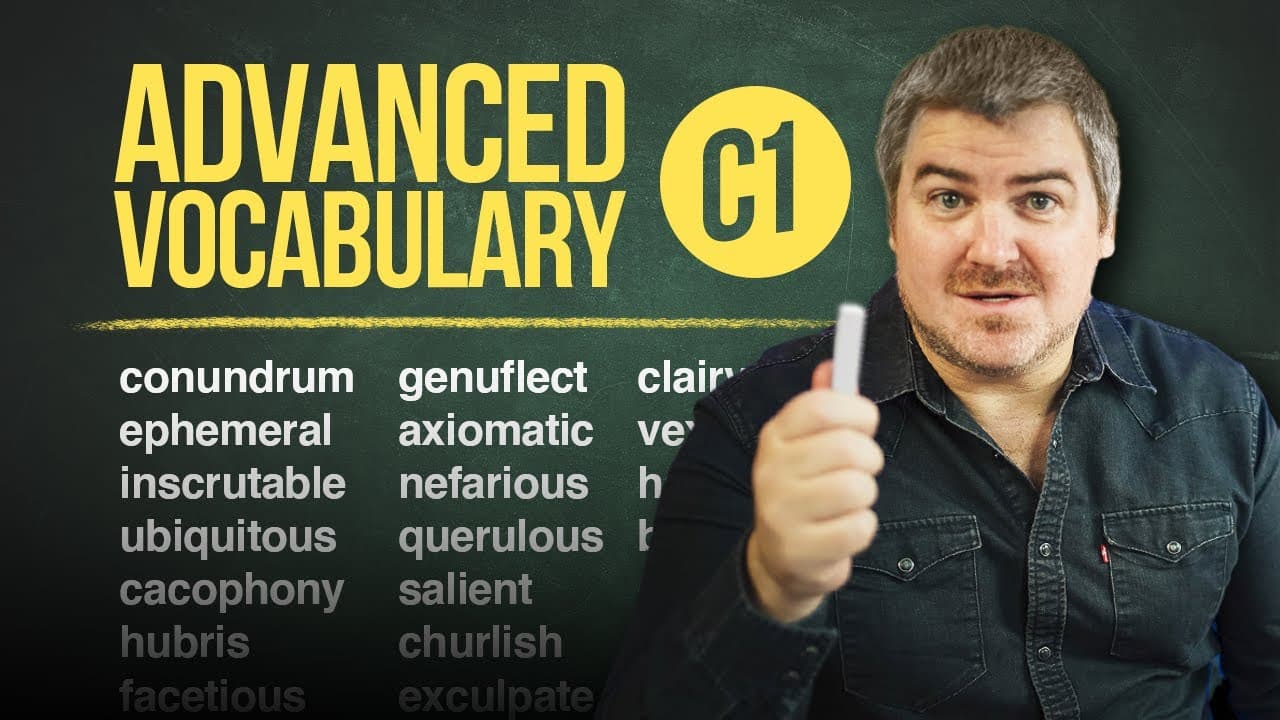
The video shows how to leverage 69 advanced words used by top IELTS students to raise your writing score. It explains each word’s meaning, common collocations, and provides example sentences from real essays. A bonus offers access to 100 sample essays to practice with and improve task responses and coherence.
Transcript
today we're going to be looking at the 69 most commonly used words by real band 78 and9 students so that you can improve not just your vocabulary but massively boost your I writing score and in this video I'm going to show you what those words are how you can use them in your essays and how they will help you massively improve your essays at the en... Read More
Key Insights
- The video demonstrates that using high level vocabulary can elevate task response by showing precise word choices in context.
- Understanding collocations is essential because it helps learners sound natural and accurate when applying advanced terms.
- Focusing on verbs, adjectives, and nouns with common collocations builds fluency and reliability in writing.
- Choosing the right word requires matching tone, formality, and meaning to the essay prompt for credibility.
- Some words have topic specific usage, such as governance, education, or economics, guiding where they fit in an argument.
- Avoiding overuse is important; balance simple language with high level terms to maintain readability and impact.
- The video reinforces that memorization alone does not improve intellect; comprehension and practical application do.
- A bonus resource of 100 sample essays provides concrete models for structure, cohesion, and argument development.
- More videos from this channel:
- More from this channel: IELTS Advantage
Install to Summarize YouTube Videos and Get Transcripts
Explore YouTube Video Summarizer or Get YouTube Transcript Extractor
Questions & Answers
Q: How can I start using the 69 advanced words in my IELTS practice essays
To start, pick a word or two that feel natural for your topic and learn its most common collocations. Practice weaving them into your introduction and conclusion first, then extend to body paragraphs. Use the words in two or three sentences to solidify their meaning, pronunciation, and nuance. Build gradually and track improvements in coherence.
Q: What is the best way to learn collocations for IELTS writing
Focus on collocations that pair with your target words to sound natural. Create flashcards with the word on one side and its common collocations on the other. Drill by writing short sentences that combine the word with its collocations in different contexts. Regular practice with feedback helps ensure correct usage.
Q: Are there risks in overusing high level vocabulary
Yes, overusing advanced vocabulary can make writing seem artificial or obscure. It is important to balance high level words with clear, simple language to preserve readability. Use advanced terms where they add precision, and rely on plain language when the topic does not require complexity.
Q: How does the video suggest handling controversial or complex topics
The video recommends presenting balanced arguments and using words that clearly express stance without semantic ambiguity. Select terms that accurately reflect nuance, such as “irrespective” to acknowledge opposing views, and support your claims with examples from the provided essays to enhance credibility.
Q: What is the role of examples when using advanced vocabulary
Examples anchor abstract terms in concrete scenarios, showing how a word functions in context. The video uses sentences illustrating each word in an IELTS style to demonstrate collocations, tone, and emphasis. Include at least one relevant example per paragraph to reinforce understanding and retention.
Q: How can I access the 100 sample essays mentioned in the video
The video offers a bonus that provides access to 100 Band 7, 8, and 9 essays. Follow the description link or prompts in the video to obtain these samples. Reviewing these essays helps you see practical applications of vocabulary and effective argument structure.
Q: What should I focus on after learning the 69 words
After learning the words, practice by incorporating them into full practice essays under timed conditions. Focus on flow, coherence, and task response while weaving in the new vocabulary naturally. Seek feedback from teachers or peers to refine usage and correctness.
Q: Is there a recommended sequence for learning the words
A practical sequence is to start with words that have versatile collocations across topics, then add topic specific terms like governance or education. Pair each word with several collocations, create sentences, and gradually expand to longer passages. This builds both vocabulary depth and writing flexibility.
Summary & Key Takeaways
-
The video presents a curated list of 69 high level words, with definitions, synonyms, and collocations to help learners place them accurately in IELTS writing tasks.
-
It emphasizes practical usage over memorization, encouraging learners to integrate the words into their own essays to demonstrate range and precision.
-
A bonus package gives access to 100 sample Band 7–9 essays to illustrate effective application and argument development.
Read in Other Languages (beta)
Share This Summary 📚
Summarize YouTube Videos and Get Video Transcripts with 1-Click
Try YouTube Summary with ChatGPT & Claude or YouTube Transcript Generator
Explore More Summaries from IELTS Advantage 📚


Summarize YouTube Videos and Get Video Transcripts with 1-Click
Try YouTube Summary with ChatGPT & Claude or YouTube Transcript Generator