How to Answer IELTS Speaking Questions Naturally
TL;DR
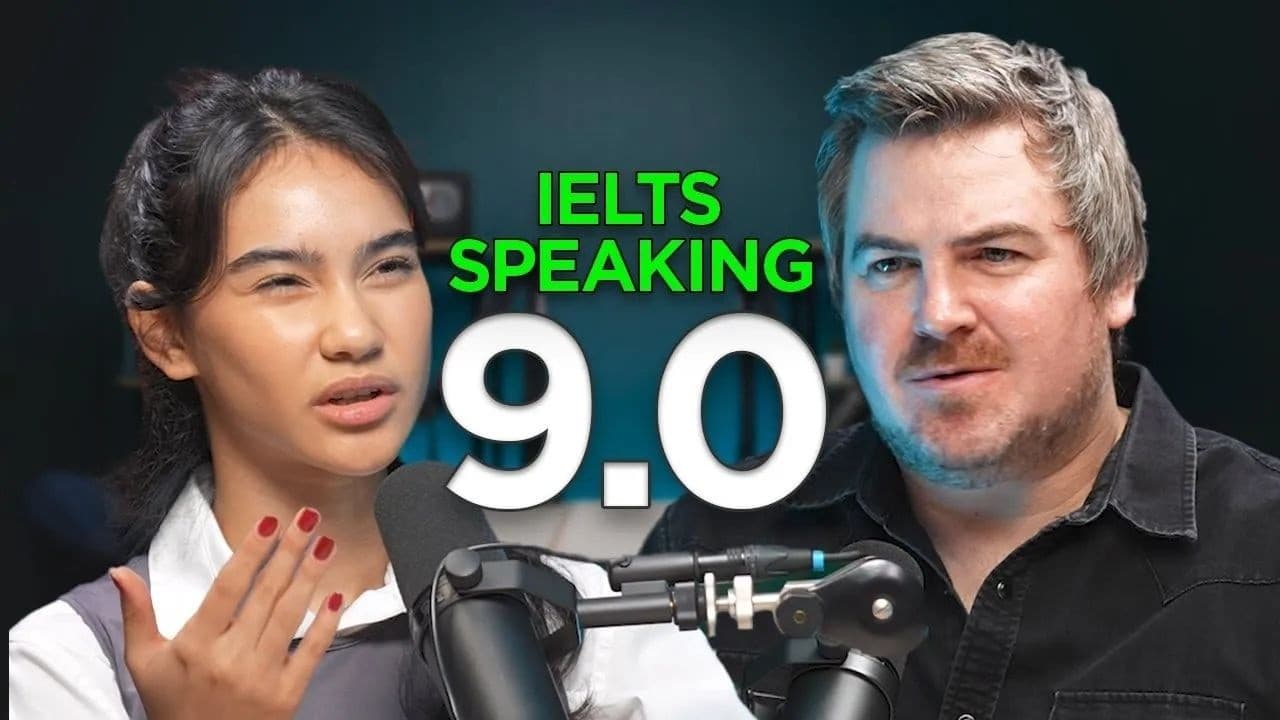
Strong IELTS Speaking answers give a direct response, add personal details, and explain reasons with concrete examples. The candidate applies this approach across daily routines, flowers, food, movies, and cooking, then develops a longer story about preparing pasta arrabbiata before discussing children learning to cook, professional chefs, and celebrity influence.
Transcript
let's talk about your daily routine can you tell me about your daily routine when I first get up I don't like doing anything um high maintenance or too quick I like to take my time um once I wake up I like to just be on my phone and then gradually get on from there get up and do my skin care I start getting dressed and then go downstairs I make som... Read More
Key Insights
- Effective speaking answers are extended with reasons, examples, and personal experiences. The candidate rarely stops after saying yes or no, instead explaining her habits, preferences, memories, or concerns in enough detail to keep each response connected to the examiner's question.
- A natural daily-routine answer can follow events in chronological order. The candidate moves from waking and checking her phone to skincare, dressing, going downstairs, and choosing coffee, tea, or matcha, which gives the response an easy structure without sounding memorized.
- Personal comparisons can develop an answer about change over time. The candidate contrasts having little structure as a child with recognizing the importance of routines while growing up, then connects routines to self-care and maintaining the rest of her day.
- Specific details make preference answers more substantial. When discussing flowers, the candidate names roses, tulips, and sunflowers, recalls being fascinated by sunflower pictures as a child, and explains that she has never seen or touched one in real life.
- Honest qualifications create nuanced responses. The candidate says she does not enjoy cooking for herself but likes baking cakes, chocolate cake, and cookies when bored, distinguishing between two related activities instead of forcing an entirely positive or negative answer.
- A longer narrative works well when it identifies the situation, choice, process, assistance, and result. The pasta arrabbiata account explains why she cooked, why she selected that meal, where she found instructions, who helped, how quickly it cooked, and why she enjoyed it.
- Part Three responses can address broader questions through practical reasoning. The candidate supports teaching children at home by mentioning available ingredients, parental guidance, kitchen safety, suitable combinations, and opportunities to test what matches the child's preferences.
- Professional cooking is presented as demanding because chefs may need to handle many simultaneous orders for different meals. The candidate bases this view on cooking programs and Hell's Kitchen, while also considering the pressure of keeping pace and avoiding mistakes.
Install to Summarize YouTube Videos and Get Transcripts
Explore YouTube Video Summarizer or Get YouTube Transcript Extractor
Questions & Answers
Q: How should you extend answers in an IELTS Speaking test?
Extend an IELTS Speaking answer by responding directly, giving a reason, and adding a relevant personal detail or example. The candidate follows this pattern when discussing routines, flowers, baking, movies, and cooking. For example, she does not merely say that she prefers company for horror films. She explains that those films scare her, so watching with someone else creates a better experience.
Q: How can you describe a daily routine naturally in IELTS Speaking?
Describe a daily routine in the order that activities normally happen, then include small details that make the answer personal. The candidate begins with waking and spending time on her phone, then mentions skincare, getting dressed, going downstairs, and making coffee, tea, or matcha. She also explains that she dislikes rushing in the morning and prefers to take her time.
Q: How can you answer an IELTS question about changes since childhood?
A clear answer can contrast the past with the present and explain what caused the change. The candidate says she did not really have a routine as a child because children simply do what they want. As she grew older, she recognized the value of a set routine for self-care and for managing the day, so her habits changed drastically throughout her life.
Q: What personal examples does the candidate use when discussing flowers?
The candidate says she recently received flowers and enjoys their different types and colors, including roses and tulips. She explains that people where she is from give flowers for birthdays and weddings, while her friends also exchange them as thanks or signs of appreciation. She would especially like sunflowers because childhood pictures fascinated her, although she has never seen one in real life.
Q: How does the candidate explain her food and eating habits?
The candidate distinguishes cooking from baking, saying she does not usually cook for herself but enjoys making cakes and cookies when bored. She does not consider her diet healthy because she often eats whatever is available, although she tries to be mindful of food-related issues and her changing metabolism. She orders online two to three times weekly but prefers homemade food.
Q: How does the candidate structure her story about cooking pasta arrabbiata?
The candidate begins with the situation: her mother, who normally prepares meals, was away on vacation. She then explains choosing pasta arrabbiata because her father enjoys it, finding a recipe on a random website, and receiving help from her cousin. She emphasizes that the meal was quick, contained pasta and sauce without meat, used tomatoes rather than canned sauce, and tasted delicious.
Q: Why does the candidate think children should learn to cook at home?
The candidate believes cooking from a young age can provide future benefits and says she would teach her own children if she learned properly herself. She prefers home instruction because the kitchen already contains the ingredients and a parent can guide the child about what to use, what to avoid, which ingredients work together, and what suits the child's preferences.
Q: How does the candidate evaluate professional chefs and celebrity chefs?
The candidate views professional cooking as tiring and difficult because a chef may face about twenty people ordering different meals at the same time. She also worries about keeping up and making mistakes. Celebrity chefs can strongly influence home cooks by adding personal touches to dishes. She cites Gordon Ramsay and his filet mignon as an example that may intrigue viewers to try preparing it.
Summary & Key Takeaways
-
The opening answers cover daily routines, childhood changes, and meditation. The candidate describes taking time after waking, checking her phone, completing skincare, getting dressed, and preparing coffee, tea, or matcha. She contrasts this routine with childhood and says she would like to add meditation to feel grounded.
-
The candidate discusses receiving flowers, occasions for giving them, baking, diet, food delivery, and cinema experiences. Her answers consistently move beyond a simple preference by adding reasons or examples, such as wanting sunflowers, ordering food two to three times weekly, enjoying IMAX sound, and watching horror films with company.
-
The longer discussion centers on preparing pasta arrabbiata while the candidate's mother was away. She explains choosing it because her father enjoys it, using an online recipe and help from a cousin, and making tomato sauce from scratch. Later answers consider cooking education, professional kitchen pressure, and celebrity chefs' influence.
Read in Other Languages (beta)
Share This Summary 📚
Summarize YouTube Videos and Get Video Transcripts with 1-Click
Try YouTube Summary with ChatGPT & Claude or YouTube Transcript Generator
Explore More Summaries from IELTS Advantage 📚


Summarize YouTube Videos and Get Video Transcripts with 1-Click
Try YouTube Summary with ChatGPT & Claude or YouTube Transcript Generator