How to Achieve Band 9 in IELTS Speaking

TL;DR
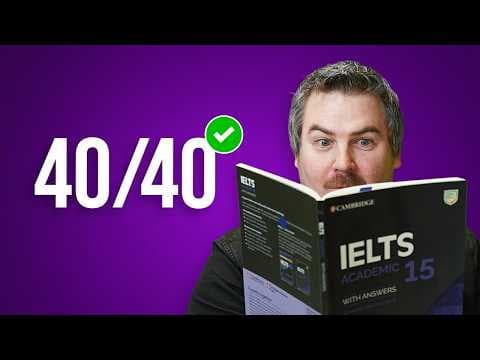
Achieving a Band 9 in the IELTS Speaking test involves avoiding memorized answers, directly answering questions with added details, and speaking naturally as in a conversation. The key is to focus on the main topic, use personal stories, examples, and explanations, and practice regularly to build confidence and fluency.
Transcript
imagine walking into your I speaking test confident and prepared knowing no matter what happens you're going to get the I score that you need now picture walking out of the exam Center knowing that you have got the score that you deserve this might sound impossible but it's not I know this because I've helped thousands of students who are strugglin... Read More
Key Insights
- Memorized answers can significantly lower your score as they make you sound robotic and off-topic.
- Directly answering questions with added details is crucial for a high score.
- IELTS Speaking Test has three parts, each requiring different strategies for success.
- Part 1 is about creating a good first impression and relaxing into the test.
- In Part 2, focus on the main topic rather than sticking rigidly to bullet points.
- Part 3 questions are more challenging, and it's important to attempt an answer even if unsure.
- Band 7-9 students speak naturally and steer the conversation to comfortable topics.
- Practice is essential to perform naturally and confidently on test day.
Install to Summarize YouTube Videos and Get Transcripts
Explore YouTube Video Summarizer or Get YouTube Transcript Extractor
Questions & Answers
Q: How to avoid sounding robotic in IELTS Speaking?
To avoid sounding robotic in the IELTS Speaking test, focus on speaking naturally as you would in a normal conversation. Avoid memorizing answers, and instead, directly answer the questions with relevant details, examples, and personal stories. This approach helps create a more authentic and fluent impression.
Q: What are the differences between Band 5-6 and Band 7-9 students?
Band 5-6 students often rely on memorized answers and tend to go off-topic, which can lead to robotic and less fluent responses. In contrast, Band 7-9 students answer questions directly, add relevant details, and engage in a natural conversational style. They steer the conversation to comfortable topics and demonstrate better fluency and coherence.
Q: What strategies are effective for Part 2 of the IELTS Speaking test?
For Part 2 of the IELTS Speaking test, focus on the main topic rather than strictly adhering to the bullet points. Use the freedom to add personal stories, examples, and other points you feel comfortable discussing. This approach allows you to speak more fluently and comfortably for up to two minutes.
Q: How should one tackle difficult Part 3 questions in IELTS Speaking?
When facing difficult Part 3 questions, always attempt an answer, even if you are unsure. It's not a test of knowledge but of speaking ability. Provide a structured response by directly answering the question, explaining your reasoning, giving examples, and considering other perspectives. This demonstrates your ability to handle complex topics.
Q: Why is it important to avoid memorized answers in IELTS Speaking?
Memorized answers can significantly lower your score as they make you sound robotic and can lead to going off-topic. The IELTS Speaking test evaluates your ability to communicate naturally and fluently in English, not your ability to memorize and recite prepared responses. Natural conversation is key to achieving a high score.
Q: What role does practice play in preparing for the IELTS Speaking test?
Regular practice is crucial for building confidence, fluency, and the ability to respond naturally during the IELTS Speaking test. By practicing, you become more comfortable with the test format, improve your ability to think on your feet, and develop strategies for answering different types of questions effectively.
Q: How can one create a good first impression in Part 1 of IELTS Speaking?
To create a good first impression in Part 1, focus on relaxing and engaging with the examiner naturally. Answer questions directly and add relevant details to demonstrate fluency. This approach helps set a positive tone for the rest of the test and allows you to perform more confidently and effectively.
Q: What is the significance of steering the conversation in IELTS Speaking?
Steering the conversation in IELTS Speaking allows you to discuss topics you are comfortable with, which helps demonstrate your fluency and natural speaking ability. By guiding the conversation to areas you know well, you can provide more detailed and coherent responses, which can lead to higher band scores.
Summary & Key Takeaways
-
To excel in the IELTS Speaking test, avoid memorized answers, as they can make you sound robotic and off-topic. Instead, focus on directly answering questions with relevant details, examples, and personal stories. This approach helps create a natural conversation flow, which is key for achieving higher band scores.
-
The IELTS Speaking test is divided into three parts, each requiring specific strategies. Part 1 focuses on creating a good first impression, Part 2 involves discussing a main topic with flexibility, and Part 3 presents more challenging questions. Attempting every question is crucial, even if you are unsure.
-
Band 7-9 students excel by speaking naturally and steering conversations toward topics they are comfortable with. They avoid tricks or hacks and rely on their existing English skills to communicate clearly. Regular practice is vital to build confidence and fluency for the test day.
Read in Other Languages (beta)
Share This Summary 📚
Summarize YouTube Videos and Get Video Transcripts with 1-Click
Try YouTube Summary with ChatGPT & Claude or YouTube Transcript Generator
Explore More Summaries from IELTS Advantage 📚





Summarize YouTube Videos and Get Video Transcripts with 1-Click
Try YouTube Summary with ChatGPT & Claude or YouTube Transcript Generator