How to Improve Your IELTS Speaking Test Score
TL;DR
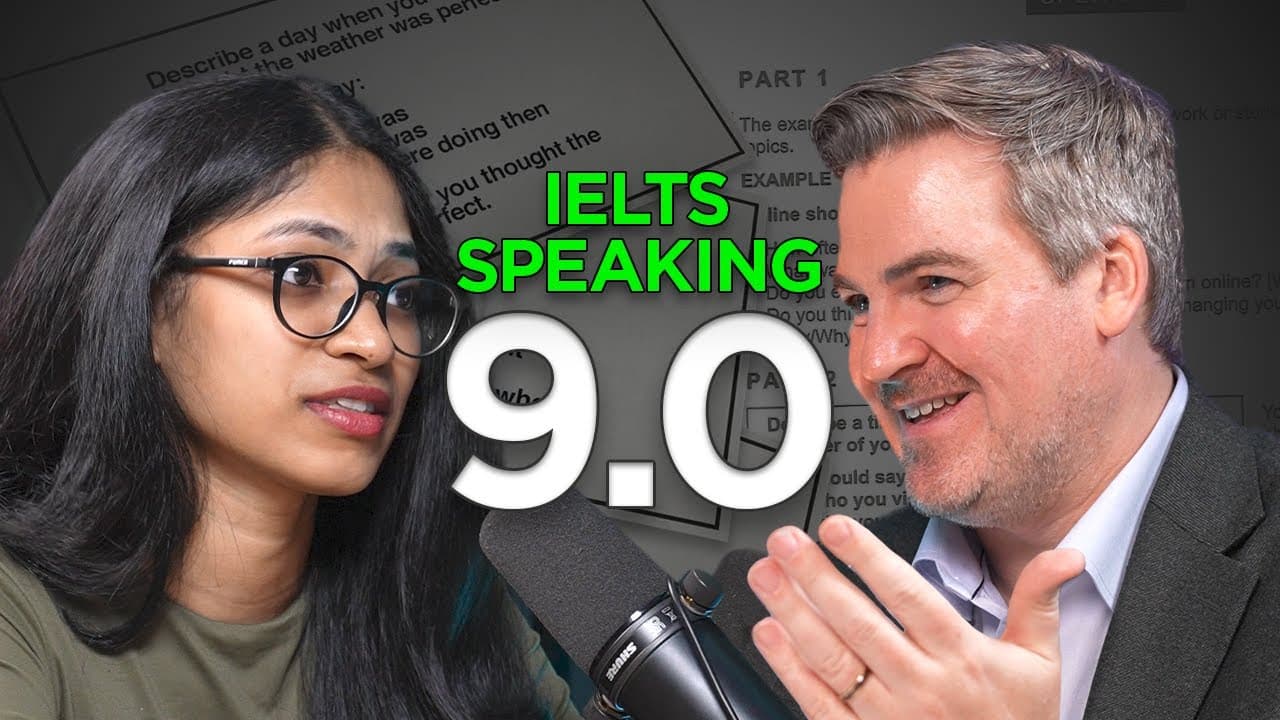
Develop answers naturally, keep speaking for the full Part Two period, and strengthen Part Three responses with examples and multiple perspectives. A conversational style supports fluency and coherence, while adding relevant points helps when the prompt is unfamiliar or personal knowledge is limited.
Transcript
I'm a student. I'm a student in Oman. I am pursuing ACCA at the moment, but, the thing still going on. And, what is that? It's the Association of Certified Chartered Accountancy. So there are 13 papers and you're supposed to complete all 13 to get the certification. So far, I've completed four. I’m still working on doing the rest. I wanted to get i... Read More
Key Insights
- Part One is most effective when answers sound like a natural conversation and include enough personal detail to develop the response. The candidate handled questions about studies, history, reading, and drinks fluently, so the evaluator advised maintaining the same general approach.
- Part Two requires the candidate to continue speaking until the examiner stops the response. The candidate spoke for about 90 seconds, and the feedback warned that stress can distort a test taker’s sense of time, causing an answer to end much earlier than intended.
- The Part Two prompt can be expanded with additional relevant points beyond the listed bullets. When a provided point feels difficult or lacks enough material, adding related details that are easier to discuss can help sustain the response and reduce pressure.
- Part Three answers become stronger when they include concrete examples. The feedback recommends briefly explaining whatever example comes to mind, even when it is not highly academic, because the purpose is to develop the idea rather than display specialized subject knowledge.
- Multiple perspectives can improve the depth of Part Three responses. A candidate can begin with phrases such as “It depends,” compare what different groups might think, and then support each position with an explanation or example.
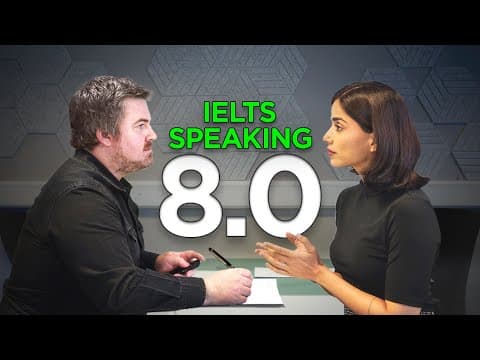
- Fluency and coherence were identified as strengths in the candidate’s performance. She answered the questions, developed her ideas sufficiently, remained friendly, and used a conversational speaking style across the three parts of the practice test.
- Limited subject knowledge does not prevent a successful Part Two response. Although the candidate felt unsure about monuments and said she had to invent some details, the evaluator still considered the response good and focused feedback mainly on speaking for longer.
- Historical preservation provides visible evidence of the past, according to the candidate’s Part Three response. She argues that written history alone is not always enough because people also want physical proof, making monuments worth preserving and maintaining.
Install to Summarize YouTube Videos and Get Transcripts
Explore YouTube Video Summarizer or Get YouTube Transcript Extractor
Questions & Answers
Q: How should I answer IELTS Speaking Part One questions?
Answer Part One questions in a natural, conversational way and develop each response with a relevant personal detail. The candidate successfully discussed her studies, childhood reading, preferred drinks, and interest in history without sounding overly formal. The feedback says her approach did not need changing, although unexpected topics and test-day nerves could still make some questions feel less comfortable.
Q: How long should I keep talking in IELTS Speaking Part Two?
Keep speaking until the examiner stops you. In this practice test, the candidate ended her monument response after about 90 seconds, and the evaluator recommended continuing rather than estimating when the allotted period has ended. Stress can make 30 or 40 seconds feel much longer, so stopping based on instinct may produce an unnecessarily short response.
Q: What can I do if an IELTS Part Two prompt feels difficult?
Add relevant points that you feel comfortable discussing instead of limiting yourself to the prompt’s listed bullets. The candidate lacked confidence because she did not know much about monuments, yet she described the Red Fort’s appearance, history, garden, atmosphere, and personal impact. These connected details gave her useful material even when her factual knowledge felt limited.
Q: How can I develop stronger IELTS Speaking Part Three answers?
Develop Part Three answers by adding examples and considering more than one perspective. The feedback suggests starting with “It depends,” explaining what some people may think, contrasting that with another group, and supporting the positions with examples. The example does not need to be highly academic. It only needs to clarify and extend the reasoning behind the answer.
Q: Why are examples useful in IELTS Speaking Part Three?
Examples give the candidate more material to explain and prevent responses from becoming too short, especially when nervous or eager for the test to finish. The evaluator advises mentioning any relevant example and discussing it briefly. This technique turns a simple opinion into a developed answer with a reason, an illustration, and clearer connections between ideas.
Q: What speaking strengths did the evaluator identify?
The evaluator identified natural conversation, friendliness, fluency, coherence, and sufficient answer development as strengths. Part One was described as having no significant problems, while Parts Two and Three were also judged positively. The candidate consistently answered the questions and communicated her ideas clearly, even when she lacked confidence in her knowledge of the assigned monument topic.
Q: How can different perspectives improve an IELTS answer?
Different perspectives move an answer beyond a single statement such as “This is what I think.” For a question about whether building design affects mood, the feedback contrasts people who may not notice architecture with architects or people who are sensitive to their surroundings. Explaining both positions creates a broader, more developed response and provides opportunities for examples.
Q: Why should historical monuments be preserved?
Historical monuments should be preserved because they provide visible evidence of what earlier societies left behind. The candidate argues that history can be written in books, but people also want to see physical proof. Her description of the Red Fort highlights how preserved spaces can reveal past routines, architecture, reporting areas, gardens, and connections to the Mughal period.
Summary & Key Takeaways
-
The candidate discusses studying ACCA in Oman, possible future careers in business or law, and an interest in eventually pursuing CFA. Her answers feel conversational because she expands on personal motivations, acknowledges changing ambitions, and responds naturally rather than delivering rigid or memorized statements.
-
The test covers history, reading, drinks, monuments, and architecture. For Part Two, the candidate describes the Red Fort, its Mughal associations, traditional appearance, maintained garden, and personal impact. Part Three then explores tourism, statues, historical preservation, architecture, and how buildings may influence people’s moods.
-
The feedback praises the candidate’s natural delivery, friendliness, fluency, and ability to develop answers. The main recommendations are to continue speaking until stopped in Part Two, add personally manageable points to the prompt, and develop Part Three answers through examples, contrasting opinions, and perspectives beyond personal experience.
Read in Other Languages (beta)
Share This Summary 📚
Summarize YouTube Videos and Get Video Transcripts with 1-Click
Try YouTube Summary with ChatGPT & Claude or YouTube Transcript Generator
Explore More Summaries from IELTS Advantage 📚


Summarize YouTube Videos and Get Video Transcripts with 1-Click
Try YouTube Summary with ChatGPT & Claude or YouTube Transcript Generator