How to Plan an IELTS Writing Task 2 Essay
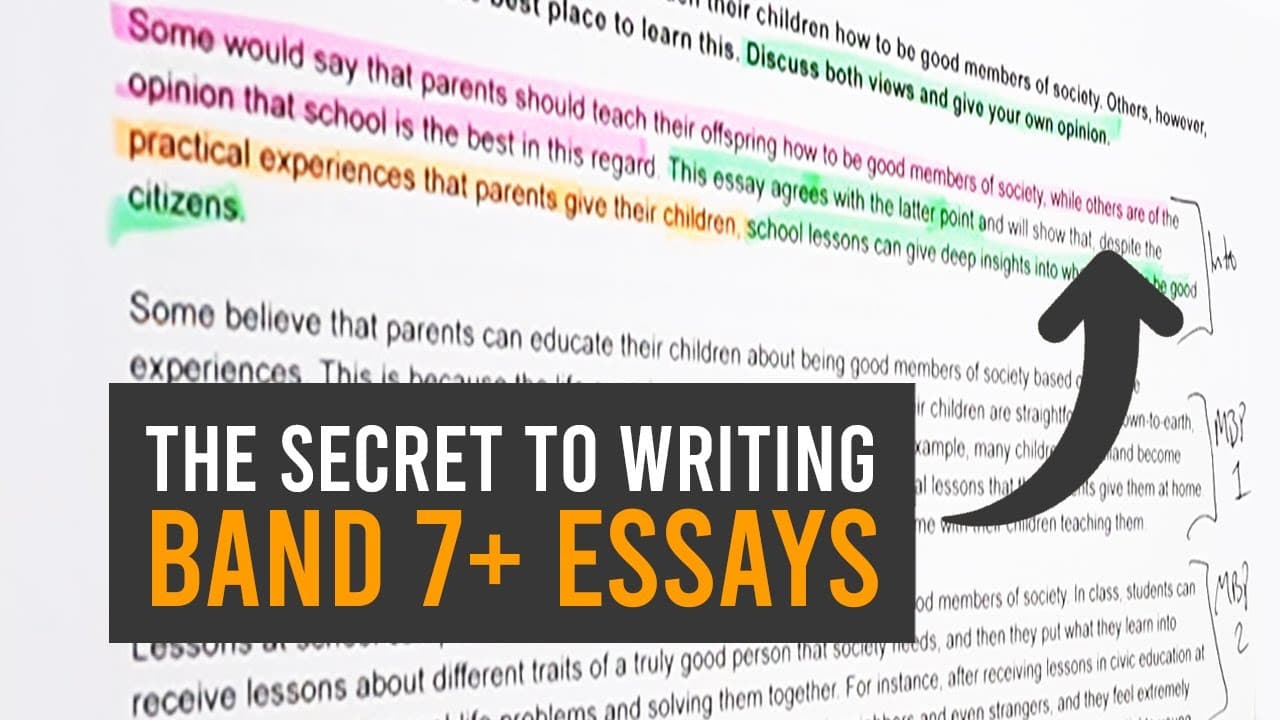
TL;DR
Plan an IELTS Writing Task 2 essay by identifying the question type, finding the general and specific topics, generating a few simple and relevant ideas, and placing them into a clear structure. The lesson covers six question types and recommends treating planning, writing, and checking as three distinct stages within the available 40 minutes. Read on for a practical planning sequence that helps prevent losing direction and preserves time to check your answer.
Transcript
- Hi, everyone. Chris here from IELTS Advantage, and this is IELTS Writing Task 2: Everything You Need To Know. Alright, so what we're gonna do in this video is we're gonna break IELTS Writing Task 2 down into three parts. The planning part, the writing part, and the checking part. Often students get really confused about what to do when they're wr... Read More
Key Insights
- IELTS Writing Task 2 is best divided into planning, writing, and checking stages. Starting to write immediately can leave a student without direction, consume the available time, and eliminate the opportunity to review the completed essay.
- Question identification is the first planning task. The six types described are opinion, discussion, advantages and disadvantages, problem and solution, causes and solution, and double or direct questions, with different approaches recommended for each type.
- Accurate prompt analysis requires three questions: what type of question is this, what is the general topic, and what is the specific topic? This sequence helps prevent a response that discusses the broad subject without completing the precise instruction.
- Task fulfillment is the most important objective described for Writing Task 2. A student must follow the prompt, address its specific focus, and provide any requested position, such as the extent to which the student agrees or disagrees.
- Brainstorming is presented as ineffective for IELTS idea generation because it encourages numerous possible ideas. The essay instead needs a limited number of specific, relevant ideas that directly answer the question and can be communicated clearly in English.
- Simple ideas are preferable to unnecessarily complicated ones because the task does not award extra marks merely for unusual or highly complex concepts. If no personal answer appears, considering what most people might say can reveal an obvious response.
- A structure plan is a written roadmap populated with the selected ideas. It separates planning from composition, allowing the student to focus on writing instead of simultaneously deciding the structure, developing ideas, and searching for vocabulary and grammar.
- Practice is the key to completing the full process within 40 minutes. Planning may initially take longer while the method is unfamiliar, but repeated use is presented as a way to write faster, avoid getting lost, and retain checking time.
Install to Summarize YouTube Videos and Get Transcripts
Explore YouTube Video Summarizer or Get YouTube Transcript Extractor
Questions & Answers
Q: How should I plan an IELTS Writing Task 2 essay?
First identify the question type, then determine the general topic and the specific issue you must answer. Generate a small number of simple, relevant ideas and place them into an appropriate structure. This written plan becomes a roadmap for the writing stage.
Q: What are the six IELTS Writing Task 2 question types?
The six types described are opinion, discussion, advantages and disadvantages, problem and solution, causes and solution, and double or direct questions. Each type requires an appropriate approach rather than using the same method for every prompt.
Q: How do I analyze an IELTS Writing Task 2 question?
Ask three questions: What type of question is it, what is the general topic, and what is the specific topic? For the railway-and-road prompt, the general topic is government spending, while the specific topic is whether governments should spend money on railways rather than roads.
Q: Why is answering the specific question important in IELTS Writing Task 2?
The lesson identifies answering the question and following its instructions as the most important objective. Writing everything you know about a general subject does not answer the prompt if you ignore its specific focus or fail to provide the requested opinion.
Q: Why should I avoid brainstorming for IELTS Writing Task 2?
Brainstorming encourages you to produce as many ideas as possible, but the essay needs only a small number of specific, relevant ideas. The lesson says students may generate 10, 20, or even 30 ideas this way, with most proving useless.
Q: How can I generate relevant IELTS essay ideas quickly?
Turn the prompt into a direct question and select the most obvious, straightforward answers. Keep the ideas simple rather than searching for unusually complicated ones. If you cannot find a personal answer, consider what most people would say.
Q: Why should I create a structure plan before writing?
A structure plan puts each selected idea into its intended place before composition begins. It provides a roadmap, so you can focus on writing instead of deciding simultaneously on organization, ideas, vocabulary, and grammar.
Q: How should I use the 40 minutes for IELTS Writing Task 2?
Divide the process into planning, writing, and checking rather than beginning the essay immediately. Planning may take longer while the method is unfamiliar, but practice helps you write faster, avoid losing direction, and preserve time for checking.
Summary & Key Takeaways
-
IELTS Writing Task 2 should be approached through three broad stages: planning, writing, and checking. Planning comes first because beginning immediately can cause students to lose direction, run out of time, and leave no opportunity for review. A written plan creates a roadmap that makes the later writing stage clearer and more efficient.
-
The planning process involves identifying the essay type, analyzing the prompt, generating relevant ideas, and fitting those ideas into an appropriate structure. The six types presented are opinion, discussion, advantages and disadvantages, problem and solution, causes and solution, and double or direct questions. Each type requires a suitable approach and structure.
-
Effective idea generation means asking a direct question and selecting a small number of obvious, straightforward answers. The lesson rejects broad brainstorming because it can produce many irrelevant or overly complicated ideas. After selecting ideas, students should record them within a memorized structure before writing the introduction, body paragraphs, and conclusion.
Read in Other Languages (beta)
Share This Summary 📚
Summarize YouTube Videos and Get Video Transcripts with 1-Click
Try YouTube Summary with ChatGPT & Claude or YouTube Transcript Generator
Explore More Summaries from IELTS Advantage 📚


Summarize YouTube Videos and Get Video Transcripts with 1-Click
Try YouTube Summary with ChatGPT & Claude or YouTube Transcript Generator