How to Answer Every IELTS Reading Question
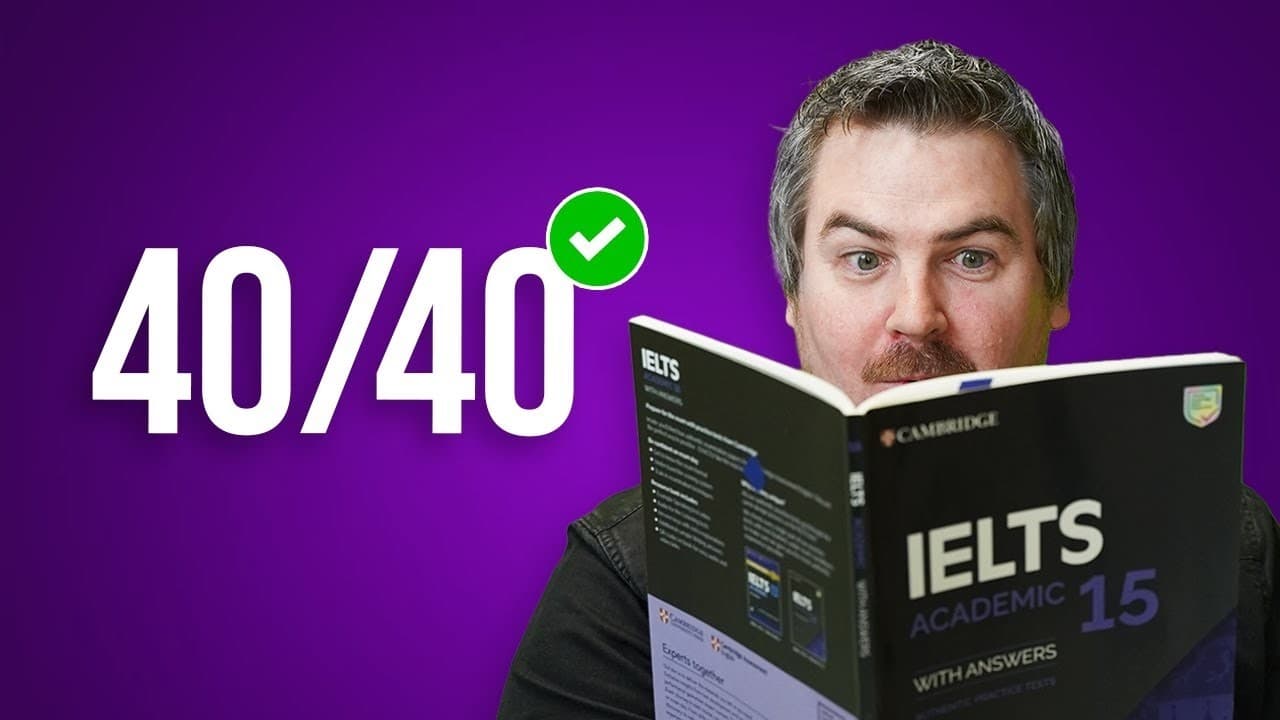
TL;DR
Find where the answer is before deciding what it is. Read each question and its instructions first, predict likely content and word forms, scan for keywords or synonyms, then examine only the relevant passage section carefully while checking spelling, grammar, word limits, and subtle differences between options.
Transcript
- IELTS reading is actually quite simple, but what students find really frustrating is there's so many different types of reading question. So what I decided to do was put together a video that shows you the 12 main types of IELTS question. I'm gonna show you exactly what those questions look like, go over the key problems that students face, and t... Read More
Key Insights
- The IELTS Reading test contains 12 main question types, and each type presents distinct problems that require a tailored strategy. Recognizing the format quickly helps candidates understand what information to seek and prevents them from treating every task as though it works in exactly the same way.
- The central reading principle is to find where the answer appears before deciding what the answer is. Candidates should scan for the relevant location using keywords and synonyms, then read that limited section carefully instead of closely reading the entire passage from the beginning.
- Sentence completion requires candidates to read the incomplete sentences before examining the passage. They should predict likely content, consider possible synonyms, scan for the correct location, and copy the chosen words accurately because one incorrect letter makes the entire response wrong.
- Summary completion depends on both meaning and grammar. Candidates should predict the likely content and determine whether each blank requires a noun, verb, or adjective, then confirm that the selected passage wording fits the summary grammatically and complies with the stated word limit.
- Multiple-choice success depends on understanding the subtle differences among the available options. Candidates should read the question and choices carefully, skim the passage for general meaning, locate the relevant section, and compare that section with the specific wording and meaning of each option.
- Elimination is a practical method when a multiple-choice answer remains unclear. Identifying options that are definitely wrong reduces the decision to fewer possibilities, allowing the candidate to focus on the most important difference between the remaining choices and verify that distinction against the relevant text.
- Short-answer questions require exact understanding of what the question asks. Candidates should underline keywords, especially nouns and noun phrases involving people, places, objects, or things, think of possible synonyms, and use those clues to scan for the answer location before reading closely.
- Instructions are part of the scoring task, particularly in completion and short-response formats. Candidates must observe limits such as one word or no more than two words, preserve correct spelling, and check that an answer makes sense within the sentence or summary where it appears.
Install to Summarize YouTube Videos and Get Transcripts
Explore YouTube Video Summarizer or Get YouTube Transcript Extractor
Questions & Answers
Q: How should I approach any IELTS Reading question?
Begin with the question rather than reading the entire passage closely. Understand the instructions and identify what the question requires, then note useful keywords and consider related synonyms. Predict the likely answer or type of information, scan the passage to find its location, and only then read that section carefully. Finally, check meaning, spelling, grammar, and any stated word limit before recording the answer.
Q: What does “where before what” mean in IELTS Reading?
“Where before what” means locating the relevant part of the passage before trying to determine the exact answer. Candidates scan for keywords, noun phrases, or synonyms connected to the question. Once they identify the likely paragraph or section, they read that limited area carefully and decide what the answer is. This approach avoids spending time reading every paragraph in equal detail.
Q: How do I answer IELTS sentence completion questions?
Read the instructions carefully, especially the permitted number of words, and then study the incomplete sentences before looking at the passage. Predict the likely content and consider synonyms that may appear in the text. Scan to find the relevant location, read that section closely, and select words from the passage. Copy them with exact spelling because even one incorrect letter makes the response wrong.
Q: How do I solve IELTS summary completion questions?
Start by reading the summary and its instructions rather than the main passage. Predict both the missing content and the required grammatical form, such as a noun, verb, or adjective. Consider synonyms, scan for the corresponding location in the passage, and read that section carefully. The final choice must fit the summary’s meaning and grammar while remaining within the stated one-word or two-word limit.
Q: How do I answer IELTS multiple-choice reading questions?
Read the question and every option carefully, paying particular attention to small differences in meaning. Skim the passage to understand its general meaning, then use the question to locate the relevant section and read that part closely. Compare the text with each option. If uncertain, eliminate choices that are definitely wrong, focus on the difference between those remaining, and check the passage again before deciding.
Q: Why is eliminating wrong options useful in IELTS Reading?
Eliminating clearly incorrect options reduces the number of meanings that must be compared. If two of four choices conflict with the passage, the candidate can concentrate on the precise difference between the remaining two. That narrower comparison makes it easier to return to the relevant passage section, verify which wording matches the text, and make a final choice based on evidence rather than confusion.
Q: How should I answer IELTS short-answer questions?
Read and understand each question before examining the passage because strong reading skills cannot compensate for misunderstanding what is being asked. Underline keywords, especially nouns and noun phrases referring to people, places, objects, or things. Think of synonyms for those terms, scan for the relevant location, read that section carefully, and then reread the question before writing the final answer.
Q: What mistakes should I avoid in IELTS Reading completion tasks?
Avoid ignoring instructions, exceeding the allowed number of words, misspelling copied terms, and choosing an answer that does not fit grammatically. Do not begin by reading the whole passage closely. Read the sentence or summary first, predict the content and word form, consider synonyms, and locate the relevant passage section. Before submitting the response, confirm its spelling, meaning, grammar, and word count.
Summary & Key Takeaways
-
IELTS Reading includes 12 main question types, so effective preparation requires recognizing each format and applying a suitable strategy. The recurring foundation is to study the question before the passage, understand exactly what is required, anticipate possible answers, and locate the relevant section before reading closely and selecting an answer.
-
Sentence and summary completion both require careful attention to word limits and spelling. Candidates should read the incomplete material first, predict likely content, consider synonyms, and scan for the answer location. Summary completion adds a grammatical check because the missing item may need to function as a noun, verb, or adjective.
-
Multiple-choice and short-answer tasks demand precise question analysis. For multiple choice, candidates should compare subtle differences among options, skim for general meaning, locate the relevant passage section, and eliminate clearly incorrect choices. For short answers, they should identify keywords, consider synonyms, scan for the location, reread the question, and respond carefully.
Read in Other Languages (beta)
Share This Summary 📚
Summarize YouTube Videos and Get Video Transcripts with 1-Click
Try YouTube Summary with ChatGPT & Claude or YouTube Transcript Generator
Explore More Summaries from IELTS Advantage 📚

Summarize YouTube Videos and Get Video Transcripts with 1-Click
Try YouTube Summary with ChatGPT & Claude or YouTube Transcript Generator