How to Boost IELTS Speaking to Band 9 Score Fast
TL;DR
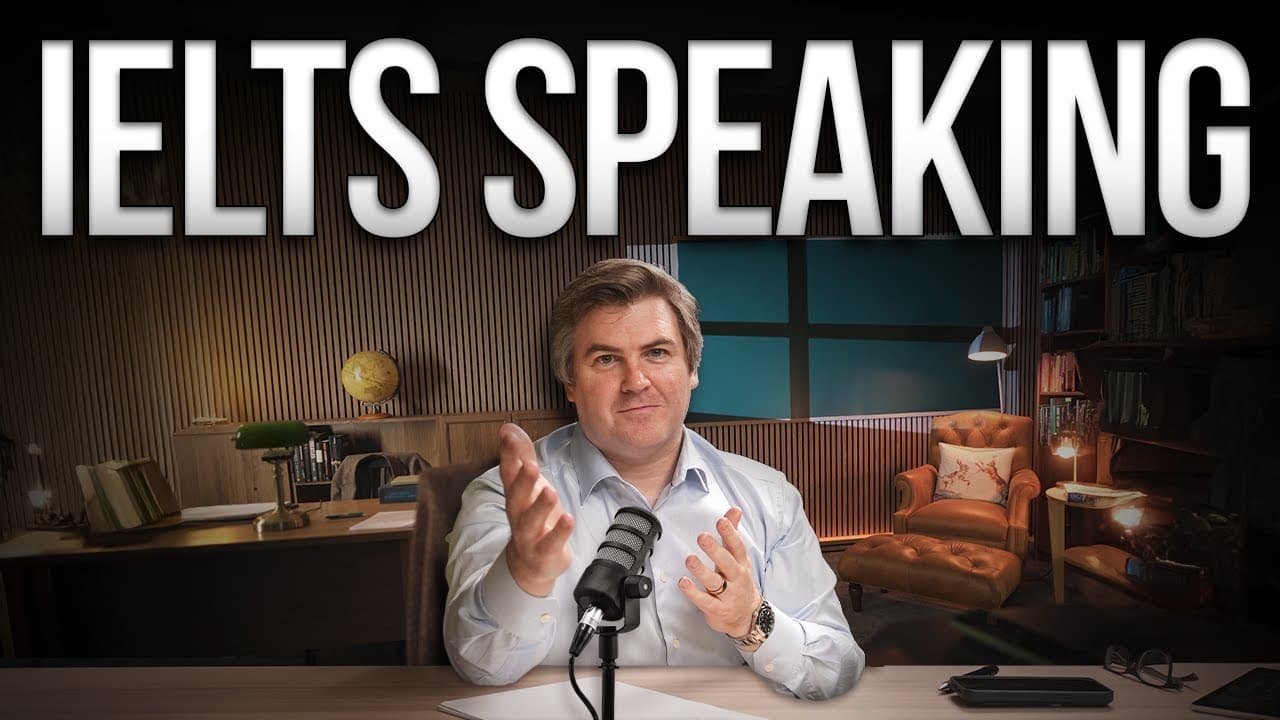
Directly address the task, speak naturally, and add brief details or examples rather than memorized scripts. Practice outside the test so you arrive in test mode with the same conversational flow you use with friends. Focus on staying on topic, answering clearly, and avoiding robot-like rehearsed replies.
Transcript
Imagine walking into your IEL speaking test. You feel confident and prepared. You know that no matter what happens, you're going to get the score that you need. Now, picture walking out of the exam knowing that you got the score that you deserve. This might sound impossible, but it's not. I know this because I've helped thousands of students who we... Read More
Key Insights
- Memorized answers create a robot-like delivery and risk band zero in IELTS speaking.
- Band 7, 8, and 9 speakers speak naturally by staying in conversation mode and avoiding memorization.
- Test mode can degrade fluency; the cure is practicing normal speech just before speaking tasks.
- A simple pre-class chat routine helps students maintain high-level fluency under exam conditions.
- Directly answering the question and adding a bit of detail is the effective pattern used by top scorers.
- Part one should avoid long off-topic monologues and stay focused on the asked prompt.
- Part two requires comfort with a two-minute talk and the ability to extend naturally without memorization.
- The PDF with real practice questions is a practical resource to simulate exam conditions and improve readiness.
Install to Summarize YouTube Videos and Get Transcripts
Explore YouTube Video Summarizer or Get YouTube Transcript Extractor
Questions & Answers
Q: What is the main reason memorized answers hurt IELTS speaking scores?
Memorized answers sound like a robot and demonstrate a failure to communicate naturally in English. They often go off topic, cause examiners to interrupt, and create a perception of inauthentic language use. The video explains this is a common mistake that lowers the score and teaches a better approach: speak like you would in everyday conversation, and only memorize nothing.
Q: How can you maintain fluency during Part 1 without memorizing?
The recommended method is to practice normal conversation before the official test, so your spontaneous responses resemble natural speech. This pre-class or pre-test chatter helps you answer directly with some added detail, avoiding off-topic rambling and keeping your fluency steady when the examiner asks different questions.
Q: What strategy helps students avoid ‘test mode’ in speaking exams?
The strategy is to speak as you do in normal conversation outside the test, not in an exam mindset. By talking to a friend or in casual contexts before the test, you maintain natural fluency and directness, which translates into more coherent and confident answers during the exam.
Q: What should a good Part 1 answer look like according to the video?
A good Part 1 answer should directly address the question, then follow with a bit more detail or a short example. It should stay on topic and be delivered in a fluent, natural manner rather than a memorized or overly long response.
Q: How does the video propose handling Part 2 prompts?
Part 2 prompts require speaking for up to two minutes on a given topic. The video suggests building comfort with extended talk by staying on point, using a personal angle or example, and avoiding memorized blocks, thus maintaining coherence and natural flow across the longer response.
Q: What is the recommended practice resource mentioned in the video?
The video mentions a free PDF with over 500 real practice questions. This resource is provided to help learners simulate authentic exam conditions, practice realistic prompts, and apply the strategies discussed to improve readiness for Parts 1, 2, and 3.
Q: Why is pre-class speaking important for achieving higher scores?
Pre-class speaking allows students to express themselves in a natural, human way before the formal test environment. This practice fosters fluency and direct answering, reducing the shift to robotic performance once the test starts. It helps students deliver band 7, 8, or 9 level responses more consistently.
Q: What overall approach does the video advocate for top IELTS scores?
The overarching approach is to speak naturally with direct answers plus limited additional detail, avoid memorized responses, stay on topic, and practice in realistic conversational contexts. This combination improves fluency, coherence, and examiner perception, enabling higher scores across Parts 1, 2, and 3.
Summary & Key Takeaways
-
The video emphasizes that memorized answers are a major pitfall in IELTS speaking and can severely lower scores. It teaches you to speak like a normal conversation, with direct answers followed by a little extra detail. This shifts performance from robotic to fluent and coherent.
-
A key method is practicing before class to keep your speaking natural in test mode, then maintaining that fluency during the actual test. The strategy helps students deliver band 7, 8, and 9 level responses more consistently.
-
Part by part, the video outlines specific approaches: for Part 1, talk directly and briefly, for Part 2, handle a two-minute prompt with structure and personal relevance, and for Part 3, sustain logical elaboration rather than wandering off topic.
Read in Other Languages (beta)
Share This Summary 📚
Summarize YouTube Videos and Get Video Transcripts with 1-Click
Try YouTube Summary with ChatGPT & Claude or YouTube Transcript Generator
Explore More Summaries from IELTS Advantage 📚



Summarize YouTube Videos and Get Video Transcripts with 1-Click
Try YouTube Summary with ChatGPT & Claude or YouTube Transcript Generator