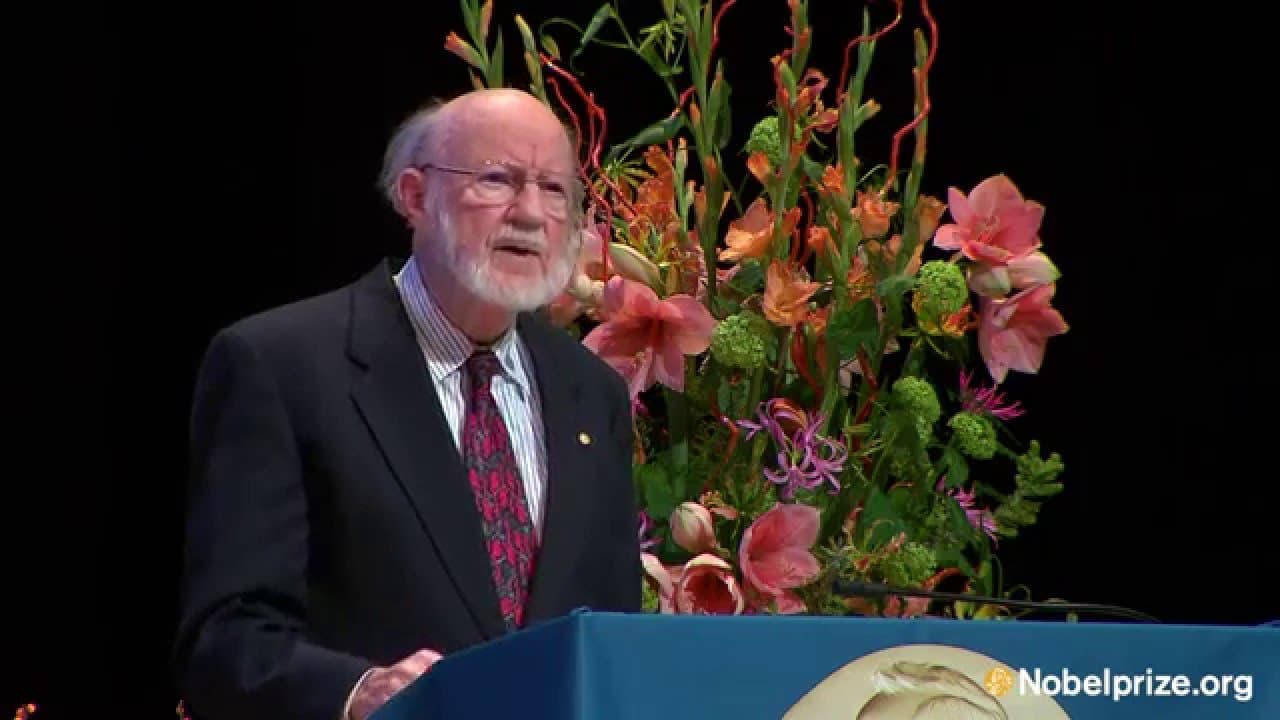
William C. Campbell - Nobel Lecture: Ivermectin: A reflection on simplicity
TL;DR
Ivermectin began with a simple test in which one worm-infected mouse ate food mixed with bacterially fermented liquid and was cured. That observation initiated years of complex, multidisciplinary research, producing a modified antiparasitic compound used in animal health, heartworm prevention, and investigations of parasites affecting people.
Transcript
William C cample received a ba from Trinity College University of Dublin in Ireland 1952 and a PhD from University of Wisconsin Madison Wisconsin in United States in 1957 he was with the Merk Institute for therapeutic research from 1957 and in 1984 he became the senior scientist and director for essay research and development cample is currently a ... Read More
Key Insights
- Simplicity is presented as a practical scientific tool, even though science and pharmaceutical development are not themselves simple. Campbell argues that a straightforward experiment can initiate discoveries whose later investigation demands many years, disciplines, and scientists.
- The foundational observation occurred on 9 May 1975, when one worm-infected mouse received food mixed with bacterially fermented liquid. After the altered diet ended and additional time passed, the mouse was found to have been cured of its worms.
- The active liquid contained metabolites produced while a bacterium multiplied and broke down surrounding nutrients. Satoshi Omura supplied the unfamiliar microbe to Merck, where researchers discovered that it produced an unfamiliar substance with potent activity against worm parasites.
- Single-mouse screening reduced each experimental group to one animal, allowing different fermented liquids to be tested individually. John Egerton developed the test method, while Dan Ostlind had pioneered the reduction of experimental group size that made this unusually simple approach possible.
- Ivermectin development became a multidisciplinary undertaking after the initial result. Microbiologists described a new Streptomyces species, fermentation researchers increased production, analytical chemists determined molecular structures, synthetic chemists improved the material, and parasitologists investigated its activity and mechanism.
- Ivermectin was created by hydrogenating the 22–23 bond of an avermectin molecule. The modification added hydrogen at those carbon atoms and produced 22,23-dihydroavermectin B1a, illustrating how chemists improved a complex molecule originally made by a microorganism.
- Paralysis is sufficient to remove susceptible parasitic worms because the host body can eliminate worms after they become immobilized. Campbell therefore distinguishes direct killing from a mechanism that incapacitates parasites while allowing the body to complete their removal.
- Ivermectin prevents dog heartworm by acting against a pre-adult phase rather than the adult worm. This limitation became beneficial because killing adult heartworms during routine treatment could be fatal to dogs, while laboratory life-cycle research supported development of once-monthly prevention.
Install to Summarize YouTube Videos and Get Transcripts
Explore YouTube Video Summarizer or Get YouTube Transcript Extractor
Questions & Answers
Q: How did the discovery process for ivermectin begin?
The process began with a simple experiment on 9 May 1975. A single mouse had been deliberately infected with worms without being made ill. Researchers mixed a bacterially fermented liquid into its regular food for almost a week, restored its normal diet, and later found that its worms were gone. That result initiated further scientific and developmental work.
Q: What was contained in the liquid given to the infected mouse?
The liquid had supported the multiplication of a bacterium, which broke down surrounding nutrients and produced multiple metabolites. The bacterium had been isolated and sent to Merck by Satoshi Omura. Researchers found that this unfamiliar microorganism produced an unfamiliar substance with potent activity against worm parasites, along with activity against some other parasites.
Q: Why was only one mouse used in the initial screening test?
The parasitology department used a screening method in which individual mice received diets altered with different fermented liquids. John Egerton developed the test method, and Dan Ostlind had pioneered reducing experimental groups to a single animal. Only one of those liquids cured its assigned mouse, revealing an active substance while using an unusually simple experimental arrangement.
Q: How did avermectin become ivermectin?
The bacterium initially produced a set of closely related molecules named avermectins, including a material also called abamectin. Synthetic chemists created a better version by hydrogenating the 22–23 bond between two carbon atoms. Adding hydrogen at those positions produced 22,23-dihydroavermectin B1a. The resulting modified compound received the name ivermectin.
Q: Which scientific disciplines contributed to ivermectin development?
Microbiologists described the bacterium as a new Streptomyces species. Fermentation chemists and biologists isolated the active substance and increased its production. Analytical chemists determined its chemical structure, synthetic chemists modified it, and parasitologists identified susceptible worms and studied how it affected them. Veterinary parasitologists then conducted trials involving many parasites, animal hosts, and countries.
Q: How does ivermectin affect parasitic worms?
The research described ivermectin as paralyzing susceptible parasitic worms. Directly killing the worms was not necessary because the host body could remove them after paralysis. Campbell treats paralysis as practically equivalent to killing from the parasite's perspective, while emphasizing that researchers investigated both which worms were affected and the biological basis of that effect.
Q: Why is ivermectin suitable for preventing dog heartworm?
Ivermectin is not active against the adult stage of dog heartworm, but researchers found that it acts against a pre-adult phase. This made preventive treatment possible. Campbell and Lindia Blair had established the mosquito-to-dog life cycle in the laboratory, enabling experiments that supported development of the first once-monthly treatment for preventing heartworm disease in dogs.
Q: Why can inactivity against adult dog heartworms be beneficial?
Killing adult heartworms during routine treatment can be dangerous and may result in the dog's death. Ivermectin's lack of activity against that adult stage is therefore useful rather than disqualifying. It avoids the unwanted adult-killing effect while remaining effective against a pre-adult phase, allowing the compound to be used regularly as a preventive agent.
Summary
Dr. William C. Campbell, a Nobel laureate, delivered a lecture titled "Ephemeral Medications: A Reflection on Simplicity" discussing the prominent role of simplicity in the discovery and development of the drug ivermectin. He shared a real-life event involving a mouse that was cured of worms through a simple experiment. He also emphasized the collaborative efforts and complexity involved in the research and development of ivermectin, which eventually led to its use in human and animal medicine. Dr. Campbell highlighted the significant impact of ivermectin in the treatment and prevention of river blindness, along with the need for continued scientific research and global health initiatives.
Questions & Answers
Q: How was ivermectin discovered?
Ivermectin was discovered through a simple experiment involving a mouse. On May 9, 1975, a mouse infected with worms was fed a liquid containing fermented bacteria. After a week, the mouse's regular diet was restored, and its worms were gone. This event set in motion a series of research and development activities that eventually led to the creation of ivermectin.
Q: What process was involved in the development of ivermectin?
The development of ivermectin involved several scientific disciplines and research stages. Microbiologists identified a new species of streptomyces bacterium that produced a substance with potent activity against worm parasites. Fermentation chemists and biologists isolated this substance, which was named avermectin. Analytical chemists determined the chemical structure of avermectin and synthetic chemists developed an even better version called ivermectin. The parasite-killing activity and mode of action of ivermectin were subsequently studied by parasitologists and biochemists.
Q: Why was ivermectin considered significant for the treatment of river blindness?
Ivermectin was considered significant for the treatment of river blindness because it showed efficacy against the microscopic larvae of the parasite Onchocerca volvulus, which causes the disease. Killing these larvae can prevent the progression of the disease and the associated symptoms, including blindness. This discovery led to the initiation of clinical trials in humans and subsequently to the donation of ivermectin by Merck & Co. for the control of river blindness.
Q: What challenges were faced during the distribution of ivermectin for the treatment of river blindness?
The distribution of ivermectin for the treatment of river blindness faced numerous challenges due to the complexity of logistics and involvement of various organizations. The World Health Organization, Merck's Mectizan Donation Program, and the Carter Center played roles in the distribution. The drug had to be delivered to remote and endemic areas, ensuring proper use and compliance with treatment regimens. Collaboration among different agencies and leaders proved vital in ensuring the successful distribution of ivermectin.
Q: How did the development of ivermectin impact animal health?
The development of ivermectin had a significant impact on animal health. It became the dominant anti-parasitic agent in veterinary medicine, particularly for the control of heartworm disease in dogs. ivermectin was also effective against other parasites in various host animals, improving their health and reducing economic losses in the agricultural sector.
Q: Why did Dr. Campbell emphasize the role of simplicity in science?
Dr. Campbell emphasized the role of simplicity in science to highlight its practical utility. While science itself may not be simple, simplicity often plays a crucial role in the genesis of scientific discoveries. Simple experiments and observations can yield profound insights and lead to significant advancements in various fields. In the case of ivermectin, the initial experiment with the mouse and other simple experiments laid the foundation for complex research and development processes.
Q: What is the significance of using microorganisms in drug discovery?
Using microorganisms in drug discovery is significant because they can produce molecules that humans cannot naturally synthesize. Microorganisms have unique biochemical capabilities that allow them to generate diverse and potent bioactive substances. By isolating and studying these microorganisms, scientists can discover new molecules with therapeutic potential, which can be further developed into drugs for various diseases.
Q: How did the discovery of ivermectin challenge traditional approaches to drug development?
The discovery of ivermectin challenged traditional approaches to drug development, particularly the screening of synthetic compounds. It demonstrated the importance of natural products, particularly those derived from microorganisms, as potential sources of therapeutic agents. This discovery highlighted the need to explore and harness the potential of biodiversity in drug discovery efforts.
Q: What were some of the challenges faced during the research and development of ivermectin?
The research and development of ivermectin faced several challenges, including the identification and isolation of the specific microorganism responsible for producing the active substance, the optimization of the fermentation process to increase substance production, and the determination of the chemical structure of the compound. Additionally, conducting clinical trials to demonstrate the safety and efficacy of ivermectin in humans and establishing distribution programs for mass administration were complex endeavors.
Q: What recommendations did Dr. Campbell make for future research in the field?
Dr. Campbell recommended broader exploration of microorganisms as sources of natural products for the development of chemotherapeutic agents. He highlighted the importance of supplementing mass treatment programs with new molecules and emphasized the need to develop effective antiparasitic vaccines. Additionally, he urged the consideration of public health measures that can disrupt parasite life cycles more subtly and without relying solely on chemical agents.
Takeaways
Dr. William C. Campbell's lecture highlighted the significance of simplicity in scientific discoveries and the development of drugs like ivermectin. Despite the complexity involved in pharmaceutical development, simplicity often underlies the initial scientific insights that pave the way for breakthroughs. The discovery of ivermectin and its subsequent use in the treatment of river blindness showcased the collaborative efforts of scientists from various disciplines and the global health initiatives aimed at improving the lives of affected populations. Dr. Campbell stressed the importance of continued research, exploration of natural products, and the development of effective vaccines and non-chemical control measures to address prevalent diseases and promote global health.
Summary & Key Takeaways
-
Campbell presents simplicity as a source of practical scientific value rather than merely beauty. His central example is a single mouse experiment conducted on 9 May 1975. After eating food containing a bacterially fermented liquid, the infected mouse lost its worms, setting a much larger research and development process in motion.
-
The active material came from an unfamiliar bacterium supplied by Satoshi Omura. Microbiologists classified it, fermentation specialists increased its production, analytical chemists determined the structures of related molecules called avermectins, and synthetic chemists hydrogenated a 22–23 bond to create the improved derivative that became known as ivermectin.
-
Development required expertise extending far beyond the initial screening experiment. Parasitologists studied susceptible worms and their paralysis, while veterinary researchers tested ivermectin across parasites, host animals, and countries. Its inactivity against adult dog heartworms became advantageous because killing adults during routine treatment could endanger dogs, supporting preventive use against a pre-adult phase.
Read in Other Languages (beta)
Share This Summary 📚
Summarize YouTube Videos and Get Video Transcripts with 1-Click
Try YouTube Summary with ChatGPT & Claude or YouTube Transcript Generator
Explore More Summaries from Nobel Prize 📚



Summarize YouTube Videos and Get Video Transcripts with 1-Click
Try YouTube Summary with ChatGPT & Claude or YouTube Transcript Generator