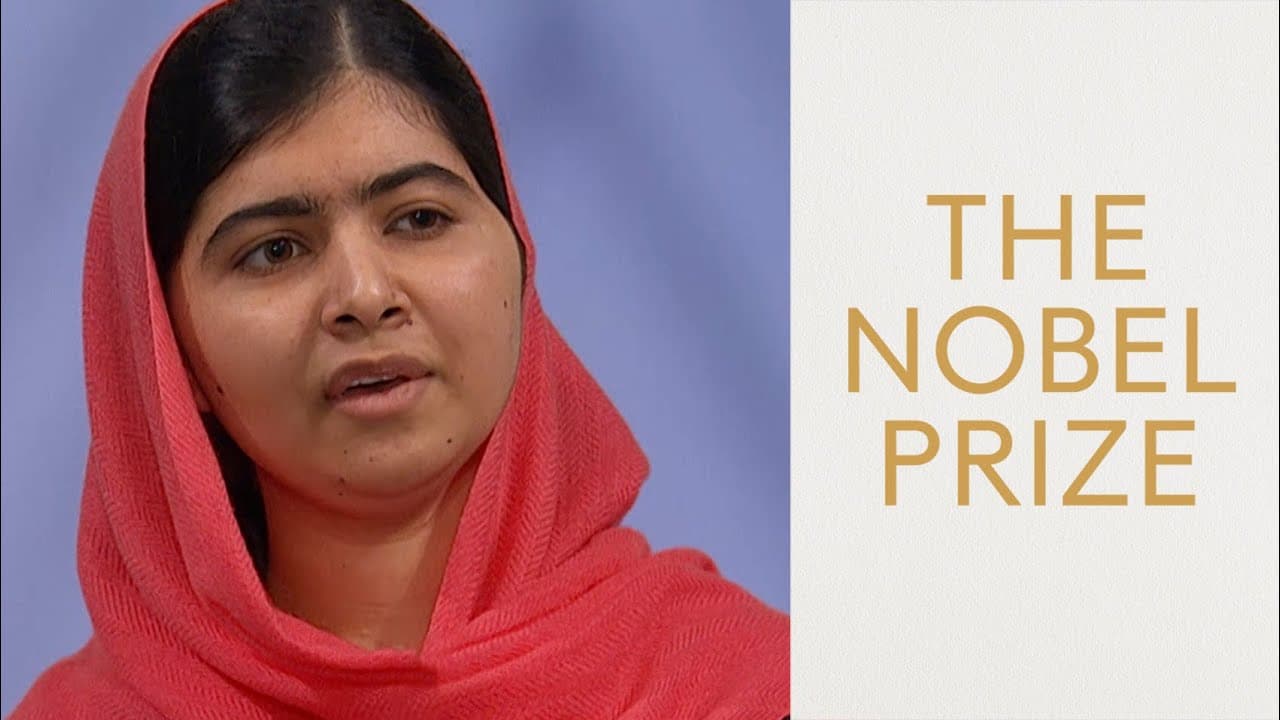
Malala Yousafzai: Nobel Peace Prize Lecture 2014
TL;DR
Every child deserves free, quality primary and secondary education, and world leaders must make it their top priority. Malala Yousafzai dedicated her Nobel Peace Prize money to the Malala Fund to build girls' schools, starting in Swat, Pakistan, and spoke for 66 million girls denied schooling worldwide.
Transcript
Malala yourself sigh I call upon you to come forward and give your noble lecture thank you sir bismillahirrahmanirrahim in the name of God the most merciful the most beneficent your Majesties your Royal Highnesses distinguished members of the Norwegian Nobel Committee dear sisters and brothers today is the day of great happiness for me I'm humbled ... Read More
Key Insights
- Malala Yousafzai is the first Pakistani, the youngest person, and the first Nobel Peace Prize recipient who still fights with her younger brothers, receiving the award for standing up for children's education rights.
- The award is not just for Malala but for forgotten, frightened, and voiceless children who want education, peace, and change, and it is time to take action rather than pity them.
- Malala's home region of Swat changed from a place of tourism and beauty into a place of terrorism when she was 10, when more than 400 schools were destroyed, women were flogged, and people were killed.
- Faced with terrorism, Malala had two options: remain silent and wait to be killed, or speak up and be killed. She chose to speak up, and after being shot on her school bus in 2012, her voice grew louder.
- Malala represents 66 million girls deprived of education worldwide, saying she is not a lone voice but many, including sisters Shazia, Kainat, Mezon from Syria, and Amina from Nigeria.
- The Malala Fund receives her Nobel Peace Prize money to give girls quality education everywhere, starting by building schools in Pakistan, especially in her home of Swat and Shangla where there is still no secondary girls' school.
- Malala argues the world can no longer accept that basic education is enough, questioning why developing-country children get only basic literacy while leaders' own children study algebra, science, and physics.
- In 2015, world representatives will meet at the United Nations to set Sustainable Development Goals, and Malala urges leaders to guarantee free quality primary and secondary education for every child.
Install to Summarize YouTube Videos and Get Transcripts
Explore YouTube Video Summarizer or Get YouTube Transcript Extractor
Questions & Answers
Q: Why did Malala Yousafzai receive the Nobel Peace Prize?
Malala Yousafzai received the Nobel Peace Prize for standing up for children's education rights. She became the first Pakistani, the youngest person, and the first recipient who still fights with her younger brothers. She shared the award with Kailash Satyarthi, a long-time champion for children's rights, showing that an Indian and a Pakistani can work together to achieve their goals of children's rights and quality education for all.
Q: What happened to Malala in Swat and why did she start speaking up?
When Malala was 10, her home region of Swat changed from a place of tourism and beauty into a place of terrorism. More than 400 schools were destroyed, women were flogged, and people were killed, turning education from a right into a crime. Faced with two options, remaining silent and waiting to be killed or speaking up and being killed, she chose to speak up against the terrorists who were misusing the name of Islam.
Q: What did Malala do with her Nobel Peace Prize money?
Malala dedicated her Nobel Peace Prize money to the Malala Fund to help give girls quality education everywhere in the world and raise their voices. The first place the funding will go is Pakistan, especially her home of Swat and Shangla, where there is still no secondary school for girls. She made it her wish, commitment, and challenge to build one so her friends and sisters can fulfill their dreams.
Q: How many girls are deprived of education according to Malala?
Malala stated that there are 66 million girls deprived of education worldwide. She emphasized that though she appears as one girl, five foot two inches tall including her high heels, she is not a lone voice but many. She said she raises the voice of those 66 million girls, along with her sisters Shazia, Kainat, Kainat Soomro, Mezon, and Amina, who represent children denied their right to schooling.
Q: What does Malala say the Quran teaches about violence and education?
Malala cited that in the Holy Quran, Allah says if you kill one person it is as if you kill the whole of humanity. She noted that Muhammad, the prophet of mercy, says do not harm yourself or others. She also pointed out that the very first word of the Holy Quran is 'iqra,' which means 'read,' arguing that the terrorists were misusing the name of Islam by denying rights and killing people.
Q: What challenges keep children out of school besides conflict?
Beyond war, poverty, and injustice, Malala described how many children, especially in India and Pakistan, are deprived of education because of social taboos, forced child marriage, or child labour. She cited a school friend her own age who dreamed of becoming a doctor but was forced to marry at 12 and had a child at 14. Many children in Africa also lack access to education because of poverty.
Q: What does Malala ask world leaders to do about education?
Malala asks world leaders to unite and make education their top priority. She notes that in 2015, representatives from around the world will meet at the United Nations to set the Sustainable Development Goals. She argues the world can no longer accept that basic education is enough for developing-country children, and urges leaders to guarantee free quality primary and secondary education for every child.
Q: Why does Malala argue education for every child is possible?
Malala argues that we live in the modern age where nothing is impossible. She questions why countries called strong are powerful in creating wars but weak in bringing peace, why giving guns is easy but giving books is hard, and why making tanks is easy but building schools is hard. She notes humanity reached the moon 45 years ago and may soon land on Mars, so it must be able to give every child quality education.
Summary
In her Nobel Peace Prize acceptance speech, Malala Yousafzai expresses her gratitude for the award and acknowledges the support she has received from people around the world. She credits her parents, teachers, and the influence of Islam for shaping her commitment to education and advocating for children's rights. Despite being shot by the Taliban and facing numerous challenges, she emphasizes that her story is not unique and represents the struggles of many girls globally. Malala asserts that education is a fundamental right and calls on world leaders to prioritize providing quality education for all children. She also announces her dedication of the Nobel Peace Prize money to the Malala Fund, which aims to empower girls through education.
Questions & Answers
Q: Who inspired Malala to be patient and speak the truth?
Malala thanks her mother for inspiring her to be patient and to always speak the truth, which she believes is the true message of Islam.
Q: In what way does Malala feel proud to be the recipient of the Nobel Peace Prize?
Malala expresses her pride in being the first person from Pakistan and the youngest person ever to receive the Nobel Peace Prize. She also humorously mentions that she is proud to be the first recipient who still fights with her younger brothers.
Q: Why does Malala consider herself to be one among many rather than a lone voice?
Malala emphasizes that she is not a lone voice, but rather represents the many girls who are deprived of education. She mentions the names of some of the girls she has met from Pakistan, Nigeria, and Syria, who have faced similar challenges in their pursuit of education.
Q: Why did Malala decide to speak up instead of remaining silent?
Malala believes that remaining silent and waiting to be killed was not an option. She and her friends decided to raise their voices against the injustices committed by the Taliban and to remind them of the teachings of Islam, which condemn violence and emphasize the importance of education.
Q: How did Malala's world change when she was 10 years old?
Malala's peaceful hometown of Swat in Pakistan turned into a place of terrorism when she was 10 years old. Over 400 schools were destroyed, women were flogged, and people were killed. The dream-like atmosphere turned into a nightmare, and education became a crime.
Q: Why does Malala believe that girls should have the right to education?
Malala believes that the more important question is why girls shouldn't have the right to education. She argues that denying girls this right is unjust and limits their opportunities and potential, perpetuating poverty and inequality.
Q: What issues does Malala highlight as ongoing problems in many countries?
Malala points out that many countries still suffer from war, poverty, and injustice. She mentions conflicts, refugee crises, and the lack of education due to social taboos, child marriage, and child labor as some of the issues affecting children's rights globally.
Q: What personal story led Malala to dedicate her Nobel Peace Prize money to the Malala Fund?
Malala shares the story of her school friend, who dreamed of becoming a doctor but was forced into marriage at the age of 12 and became a mother at 14. This personal example reflects the challenges girls face in pursuing their dreams due to gender discrimination and societal barriers.
Q: Where does Malala plan to allocate the funding from the Malala Fund?
Malala intends to use the funding to build schools in her home region of Swat in Pakistan, where there is currently no secondary school for girls. She is committed to providing quality education and opportunities for girls to fulfill their dreams.
Q: What does Malala ask of world leaders in her speech?
Malala calls on world leaders to prioritize education and make it their top priority. She urges them to guarantee free quality primary and secondary education for every child, not just basic literacy. She voices her hope that the sustainable development goals set by the United Nations will reflect this commitment.
Takeaways
In her powerful speech, Malala Yousafzai emphasizes the importance of education as a basic right for all children, particularly girls who face additional barriers. She calls on world leaders to prioritize education and take action to ensure that every child has access to quality education. Malala's story of resilience and determination serves as an inspiration and a reminder that collective efforts are necessary to bring about lasting change.
Summary & Key Takeaways
-
Malala Yousafzai accepts the Nobel Peace Prize, thanking her parents, teachers, and supporters. She notes she is the first Pakistani, youngest recipient, and shares the award with Kailash Satyarthi, demonstrating that an Indian and a Pakistani can work together for children's rights.
-
Growing up in Swat, Malala loved learning until terrorism destroyed over 400 schools when she was 10. Rather than stay silent, she chose to speak up. After being shot on her school bus in 2012, her voice only grew louder against injustice.
-
Malala dedicates her prize money to the Malala Fund to build girls' schools, beginning in Pakistan. She calls on world leaders to make education their top priority and guarantee free quality primary and secondary education for every child by the 2015 UN goals.
Read in Other Languages (beta)
Share This Summary 📚
Summarize YouTube Videos and Get Video Transcripts with 1-Click
Try YouTube Summary with ChatGPT & Claude or YouTube Transcript Generator
Explore More Summaries from Nobel Prize 📚
Summarize YouTube Videos and Get Video Transcripts with 1-Click
Try YouTube Summary with ChatGPT & Claude or YouTube Transcript Generator