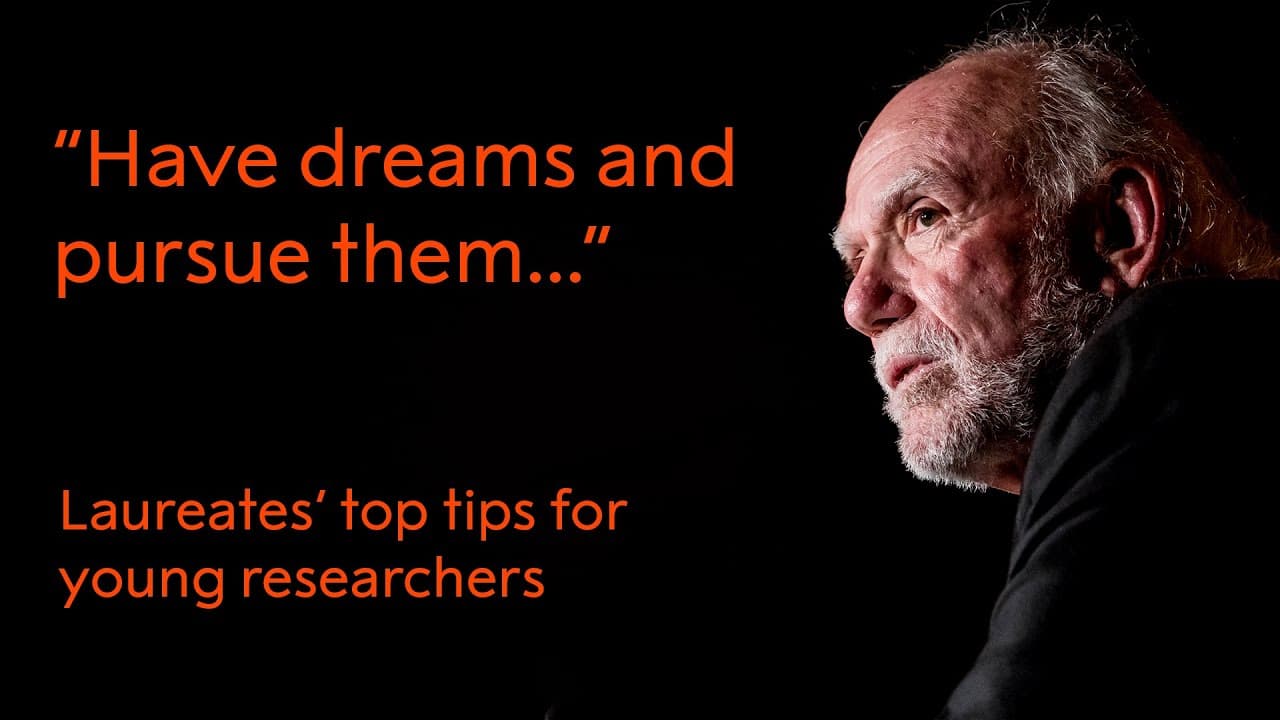
Kip Thorne, Barry Barish and Rainer Weiss: Nobel Laureates' advice for young researchers
Transcript
Read and summarize the transcript of this video on Glasp Reader (beta).
Install to Summarize YouTube Videos and Get Transcripts
Explore YouTube Video Summarizer or Get YouTube Transcript Extractor
Summary
In this video, the speaker provides advice on pursuing a career in science. They emphasize the importance of being ready and willing to work hard, avoiding the need for instant gratification, and being open to menial tasks. They also recommend exploring labs and talking to professionals to find opportunities to work on real problems. The speaker encourages having dreams and pursuing them, even if they may not be fully achieved. They conclude by advising finding a direction that one absolutely loves, comparing it to finding a job that is like play.
Questions & Answers
Q: What qualities should one have for pursuing a career in science?
One should be ready, willing, and eager to work very hard. The speaker emphasizes that a strong work ethic is essential and that individuals should not have a need for instant gratification. They mention that working on menial tasks can be a part of the process, but it is necessary to be able to see the bigger picture and understand the value of hard work.
Q: How can one gain practical experience in science?
The speaker advocates for the apprentice system, where aspiring scientists should seek opportunities to work in labs and research facilities. They recommend sniffing around labs, talking to graduate students, and engaging with professionals working on real problems. By doing so, individuals can learn from experienced researchers, assist them with various tasks, and gain hands-on experience in the field.
Q: How important is it to ask questions in the pursuit of science?
Asking questions is crucial in the pursuit of science. The speaker suggests asking a lot of questions but cautions against becoming a nuisance. By asking questions, individuals can expand their knowledge, gain insights from experts, and learn what they need to progress in their scientific endeavors. Asking purposeful questions helps in understanding concepts and problem-solving.
Q: What advice is given regarding dreams and aspirations?
The speaker encourages having dreams and pursuing them wholeheartedly. They highlight the importance of hard work in pursuing one's dreams. Although there is no guarantee of always reaching those dreams, the process itself brings satisfaction and fulfillment. Even if the ultimate objectives may not be achieved, the journey towards them can be immensely gratifying and rewarding.
Q: What advice does the speaker give to someone interested in becoming a physicist?
The speaker advises finding a direction that one absolutely loves. They recall the advice they received from their own grandfather, who told them that finding a job that feels like play is the key to success in life. Thus, for someone interested in physics or any other field, it is essential to identify and pursue a path that brings immense joy and passion.
Q: How would the speaker feel if their 20-year pursuit of something did not reach their dreams?
The speaker states that they would not have any regrets because the entire process of pursuing something they were passionate about was fun. Even if the ultimate dreams were not fully realized, the satisfaction and enjoyment derived from working towards those objectives made it worthwhile. They emphasize that pursuing something with clear objectives has its own rewards, regardless of whether they are fully achieved.
Q: What is the significance of the "apprentice system" in science?
The "apprentice system" is highly valued in the scientific community. It allows aspiring scientists to gain practical experience, learn from experienced professionals, and contribute to ongoing research. By participating in the apprentice system, individuals can acquire knowledge, hone their skills, and lay the foundation for a successful career in science.
Q: How does the speaker view the pursuit of dreams that may not be fully achieved?
The speaker believes that pursuing dreams, even if they are not fully achieved, is still worthwhile. They emphasize that the journey towards those dreams brings its own kind of satisfaction and fulfillment. Even if the ultimate objectives are not reached, there are many valuable experiences and lessons learned along the way that contribute to personal and professional growth.
Q: What advice does the speaker give to individuals unsure about their career path in science?
The speaker advises individuals unsure about their career path in science to explore different options. They recommend sniffing around labs, talking to professionals, and discovering potential areas of interest. By actively seeking out opportunities and learning from others, individuals can gain clarity and make informed decisions about their future in science.
Q: What is the overall message conveyed by the speaker?
The overall message conveyed by the speaker is to be willing to work hard, pursue dreams, and find a direction that one absolutely loves. They stress the importance of having a strong work ethic, being open to learning from others, and staying passionate throughout the journey. While there are no guarantees of always reaching one's dreams, the satisfaction and fulfillment derived from the pursuit itself make it all worthwhile.
Takeaways
Pursuing a career in science requires a strong work ethic, a willingness to work hard, and perseverance. The process may involve menial tasks, but being able to see the bigger picture and understand the value of hard work is crucial. Gaining practical experience through the apprentice system, exploring labs, and talking to professionals allows individuals to learn from experienced researchers and work on real problems. Having dreams and pursuing them wholeheartedly, even if they may not be fully achieved, brings satisfaction and fulfillment. It is essential to find a direction that one absolutely loves, as finding a job that feels like play is the key to success in life. Ultimately, the journey itself holds immense value, filled with satisfying experiences and personal growth.
Read in Other Languages (beta)
Share This Summary 📚
Summarize YouTube Videos and Get Video Transcripts with 1-Click
Try YouTube Summary with ChatGPT & Claude or YouTube Transcript Generator
Explore More Summaries from Nobel Prize 📚


Summarize YouTube Videos and Get Video Transcripts with 1-Click
Try YouTube Summary with ChatGPT & Claude or YouTube Transcript Generator