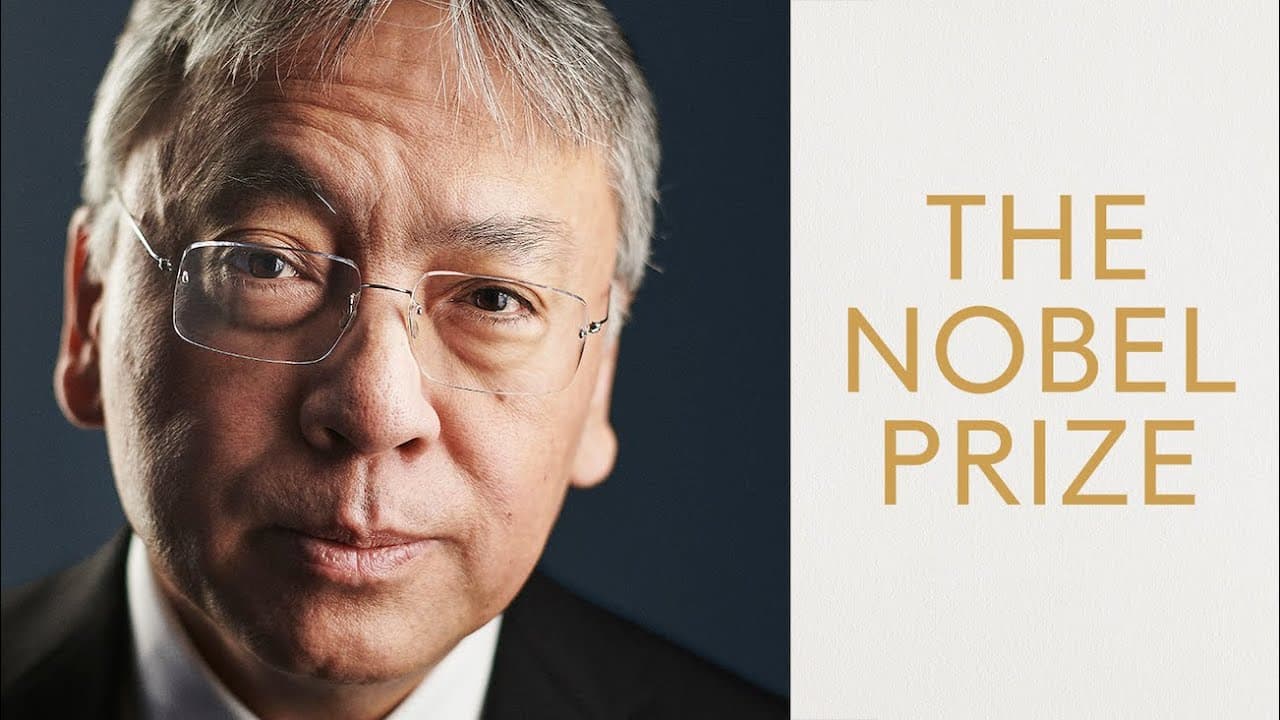
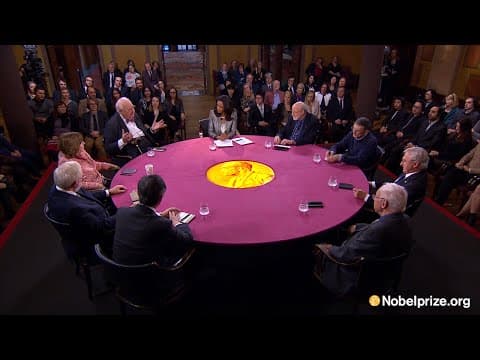
Kazuo Ishiguro, Nobel Prize in Literature 2017: Official interview
TL;DR
Writers should follow the emotional needs of an idea and use any setting or genre that helps it work. Kazuo Ishiguro connects his fiction to personal and national memory, reflects on the responsibilities attached to the Nobel Prize, and describes songwriting as his apprenticeship in using a few carefully chosen words to create entire worlds.
Transcript
well I mean until until October it was something that yeah very great people and I in my imagination you know I always thought give older people one and it wasn't it wasn't anything I would win but I mean but I'm going to say this when I deliver my banquet speech later but I first heard about the Nobel Prize when I was a small child in Japan and my... Read More
Key Insights
- The Nobel Prize represents the greatest kind of honor in Ishiguro's imagination because he learned about it as a child in Japan and deeply respects both the institution and the literature laureates who preceded him.
- A Nobel laureate becomes a public role model beyond the usual readership of a writer. Ishiguro recognizes that this expanded position brings responsibility, greater scrutiny, and invitations to support campaigns or participate in discussions outside his professional qualifications.
- Public recognition does not create expertise in every subject. Ishiguro plans to remain disciplined about speaking only on matters he knows, following advice from previous laureates and resisting platforms for which he lacks appropriate knowledge.
- A prize earns credibility through the integrity and values of those who award it and through the history of its recipients. Ishiguro warns that prizes can also function as promotional devices, institutional tools, or vehicles for political ideas.
- The Nobel Prize embodies ideals extending beyond achievement in a specialist field. Ishiguro associates its high standard with peace, cooperation among people, and humanity's effort to improve civilization rather than with corporate or institutional promotion.
- Memory in Ishiguro's earlier fiction often involves older individuals who discover that they supported the wrong values or causes. Their late perspective forces them to ask whether confidence in mistaken principles has rendered their lives wasted.
- National memory creates a difficult balance between confronting suppressed injustice and perpetuating inherited conflict. Ishiguro observes that forgotten wrongdoing can leave societies unsettled, while relentless remembrance of old atrocities can sustain hatred across generations.
- Genre is a tool chosen to serve an emotional idea, not Ishiguro's starting point. He compares his process to assembling a flying machine from anything available, borrowing settings and conventions until the story successfully expresses its central concern.
Install to Summarize YouTube Videos and Get Transcripts
Explore YouTube Video Summarizer or Get YouTube Transcript Extractor
Questions & Answers
Q: What did the Nobel Prize mean to Kazuo Ishiguro?
The Nobel Prize represented an unusually profound honor to Kazuo Ishiguro because it had occupied his imagination since childhood. He remembered his mother explaining its history to him in Japan, and he came to regard it as perhaps the greatest prize a person could receive. His response also reflected deep respect for the institution and for the literature laureates honored since 1901.
Q: How did becoming a Nobel laureate change Ishiguro's public role?
Becoming a Nobel laureate made Ishiguro more conscious that he occupied a public position beyond being a writer known mainly to readers interested in literature. He began receiving requests to sign petitions, support campaigns, and join discussions that would not previously have included him. He therefore saw a need to adjust carefully to greater responsibility and expectations as a role model.
Q: Why does Ishiguro avoid speaking outside his expertise?
Ishiguro believes public recognition should not be mistaken for expertise. After the Nobel announcement, he received invitations to participate in activities and discussions for which he felt unqualified. Previous laureates advised him to choose platforms carefully, and he adopted the principle that he would speak only about subjects he understood. He considers unqualified people presenting themselves as experts a broader problem in the world.
Q: How does Ishiguro judge whether a prize deserves respect?
Ishiguro judges a prize by two main standards: the integrity and values of the people or institution awarding it, and the history of its previous recipients. He notes that prizes can promote companies, organizations, institutions, or political ideas, sometimes subtly. Before accepting one, he asks whether he respects its underlying values and whether he wants to help promote what it represents.
Q: Why does Ishiguro consider the Nobel Prize especially important?
Ishiguro considers the Nobel Prize especially important because he believes it has captured global imagination as an expression of human ideals rather than merely as a promotional instrument. He associates it with peace, cooperation among people, and efforts to improve civilization. Its importance also comes from an institution he respects and a history of literature winners that includes many of his personal heroes.
Q: Why are memory and regret recurring themes in Ishiguro's fiction?
Ishiguro became fascinated by people who reach late middle age or old age and reconsider lives they had previously viewed with pride. Such characters may realize they supported mistaken values or causes and then wonder whether their lives were wasted. This conflict between long-held self-belief and a later, more troubling perspective shaped several of his novels and his treatment of personal memory.
Q: How does Ishiguro connect personal memory with national history?
Ishiguro extended his interest in individual memory to societies and nations that must confront dark or shameful histories. He asks when painful events should be examined and when continued remembrance might prolong conflict. Suppressed histories can leave a society unable to make peace with itself, yet inherited memories of atrocities can also sustain cycles of hatred long after the original events occurred.
Q: How did songwriting influence Kazuo Ishiguro's fiction?
Songwriting served as Ishiguro's apprenticeship for fiction. Beginning in his teenage years, he wrote more than one hundred songs with a guitar and played them with friends. Listening to Bob Dylan at thirteen showed him that a few words could mysteriously create entire worlds, while Leonard Cohen and Joni Mitchell deepened his interest in literary songwriting. In his twenties, that creative energy shifted naturally into short stories.
Summary
In this video, the Nobel laureate Kazuo Ishiguro discusses various aspects of his career and influences. He talks about the importance of the Nobel Prize, being a role model, and his responsibility as a public figure. He also shares his thoughts on prizes and their use as promotional tools. Ishiguro reflects on his writing process and how he chooses genres for his work. He discusses his early influences from the world of music, his transition from songwriting to fiction, and the importance of collaboration. He mentions Charlotte Bronte as a major literary influence and shares his thoughts on other writers like Dostoevsky, Kafka, Beckett, and Pinter. Lastly, Ishiguro mentions the influence of his wife in his writing and shares advice for aspiring writers.
Questions & Answers
Q: What are Ishiguro's thoughts on being a role model?
Ishiguro believes that it is important not to be too self-conscious about being a role model. While he has always had a sense of responsibility as a public figure and writer, winning the Nobel Prize has made him more conscious of this role. He acknowledges that he now occupies a special position as a Nobel laureate and feels that he needs to be careful and only talk about things he knows about.
Q: How does Ishiguro perceive the importance of prizes like the Nobel Prize?
Ishiguro believes that the importance of any prize depends on the integrity of the people who give the prize and the history of past winners. He recognizes that prizes are often used as promotional tools or to promote political ideas. He personally turns down prizes that he believes are not aligned with his values and respects the values and past winners associated with the Nobel Prize.
Q: What themes and questions interest Ishiguro in his writing?
Ishiguro has been fascinated by individuals who struggle with their past and memories, questioning whether their lives have been wasted or if they lived by the wrong values. As he developed as a writer, he became interested in applying this question to societies and nations. He explores the struggles of nations dealing with dark or shameful memories and how it affects their present state. He particularly focuses on issues of suppressed memories and tensions within Europe, America, and Japan.
Q: How does Ishiguro choose genres for his writing?
Ishiguro explains that he does not start off with a specific genre in mind. Instead, he starts with a particular project and an abstract idea that doesn't yet have a setting. He then looks through history and different genres to find the best way to express the story. He emphasizes that he does not think about genre from the outside, but rather focuses on expressing the particular idea and only realizes the genre afterward.
Q: How did Ishiguro's interest in writing develop?
Ishiguro initially had a big ambition to be a songwriter rather than a writer. He spent a lot of time writing songs in his bedroom with a guitar, inspired by artists like Bob Dylan, Leonard Cohen, and Joni Mitchell. However, after years of getting nowhere professionally as a singer-songwriter, he made a transition to writing short stories. Once he started writing fiction, his work was accepted and published, leading him to focus on fiction writing. Nevertheless, he continues to write song lyrics for jazz singer Stacey Kent, maintaining his connection to songwriting.
Q: Who are Ishiguro's major literary influences?
Ishiguro's major literary influence is Charlotte Bronte, particularly her books Jane Eyre and Villette. He reread these books and recognized elements he had unknowingly borrowed from them. The use of first-person narration and the idea of hidden narratives in Bronte's work became the foundation for Ishiguro's writing. He also mentions writers like Dostoevsky, Kafka, Beckett, and Pinter as influential in terms of deviating from conventional realism and exploring distortions in reality.
Q: Who has had a significant influence on Ishiguro's writing?
Ishiguro's wife, Lorna, has had a deep influence on his writing. As they were together before he started writing fiction, she has seen his growth as a writer from the very beginning. She doesn't view him as a famous author but as the post-graduate student who had an ambition to write fiction. Lorna's perspective and brutal criticism have been valuable in keeping Ishiguro grounded and helping him avoid becoming complacent as a writer.
Q: What advice does Ishiguro offer aspiring writers?
Ishiguro suggests that aspiring writers ask themselves if they genuinely want to write or if they merely desire the status or position of being a writer. He believes that many people have ambitions to be writers without actually wanting to write. It is crucial to have a special relationship with writing and a desire to create something worthwhile, regardless of commercial success or publication. Ishiguro advises aspiring writers to clarify their motives and understand if writing is genuinely their passion.
Takeaways
Kazuo Ishiguro discusses various aspects of his career, sharing insights into his writing process, influences, and advice for aspiring writers. He emphasizes the importance of being a responsible role model and staying true to one's values. Ishiguro highlights the significance of the Nobel Prize, the integrity of prizes, and the importance of memory and acknowledgment in societies. He also reflects on the impact of his wife as a trusted critic and collaborator. Overall, Ishiguro's journey as a writer underscores the need for a genuine passion for writing and a unique relationship with the craft.
Summary & Key Takeaways
-
Kazuo Ishiguro regards the Nobel Prize as an exceptional honor because he respects the institution, its values, and its history of literature laureates. The award also gives him a broader public role, but he intends to speak only on subjects he understands rather than accept every invitation created by his new status.
-
Memory in Ishiguro's work developed from individuals reconsidering their values late in life to societies confronting dark or shameful histories. He explores whether remembering can resolve suppressed injustice or perpetuate hatred, acknowledging that both forgetting and refusing to address the past can create serious tensions within nations and between generations.
-
Ishiguro begins with an abstract emotional situation rather than a predetermined genre, period, or location. He searches history and literary forms for whatever best expresses the idea. His earlier songwriting, influenced by lyricists who created worlds with few words, became an apprenticeship that naturally led to writing short stories in his twenties.
Read in Other Languages (beta)
Share This Summary 📚
Summarize YouTube Videos and Get Video Transcripts with 1-Click
Try YouTube Summary with ChatGPT & Claude or YouTube Transcript Generator
Explore More Summaries from Nobel Prize 📚

Summarize YouTube Videos and Get Video Transcripts with 1-Click
Try YouTube Summary with ChatGPT & Claude or YouTube Transcript Generator