Why Is Saudi Arabia Losing Oil Control Now?
TL;DR
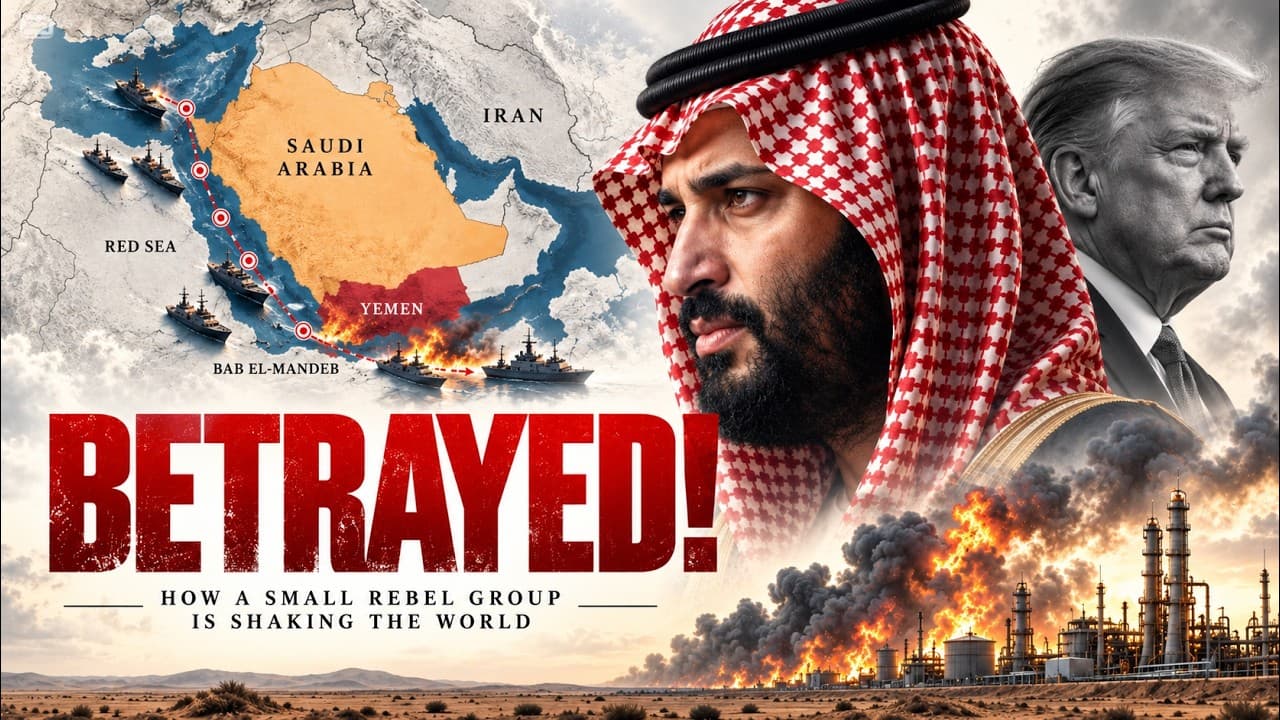
Saudi Arabia faces a double pressure from attacks on its oil routes and islands that chok e both lifelines to export markets. The video explains how cheap drones strain expensive defenses, why the Houthis and Iran are key actors, and how historical US involvement shapes the current standoff and potential global economic impact.
Transcript
Ladies and gentlemen, the Kingdom of Saudi Arabia is under attack. And this time [music] it has disrupted their entire oil supply in such a way that Saudi Arabia is now struggling to sell its own oil to the world. >> Saudi Arabia has shut down a crucial oil pipeline. >> [music] >> Houthi forces have hit sensitive locations in Riyad. >> And surprisi... Read More
Key Insights
- Saudi Arabia has two main oil export lifelines: Hormuz and Babel Mandeb, which are vulnerable to Iran and Yemen controlled forces. They become chokepoints that can disrupt global oil flows.
- Cheap drones pose a strategic cost problem because interceptors are expensive, forcing a choice between defense spending and protecting facilities, potentially accelerating supply shocks when scale matters.
- Houthi activity, funded by Iran, targets Saudi oil infrastructure and ports, transforming asymmetric warfare into a major regional risk with global price implications.
- Islands near Bab el Mandeb, such as Mayun, Zukar, and Hanish, act as force multipliers by enabling surveillance and blocking shipping routes, increasing the strategic value of small holdings.
- The 1945 US Saudi oil deal framed as a promise to keep oil flowing and protect Saudi security underpins the political lens through which current tensions are viewed.
- Saudi Arabia’s East West pipeline was built as a strategic backup to bypass Hormuz, highlighting long term planning but also exposing new vulnerabilities when multiple routes fail.
- The video argues that the side with cheaper weapons and good geography can outlast the other financially, redefining success in modern warfare beyond sheer weapon superiority.
- Global oil prices can surge when key chokepoints are disrupted, even if the underlying supply remains intact, illustrating the price sensitivity of international energy markets.
- More videos from this channel:
- More from this channel: Think School
Install to Summarize YouTube Videos and Get Transcripts
Explore YouTube Video Summarizer or Get YouTube Transcript Extractor
Questions & Answers
Q: What is causing Saudi Arabia to lose control over its oil in the video’s scenario?
The video describes a scenario where Houthi forces, backed by Iran, launch attacks on Saudi oil infrastructure and block important shipping routes, especially around the Bab el Mandeb Strait and the Hormuz corridor. This combination disrupts exports and challenges Saudi Arabia’s ability to keep oil flowing, creating a strategic and economic pressure that reverberates globally.
Q: Why are the Hormuz Strait and Bab el Mandeb crucial for global oil supply?
Both passages are chokepoints through which a large portion of the world’s oil travels. The Hormuz Strait blocks a route from Saudi fields, while Bab el Mandeb controls access from the Red Sea to Asia. Disruptions at either point can raise prices and tighten supply, affecting international markets and economic stability.
Q: How do cheap drones affect Saudi Arabia’s defense strategy in the video?
Cheap drones compel Saudi Arabia to decide between spending millions on interceptors or allowing drones to strike facilities, a trade off that can exhaust interceptors quickly. This dynamic illustrates how inexpensive weapons can magnify damage while eroding traditional defense budgets and creating financial strain during sustained attacks.
Q: What role does Iran play in the described conflict?
Iran is depicted as funding the Houthi rebels, enabling attacks on Saudi territory and its shipping routes. This support helps explain how a non state actor could challenge a major regional power, complicating USSaudi relations and increasing the strategic stakes of Middle East geopolitics.
Q: What is the significance of the Red Sea islands mentioned in the video?
The islands near Bab el Mandeb, such as Mayun, Zukar, and Hanish, are strategically valuable because they enable control and surveillance over shipping lanes. Their capture by the Houthis heightens the vulnerability of the Bab el Mandeb route and intensifies the struggle for regional dominance.
Q: What historical agreement influences the current USSaudi dynamic according to the video?
The video references a 1945 meeting between Franklin Roosevelt and the Saudi king, suggesting a long standing informal pact to keep oil flowing in exchange for security guarantees from the United States. This framing provides a lens for understanding why Saudi Arabia seeks American support during crises.
Q: How does the video describe the impact of military and economic power on warfare today?
The video argues that modern warfare is driven by cost efficiency and geography as much as technological superiority. A country with cheaper, well positioned weapons can outpace wealthier opponents by depleting their high cost interceptors and infrastructure, altering traditional combat dynamics and strategic calculations.
Q: What broader question frames the video’s exploration of the Middle East crisis?
The video asks why a poorer rebel movement can threaten a wealthier power, why the United States appears silent at times, and what islands and chokepoints mean for the global economy. This framing situates the crisis at the intersection of geopolitics, economics, and international alliances, highlighting the fragility of energy security.
Summary & Key Takeaways
-
Saudi Arabia relies on two export routes, the Hormuz Strait and the Bab el Mandeb channel, which are now contested by Iran and Houthi forces. The disruption triggers higher prices and forces Saudi Arabia to weigh costly interceptors against damaged facilities, reshaping modern warfare economics.
-
The Houthis are capable of capturing islands and attacking key oil infrastructure, redefining regional power dynamics and testing long standing US support arrangements. This shifts the strategic calculus for protecting global oil supply and highlights how geography and cheap weapons influence warfare outcomes.
-
The video links historical promises between the US and Saudi Arabia to ongoing strategic choices, showing how diplomacy, defense, and energy policy intersect when a regional crisis disrupts global markets and tests alliances.
Read in Other Languages (beta)
Share This Summary 📚
Summarize YouTube Videos and Get Video Transcripts with 1-Click
Try YouTube Summary with ChatGPT & Claude or YouTube Transcript Generator
Explore More Summaries from Think School 📚






Summarize YouTube Videos and Get Video Transcripts with 1-Click
Try YouTube Summary with ChatGPT & Claude or YouTube Transcript Generator