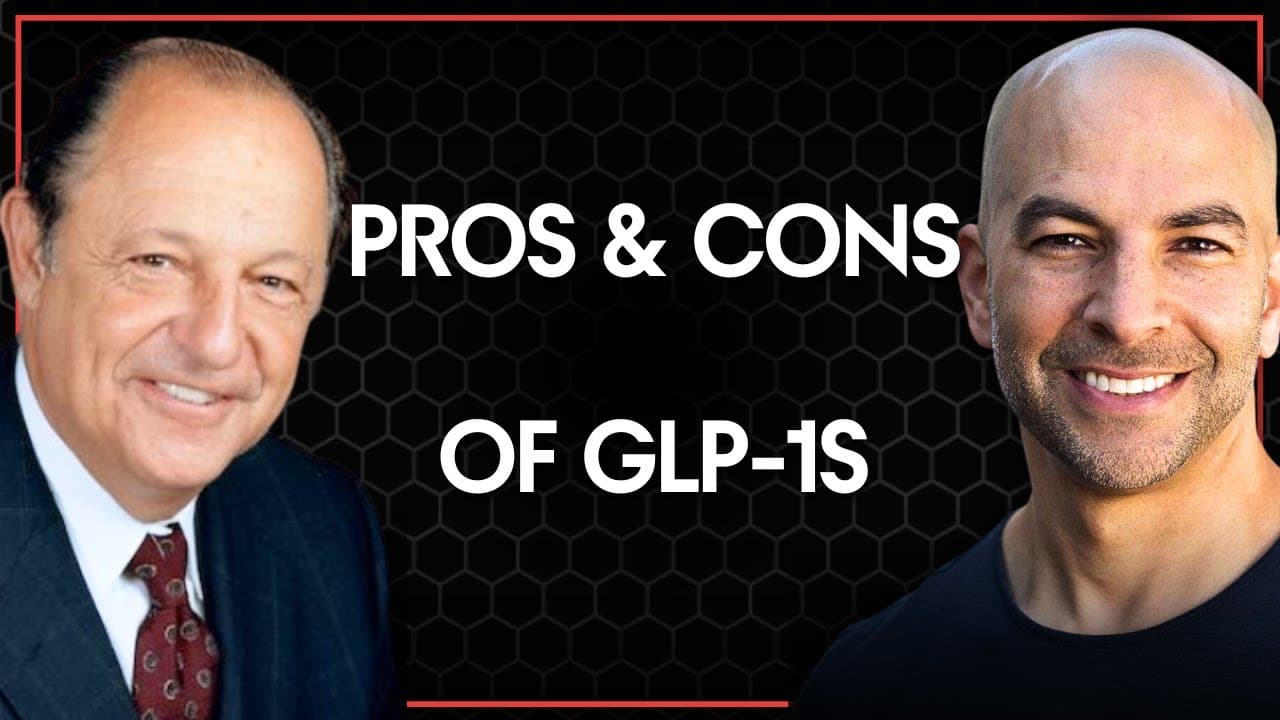
How do GLP-1 weight loss drugs affect muscle mass?
TL;DR
GLP-1 drugs are largely safe but weight loss can reduce lean mass if not monitored. The speaker notes that muscle loss concerns demand careful measurement and potential countermeasures like resistance training or myostatin inhibitors in development, with functional outcomes such as strength and walking ability being important alongside weight loss.
Transcript
do you have any concerns with long-term safety or anything other than simply the economics of the glp ones in this current generation again huge huge leap forward between liraglutide and semaglutide yeah and uh I've discussed briefly Elsewhere on the podcast what the road map looks like for how many of these drugs are in the pipeline yeah there see... Read More
Key Insights
- GLP-1 drugs are considered quite safe overall, with GI toxicity being the main dose-limiting concern.
- Lean body mass often reflects muscle mass, but accurate assessment is critical for interpreting muscle preservation during weight loss.
- Absolute strength and functional tests may be more meaningful than relative changes when evaluating muscle health.
- Resistance training can replicate some benefits of drugs by improving insulin sensitivity and strength.
- There is interest in myostatin inhibitors as potential tools to preserve or enhance muscle mass during weight loss.
- FDA criteria for sarcopenia likely require functional improvements in addition to lean mass increase.
- Weight loss can improve cardiovascular risk factors and insulin sensitivity even if lean mass decreases.
- Introducing rigorous, domain-specific tests (e.g., grip strength, leg extension) is preferred over generic tests like the six-minute walk.
- More videos from this channel:
- More from this channel: Peter Attia MD
Install to Summarize YouTube Videos and Get Transcripts
Explore YouTube Video Summarizer or Get YouTube Transcript Extractor
Questions & Answers
Q: What is the general safety outlook for current GLP-1 therapies according to the clip?
The speakers consider GLP-1 therapies to be quite safe at the present time, with the main concern being gastrointestinal toxicity that necessitates slow dose escalation. They stress that safety is reassuring but that monitoring for GI side effects is essential during weight loss programs using these drugs.
Q: Why is there concern about lean body mass loss during GLP-1 induced weight reduction?
The concern arises because significant weight loss can also reduce lean body mass, which is often a proxy for muscle mass. The discussion cites data from gastric bypass where lean mass fell, and questions whether the muscle mass loss is proportional to total weight loss or if it can be mitigated with strategies like targeted measurements and potential therapies.
Q: How do the speakers suggest measuring muscle preservation in patients on GLP-1 drugs?
They advocate for measuring actual muscle mass rather than relying solely on lean mass as a surrogate, with plans to use gold standard methods like MRI to assess muscle changes. Absolute strength tests and functional metrics are also emphasized to determine whether muscle preservation translates into real functional benefits.
Q: What functional outcomes do they deem important when evaluating drug effects on muscle?
Important functional outcomes include absolute strength measures (grip, leg strength, bench press), walking capacity, and the ability to perform repeated tasks like getting up from a chair. They argue that improvements in these areas are essential for validating the clinical value of muscle preservation during weight loss.
Q: What role might myostatin inhibitors play according to the discussion?
Myostatin inhibitors are discussed as a potential way to preserve or increase muscle mass during weight loss. The speakers note development in phase two and mention that these agents could help counteract muscle loss, potentially improving overall outcomes if they prove safe and effective in humans.
Q: What is the FDA criterion concern mentioned for approving muscle-preserving therapies?
The FDA criteria likely require that any drug aimed at sarcopenia or muscle preservation demonstrate functional improvements beyond just increasing lean mass. This would entail showing tangible gains in strength or physical performance, not merely a numerical change in body composition.
Q: How is insulin sensitivity relevant to GLP-1 weight loss therapy as discussed?
Improved insulin sensitivity in muscle and heart is highlighted as a potential benefit that may accompany weight loss from GLP-1 therapy. Even if muscle mass decreases, better insulin sensitivity could yield meaningful cardiovascular and metabolic advantages, contributing to overall health improvements.
Q: What comparison do they make between pharmacologic and exercise approaches to muscle health?
They compare pharmacologic strategies to resistance training, noting that lifting weights improves insulin sensitivity and functional strength. The question is whether drugs can replicate these benefits, or if a combination of pharmacology and exercise would be necessary to achieve similar, or superior, outcomes in muscle health.
Summary & Key Takeaways
-
GLP-1 weight loss drugs show strong weight reduction but raise questions about lean body mass loss, especially muscle mass, during rapid weight loss. The discussion highlights the need for precise measurements of muscle mass and functional testing to understand true impact. Resistance training and emerging therapies may mitigate muscle loss.
-
The episode emphasizes that improved insulin sensitivity and cardiovascular factors may accompany weight loss, possibly offsetting some muscle mass concerns. Functional outcomes like strength and activity capacity are crucial in evaluating benefits. Regulatory criteria may require demonstrable improvements in function beyond lean mass.
-
The conversation suggests a cautious but optimistic view of GLP-1 therapies, balancing weight loss with muscle preservation and overall health. It underscores ongoing research, better assessment methods, and the potential for combining pharmacology with lifestyle interventions to optimize outcomes.
Read in Other Languages (beta)
Share This Summary 📚
Summarize YouTube Videos and Get Video Transcripts with 1-Click
Try YouTube Summary with ChatGPT & Claude or YouTube Transcript Generator
Explore More Summaries from Peter Attia MD 📚
Summarize YouTube Videos and Get Video Transcripts with 1-Click
Try YouTube Summary with ChatGPT & Claude or YouTube Transcript Generator