How strength training builds bone density and aging health
TL;DR
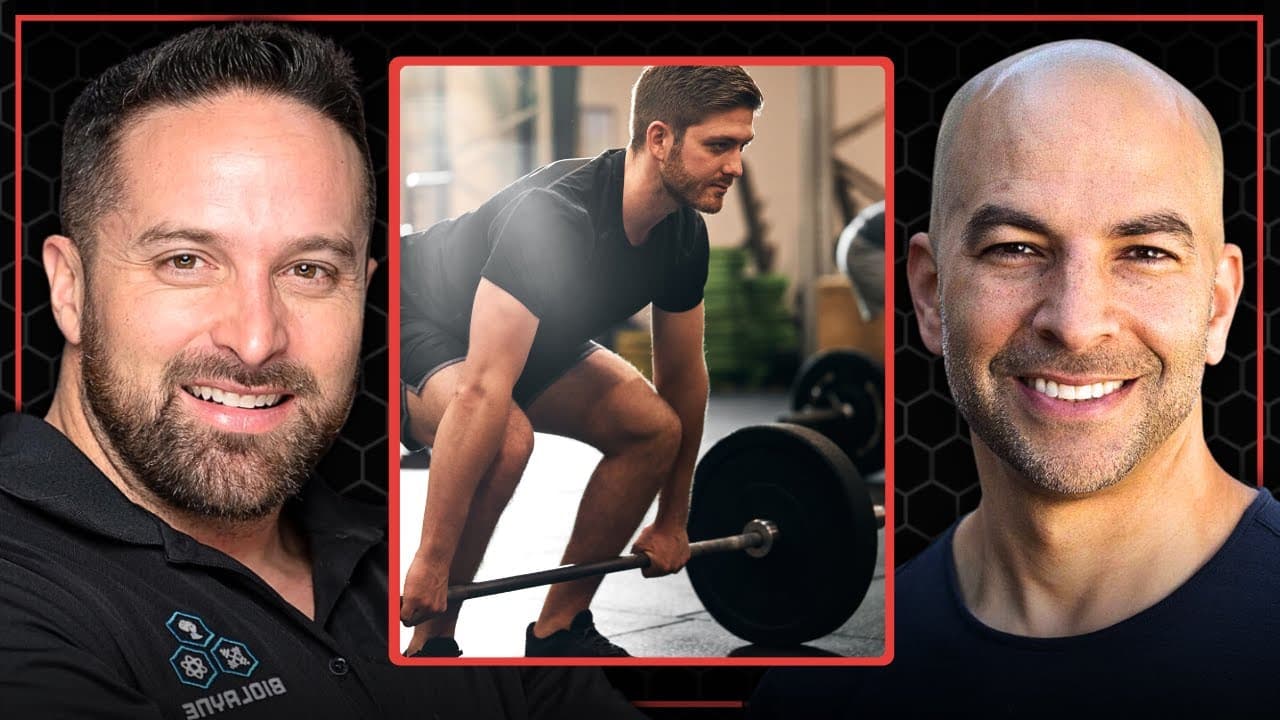
Strength training improves bone density, balance, and mobility, which reduces fall risk and supports long term health. Start with non load bearing hinge and squat patterns, progress gradually to kettlebells and then to barbells as form improves. The body needs a stimulus to lay down tissue, especially lean mass, and protein helps support this adaptation.
Transcript
also just thinking about like again if we're kind of like looking at the longevity or the quality of life piece what is you know most analogous to what these people are going to be doing and where they're going to be needing it well if it's bending over and picking something up that's some kind of hinge right some kind of hinge um if it's you know ... Read More
Key Insights
- A hinge and squat pattern foundation is essential for safe movement and long term function.
- Beginner lifters should start with no weight to learn hip and knee tracking before adding load.
- Progression should move from body weight to kettlebell, then to a safety bar, then to a barbell as form develops.
- Barbell squats are valuable but not mandatory for everyone, the goal is a close analogue to daily tasks.
- Bone density and fall prevention benefit significantly from resistance training, not just cardio.
- Protein plays a role in tissue turnover, but resistance training is the primary driver of lean mass gains.
- Muscle mass supports bone density and overall resilience, reducing immobilization risks after falls.
- A teleological view emphasizes training that creates a tissue-building signal rather than passive nutrition alone.
- More videos from this channel:
- More from this channel: Peter Attia MD
Install to Summarize YouTube Videos and Get Transcripts
Explore YouTube Video Summarizer or Get YouTube Transcript Extractor
Questions & Answers
Q: What is the first step you should take if you are completely new to strength training?
If you are new to lifting, the first step is to learn the basics of how to hinge and how to use your hips and knees to move. This means practicing movements with little to no weight to establish proper tracking of the legs and safe movement patterns before adding any resistance. This foundation reduces the risk of injury and builds confidence for progressively heavier loads.
Q: Why is bone density a focus in the discussion of aging and strength training?
Bone density is highlighted because resistance training has a strong impact on bone health, which is closely linked to fall risk in older adults. Building bone density through lifting reduces the probability of fractures after a fall, and stronger muscles help with balance and the ability to catch yourself, contributing to better overall resilience in daily life.
Q: How does a progression from no weight to barbells typically look according to the transcript?
The progression described starts with learning to hinge and squat patterns with no weight, then moving to holding a kettlebell in front for resistance, followed by a safe bar that minimizes grip demands, and finally transitioning to a barbell squat if appropriate. The emphasis is gradual adaptation and preserving technique over time.
Q: What is the role of protein in resistance training according to the discussion?
Protein supports tissue turnover and lean mass maintenance, but the speakers stress that resistance training provides the primary stimulus for tissue growth. While adequate protein is beneficial, simply eating more protein without a training stimulus yields limited gains compared to combining protein with progressive resistance work.
Q: Why might a traditional barbell squat not be suitable for everyone starting out?
Barbell squats are technically demanding and can feel uncomfortable for beginners who have not yet built the necessary mobility and technique. The speakers suggest starting with safer, lower load variations and ensuring comfort and control before progressing to heavy barbell squats, as this helps prevent early discouragement and injury.
Q: What is the connection between resistance training and fall prevention in the elderly?
Resistance training improves strength and balance, which are critical for preventing falls. Stronger muscles support better posture and the ability to recover if a loss of balance occurs, reducing the likelihood of a hip fracture and subsequent complications such as pneumonia or prolonged immobilization after a fall.
Q: How does the body decide to add tissue like muscle mass according to the speakers?
The body tends to add lean tissue when there is a clear, ongoing stimulus or demand, such as resistance training, that signals the need to adapt for increased function. From an evolutionary perspective, the body prioritizes survival and energy use, so it builds tissue when there is a consistent training signal and adequate fueling.
Q: What overall strategy do Attia and Norton suggest for longevity and quality of life through training?
They advocate a pragmatic, lifetime approach that emphasizes safe, progressive strength training aligned with daily functional tasks. The strategy combines appropriate movement patterns, gradual progression to heavier loads, attention to bone health and balance, and supporting nutrition to sustain muscle and bone density over time, thereby improving longevity and quality of life.
Summary & Key Takeaways
-
Strength training enhances functional movement and bone health, providing a practical framework for older adults to preserve independence and quality of life. By starting with safe hinge and squat patterns and progressively increasing load, most people can build strength without premature injury. The approach emphasizes long term consistency and mobility.
-
Resistance training creates a physiological environment that favors lean tissue maintenance, higher bone density, and improved balance. The discussion highlights the importance of making the training relevant to daily activities and using progressively challenging tools to avoid overreaching beginner gains.
-
The dialogue connects evolutionary biology to exercise prescriptions, arguing that the body adapts to the demands placed on it. The emphasis is on giving the body a reason to build tissue through appropriate force, protein intake, and structured progression to sustain health and function with age.
Read in Other Languages (beta)
Share This Summary 📚
Summarize YouTube Videos and Get Video Transcripts with 1-Click
Try YouTube Summary with ChatGPT & Claude or YouTube Transcript Generator
Explore More Summaries from Peter Attia MD 📚


Summarize YouTube Videos and Get Video Transcripts with 1-Click
Try YouTube Summary with ChatGPT & Claude or YouTube Transcript Generator