Why Is Alcohol Toxic to the Liver? Ethanol Metabolism
TL;DR
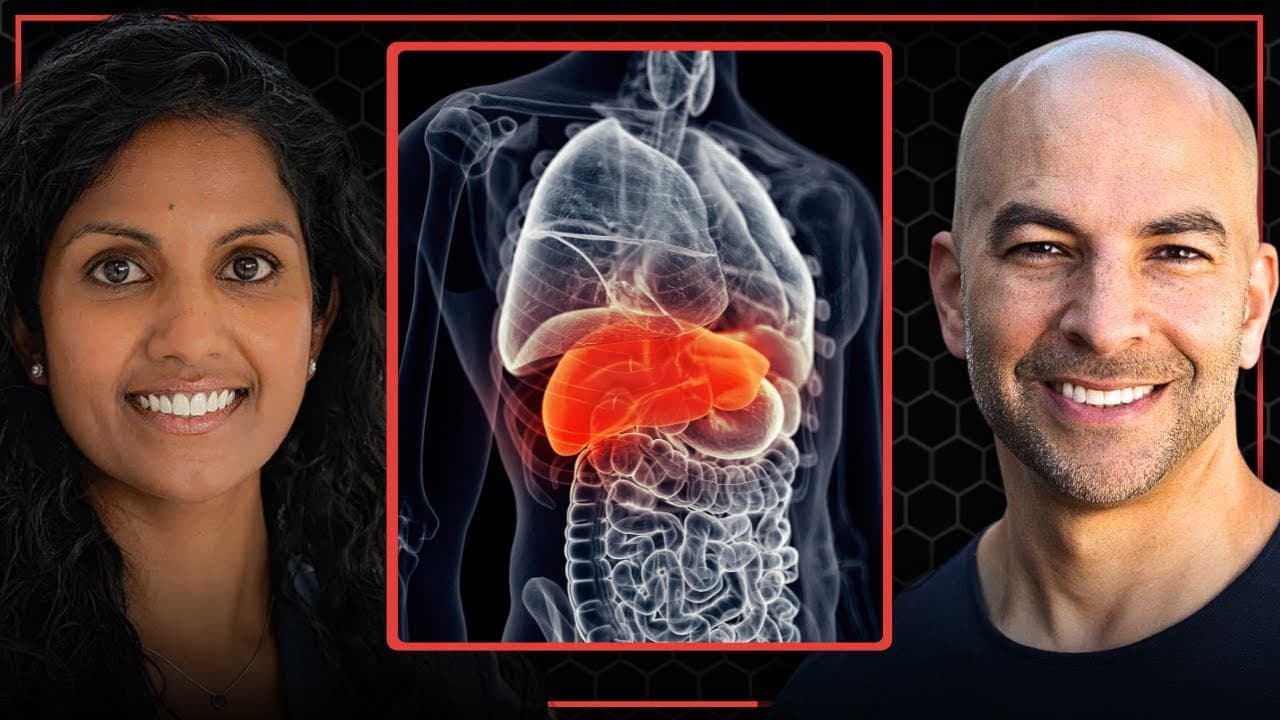
Alcohol harms the liver when its metabolism is overwhelmed. Ethanol becomes acetaldehyde, which is then broken down to carbon dioxide and water. When capacity is exceeded, acetaldehyde acts like a toxin, attracting free radicals and immune cells, driving fat deposition and injury. Sex, genetics and hormones likely change susceptibility, but much remains unstudied.
Transcript
let's talk a little bit now about how ethanol is poisonous to the liver and um I want to be mindful of the word poison because it's uh it's a it's a it's a controversial word people get all bent out of shape um so feel feel free to use whatever word you want I mean I sort of think the dose makes the poison everything is technically a poison right T... Read More
Key Insights
- The dose makes the poison: Tylenol is harmless or helpful at a low dose but deadly once it exceeds the liver's capacity to metabolize it, and the same logic applies to ethanol and even oxygen.
- Alcohol dehydrogenase converts ethanol into acetaldehyde, which is metabolized further into carbon dioxide and water, so a healthy liver can normally process alcohol without lasting harm.
- Problems begin when the liver's capacity is overwhelmed and the redox potential of the cell is disrupted, which leads to peroxidation, a feature also seen in metabolic dysfunction related liver disease.
- Acetaldehyde behaves like a toxin by attracting free radicals and immune cells, leading to fat deposition and altered metabolism at the level of the cell.
- Under the microscope, alcohol related liver injury and non-alcoholic metabolic liver disease can look so similar that some features cannot be told apart histologically.
- People who lack effective alcohol dehydrogenase, or have less effective versions of it, tend to turn bright red when drinking and are largely protected from alcohol toxicity because they cannot tolerate it.
- Individual cells do not all respond the same way, so the injury, compensatory damage and recruitment of inflammatory cells such as monocytes or lymphocytes vary, making the process hard to untangle.
- Early explanations of sex differences blamed body composition, since alcohol is less soluble in fat and women typically have more fat, but the speaker doubts this is necessarily true.
Install to Summarize YouTube Videos and Get Transcripts
Explore YouTube Video Summarizer or Get YouTube Transcript Extractor
Questions & Answers
Q: Why is alcohol toxic to the liver?
Alcohol becomes harmful when the liver's capacity to metabolize it is overwhelmed. Ethanol is converted by alcohol dehydrogenase to acetaldehyde, which should be broken down to carbon dioxide and water. When overloaded, the cell's redox balance is disrupted, peroxidation occurs, and acetaldehyde acts like a toxin, attracting free radicals and immune cells.
Q: What does acetaldehyde do inside liver cells?
Acetaldehyde behaves badly when it accumulates. It attracts free radicals and immune cells, leads to fat deposition, and alters metabolism at the level of the cell. The speaker compares this to the lipotoxicity model in metabolic dysfunction associated liver disease, where something about the molecule makes it pro-inflammatory and damaging to liver tissue.
Q: Is alcohol really a poison?
The speakers say the word is controversial, but they argue that the dose makes the poison. Everything is technically a poison at some level. Tylenol is useful at a low dose for a headache or fever, yet deadly once it exceeds the liver's capacity to metabolize it. The same applies to oxygen and to ethanol.
Q: Can alcohol liver damage look like non-alcoholic fatty liver disease?
Yes. The speaker explains that when examining liver tissue histologically, some features cannot be distinguished between someone who uses alcohol and someone who does not, because the injury pattern is so similar. Both involve peroxidation, inflammation, altered metabolism and fat deposition, even though different enzymes are used in the two pathways.
Q: Why do some people turn red when they drink alcohol?
The discussion links flushing to genetic differences in alcohol dehydrogenase. Some people lack the enzyme or have a less effective version, and they tend to be extremely sensitive to alcohol and turn bright red when drinking. In some ways they are largely protected from its toxicity, because they simply cannot tolerate drinking it.
Q: How do men and women differ in handling alcohol?
Older studies attributed sex differences to body composition, noting that alcohol is less soluble in fat and women typically have more fat. The speaker doubts this is necessarily true. Sex hormones, menopausal status, fat distribution and acetaldehyde generation have not been teased apart, so the differences remain largely unstudied.
Q: Why is it hard to say how much alcohol is too much for the liver?
Capacity to metabolize alcohol is highly variable across populations and between the sexes. Individual liver cells also respond differently, with varying injury, compensatory damage and recruitment of inflammatory cells such as monocytes or lymphocytes. Without a large, diverse cohort studied across the whole liver, the point where the system is overwhelmed cannot be pinpointed.
Q: How much alcohol is in a standard drink according to the discussion?
The speaker notes that a standard amount of alcohol is approximately 14 grams, regardless of the type of drink. How a person's liver handles that amount depends on variables still to be studied, including subcutaneous fat, hormonal responses, and how much acetaldehyde or other potentially toxic compounds are generated.
Summary & Key Takeaways
-
Ethanol is processed in liver cells by alcohol dehydrogenase into acetaldehyde, which is then broken down further into carbon dioxide and water. The speakers note that anything can be a poison at a high enough dose, so the key question is when the liver's capacity to metabolize alcohol is exceeded.
-
When that capacity is overwhelmed, the cell's redox potential is disrupted and peroxidation begins. Acetaldehyde then behaves like a toxin, attracting free radicals and immune cells and promoting fat deposition. These injury patterns resemble those in metabolic dysfunction related liver disease, and can look identical under the microscope.
-
Differences between people complicate the picture. Genetic variation in alcohol dehydrogenase causes flushing and intolerance, and sex differences once blamed on body fat remain poorly understood. Premenopausal and postmenopausal women, hormones and fat distribution have not been teased apart, so many variables are still open for study.
Read in Other Languages (beta)
Share This Summary 📚
Summarize YouTube Videos and Get Video Transcripts with 1-Click
Try YouTube Summary with ChatGPT & Claude or YouTube Transcript Generator
Explore More Summaries from Peter Attia MD 📚





Summarize YouTube Videos and Get Video Transcripts with 1-Click
Try YouTube Summary with ChatGPT & Claude or YouTube Transcript Generator