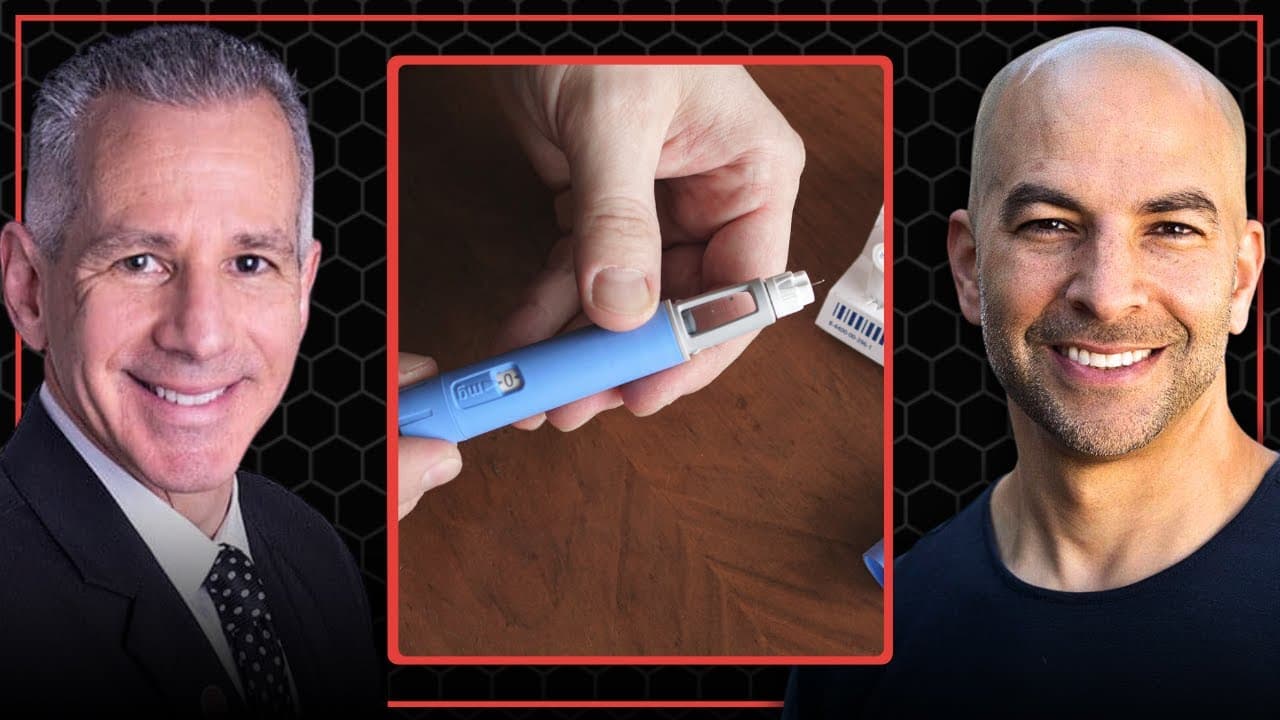
Why are GLP-1 drugs like Ozempic so popular now?
TL;DR
GLP-1 drugs have moved from diabetes treatment to powerful weight loss tools, creating safety, cost, and availability debates. The growing use reshapes social attitudes toward obesity and raises questions about stigma, motivation, and long term effects. While demand surges, production ramp ups and regulatory oversight will shape access in the near future.
Transcript
so let's let's pivot now and kind of talk about um the current state of obesity which um uh is is is really seeing a success it's it's never seen um and it's been a relatively short period of time I think three years ago very few people knew what semaglutide was um or even OIC which is the trade name given to the diabetes version of that drug where... Read More
Key Insights
- GLP-1 drugs like Ozempic are perceived as highly effective for weight loss beyond diabetes management.
- Safety is viewed as a societal judgment, influenced by long term unknowns rather than just numerical risk.
- Availability issues stem from complex manufacturing and supply chain limitations, not just demand.
- Compounding pharmacies are controversial but may offer interim access with quality control data.
- Moral panic around obesity treatment resurfaces debates about motivation and stigma.
- Historical parallels, such as Viagra, illustrate unpredictable cultural impacts of medical advances.
- Societal acceptance depends on cost, access, and transparent safety data.
- Future access will likely depend on ramped up production and clearer regulatory guidance.
- More videos from this channel:
- More from this channel: Peter Attia MD
Install to Summarize YouTube Videos and Get Transcripts
Explore YouTube Video Summarizer or Get YouTube Transcript Extractor
Questions & Answers
Q: How do GLP-1 drugs differ in safety versus other obesity treatments?
GLP-1 drugs are discussed as being powerful and appear reasonably safe, which is framed as a safety judgment rather than a strictly defined factual risk. The conversation notes uncertainty about long term effects beyond 40 years of use, highlighting that risk assessment must consider unknowns and the evolving clinical experience with these drugs.
Q: What social factors influence the popularity of these drugs?
The drugs are popular because many people want to lose weight, and for the first time treatments exist that are both highly effective and reasonably safe. The moral judgments around motivation for taking the drugs also shape public perception, with health goals often trumping cosmetic reasons in some discussions.
Q: Why is there an availability problem for GLP-1 drugs?
The shortage is attributed to manufacturing bottlenecks and different production processes that slow ramp up. Production sites need to scale, and until they do, supply cannot meet rising demand, which creates access issues for patients who could benefit from these therapies.
Q: What role do compounding pharmacies play in access to these drugs?
Compounding pharmacies are mentioned as a potential source when official supply is limited. The quality control of these pharmacies is debated, with some experts asserting rigorous procedures. The discussion emphasizes evaluating data and processes rather than labeling all compounding efforts as shady.
Q: How might this drug class affect obesity stigma?
If these drugs can reduce weight effectively, it could lessen stigma associated with obesity by offering a medical pathway for treatment. However, the conversation also notes persistent moral judgments about why people seek treatment and whether motivation type impacts outcomes.
Q: What ethical concerns are raised about prescribing these drugs for weight loss?
Ethical concerns include safety, long term unknowns, cost, and unequal access. The discussion highlights the need to balance potential benefits against moral judgments about patients and acknowledges that access disparities could influence who benefits from these therapies.
Q: What analogy is used to illustrate unpredictable cultural impact?
The speaker compares GLP-1 drug impact to Viagra, noting that you cannot fully predict how a medical breakthrough will shift cultural norms until it unfolds, as exemplified by past unforeseen uses and societal reactions.
Q: What is the expected path for manufacturing and access in the near term?
The expectation is that production will ramp up with new facilities, including acquisitions like Novo buying Catalent, which should improve supply over time. Access may also be influenced by policy decisions on healthcare funding and ongoing evaluation of safety and efficacy data.
Summary & Key Takeaways
-
GLP-1 drugs are now seen as powerful and apparently safe for obesity, changing public perception.
-
Safety, cost, and availability are major hurdles that influence who gets access to these drugs.
-
The rise of compounding pharmacies and manufacturing bottlenecks complicate the supply chain and raise quality concerns.
Read in Other Languages (beta)
Share This Summary 📚
Summarize YouTube Videos and Get Video Transcripts with 1-Click
Try YouTube Summary with ChatGPT & Claude or YouTube Transcript Generator
Explore More Summaries from Peter Attia MD 📚

Summarize YouTube Videos and Get Video Transcripts with 1-Click
Try YouTube Summary with ChatGPT & Claude or YouTube Transcript Generator