How to train VO2 max with outdoor hill repeats?
TL;DR
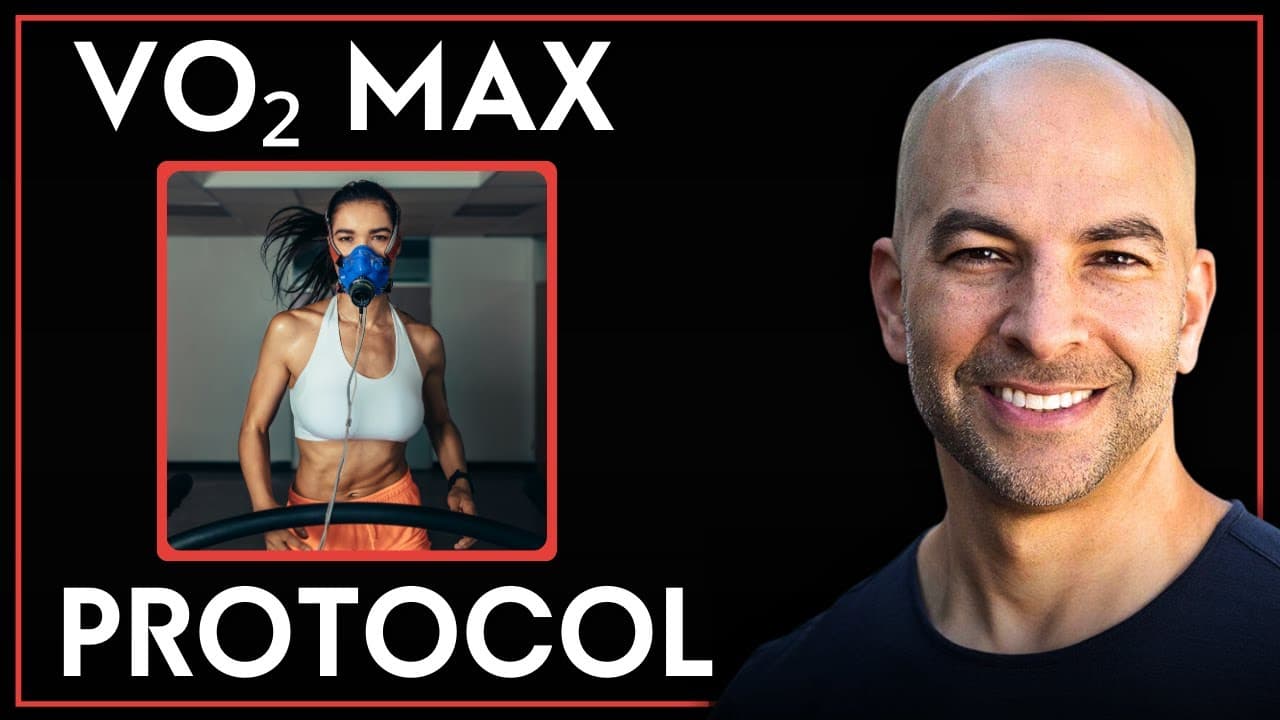
The recommended approach for VO2 max training includes warming up properly with hill repeats and escalating efforts before max testing. Real intervals should last 3 to 8 minutes at high but sustainable intensity, not all out for the entire duration. Training plans emphasize recovering fully between intervals and maintaining target power rather than chasing peak pain.
Transcript
let's just start with the V2 Max training so you're having people go through a little bit of a workout before they get going yeah and I'll tell you this I do most of my V2 max testing out Outdoors now I use that V2 Master device which I I love I'm going to leave from my house I'm going to ride 10 to 15 minutes to the place where I do my Hill repeat... Read More
Key Insights
- VO2 max training requires a proper warm up that includes escalating efforts on a hill before the true max test, otherwise the result can be misleading.
- Real VO2 max intervals are best conducted in the 3 to 8 minute range, where you sustain a high power rather than going all out for a very short duration.
- A true VO2 max effort is not all out for the entire interval; it is a high, sustainable effort aimed at maintaining a target average wattage across the interval.
- The speaker emphasizes outdoors testing and warming up thoroughly to avoid underestimating VO2 max due to environmental or protocol factors.
- Understanding the difference between Tabata style efforts and longer intervals helps athletes structure training that yields greater VO2 max gains.
- The conversation clarifies that higher carbohydrate intake strategies are more relevant to elite endurance athletes focused on energy management during long events.
- There is a distinction between functional threshold power and critical power, and both relate to how VO2 max training translates into performance improvements.
- The overall takeaway is that VO2 max gains come from sustained high-intensity intervals with proper pacing and recovery, not from brief maximal bursts.
Install to Summarize YouTube Videos and Get Transcripts
Explore YouTube Video Summarizer or Get YouTube Transcript Extractor
Questions & Answers
Q: How should you warm up before a VO2 max test according to the video?
A proper warm up for a VO2 max test involves a ride or run that includes 30 second bursts at relatively high power on small climbs, followed by two to three full hill repeats at escalating power. Then perform a four to five minute effort at around 85 percent of max power, recover, then try a second interval at around 90 percent, and finally a third effort. This sequence ensures the body is prepared and the test results reflect true capability rather than an under prepared state.
Q: Why is doing a long all out interval not the best way to maximize VO2 max gains?
The video argues that true all out efforts are limited by a natural governor and cannot be sustained for long, even in a Tabata format. Intervals lasting 3 to 8 minutes at high but sustainable power produce greater adaptations by maintaining a high intensity over a longer duration, leading to higher training stimulus and improved VO2 max compared to brief maximal bursts.
Q: What is the key difference between 3 to 8 minute intervals and Tabata style workouts?
Intervals in the 3 to 8 minute range require sustaining a near maximal power for several minutes with a controlled pace and a consistent average wattage, whereas Tabata protocols involve shorter bursts with limited total time at near maximal effort. The longer interval produces a different training stimulus that more effectively increases VO2 max for many athletes.
Q: How does the speaker describe the pain experience during longer VO2 max intervals?
Pain progressively increases, and the final minute becomes the hardest portion of a four to five minute interval. The speaker notes that after about two and a half minutes the pain starts to intensify, but it is not about the last moment alone; the overall accumulation throughout the interval defines the difficulty, followed by an easy recovery period to reset for the next effort.
Q: What is the practical guidance for pacing a 4 minute interval outdoors?
The athlete should aim for a constant power throughout the interval, with a predefined target wattage and an average wattage to hit by minute three. The belief is that if you are dying before minute one, the target is set too high. If you finish with more energy, you’re likely underestimating the interval’s target and should increase the target power in future sessions.
Q: How does the discussion differentiate VO2 max training from daily endurance training in terms of energy sources?
The conversation acknowledges that elite endurance athletes may consider carbohydrate intake and energy management, as peak endurance is not just about VO2 max. It is framed as an energy transfer problem where more input calories allow more output power, but for most listeners exercising two hours a day with steady energy, water and glycogen are typically sufficient. This highlights different training goals and fueling needs across athlete levels.
Q: What is the role of uphill climbs and outdoor environment in VO2 max testing according to the clip?
Outdoor testing creates variability that makes it more reliable for the speaker, who notes that Texas heat can affect performance in summer and prefers testing in spring, fall, or winter. Uphill climbs are used as part of the warm up to elevate power and readiness, ensuring the subsequent VO2 max assessment is a true reflection of fitness rather than being biased by environmental conditions.
Q: Why does the speaker emphasize not overdoing the maximum training during intervals?
The aim is to preserve the ability to repeat high-intensity efforts rather than to burn out early. Maintaining power consistency across intervals allows for multiple repetitions within a training session and supports long-term VO2 max improvements. The focus is on quality, sustainable effort, and proper recovery rather than pushing past sustainable limits in a single interval.
Summary & Key Takeaways
-
VO2 max testing should include a warm up that elevates intensity through short climbs before max efforts to avoid underperforming tests.
-
During VO2 max intervals, aim for a steady power target over 3 to 8 minutes rather than a short all out sprint, to maximize training adaptations.
-
Recovery between intervals is essential to allow heart rate and power to be ready for the next effort and to preserve ability to repeat the workout.
Read in Other Languages (beta)
Share This Summary 📚
Summarize YouTube Videos and Get Video Transcripts with 1-Click
Try YouTube Summary with ChatGPT & Claude or YouTube Transcript Generator
Explore More Summaries from Peter Attia MD 📚






Summarize YouTube Videos and Get Video Transcripts with 1-Click
Try YouTube Summary with ChatGPT & Claude or YouTube Transcript Generator