How to Write Copy That Visualizes, Falsifies, and Stands Out
TL;DR
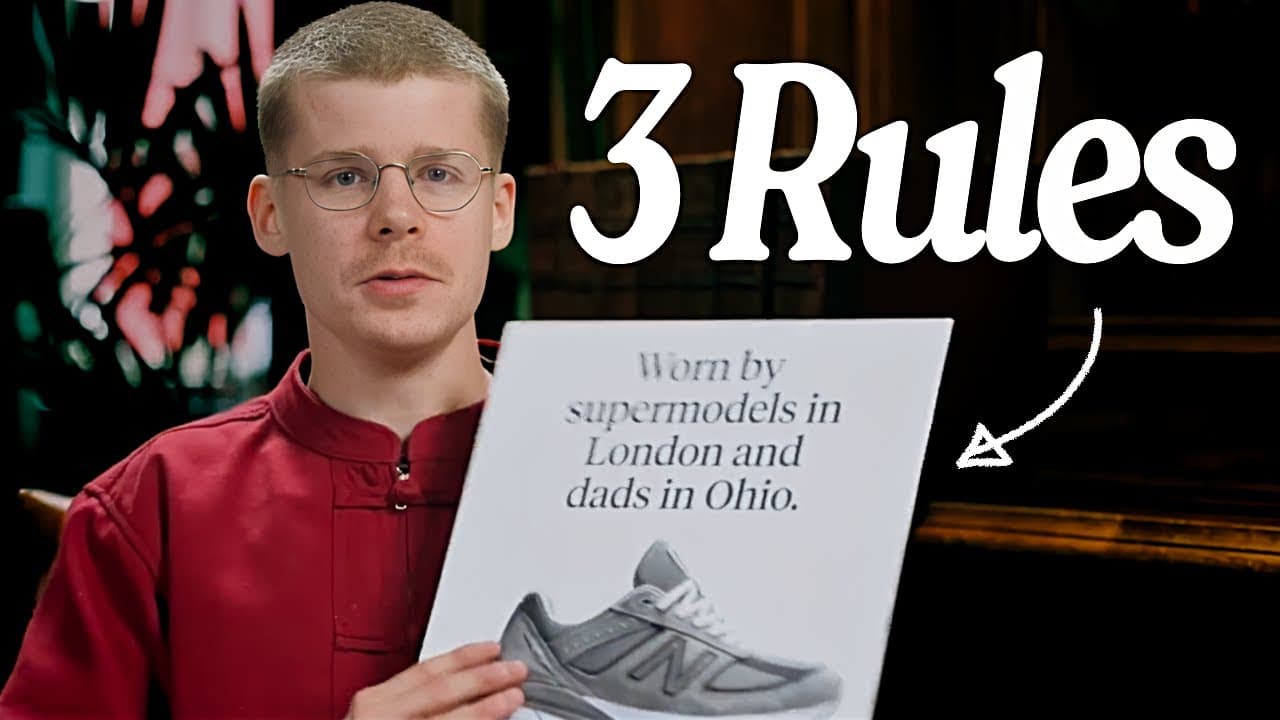
The three rules are to visualize the idea with concrete imagery, make claims that can be true or false, and ensure the message cannot be easily copied by others. Start with concrete visuals rather than abstract language, and use falsifiability to engage readers and prove credibility. This approach makes ideas memorable and differentiates messaging from competitors.
Transcript
I know that you have these three rules that you apply to every sentence. I do. What are they? I do. Can I visualize it? Can I falsify it? Can nobody else say this? So, you get free nos. You've probably written a lot of rubbish. You get free yeses. You're on to something. I'll give you two examples of what not to do, what to do. So, I saw an ad on t... Read More
Key Insights
- Concrete imagery wins over abstract language because people remember vivid visuals like a supermodel in London or a dad in Ohio with a New Balance.
- Falsifiability engages readers by forcing the writer to stake credibility on true or false statements that can be evaluated.
- Pointing at concrete objects or data rather than using adjectives helps avoid vague copy and strengthens persuasiveness.
- The best copy avoids generic statements and seeks specifics that cannot be easily replicated by competitors.
- A headline or line should be testable for truth, encouraging reader trust through measurable claims.
- Unique associations between product visuals and benefits create a differentiating narrative that others cannot easily copy.
- Effective copywriting combines concrete visuals with verifiable claims to create memorable, credible messages.
- The overarching goal is to make the reader visualize, verify, and remember the message long after reading.
- More videos from this channel:
- More from this channel: David Perell
Install to Summarize YouTube Videos and Get Transcripts
Explore YouTube Video Summarizer or Get YouTube Transcript Extractor
Questions & Answers
Q: What are the three rules of copywriting mentioned in the video
The three rules are to visualize what you are saying, to make statements that can be proved true or false, and to ensure that nobody else can say it in the same way. Visualizing helps memory, falsifiability adds credibility, and unique phrasing prevents easy imitation, making the copy more persuasive and durable.
Q: Why is visualization important in copywriting
Visualization is important because people remember concrete images better than abstract phrases. By turning ideas into vivid scenes or objects, you help readers picture the concept in their minds, which enhances recall and emotional engagement. This concreteness makes the message more compelling and shareable.
Q: What does falsifiability achieve in copy
Falsifiability puts the writer on the line, making the copy more credible because it can be checked for truth or falsehood. It creates a benchmark for accuracy and forces precise language, which helps readers evaluate claims and increases trust in the message.
Q: How can copy be made unique and hard to imitate
Make the copy rely on specific visuals, scenarios, or data that are tightly tied to the brand or product. Use distinctive imagery and verifiable claims that competitors cannot easily replicate, ensuring that the message stands out and remains distinctive in the market.
Q: What role do concrete examples play in copy
Concrete examples convert vague ideas into tangible concepts. They provide a mental image readers can latch onto, improving comprehension and retention. Specific examples also support credibility by showing how the idea works in real life.
Q: How can a writer test copy for impact
Test copy by asking whether the statements can be visualized, whether they could be true or false, and whether competitors could say the same thing. If the answer is yes to all, refine the visuals and specifics to improve distinctiveness and persuasiveness.
Q: Why should startup messaging borrow from the example of contrast in visuals
Contrasting visuals create surprise and humor while clarifying the benefit, making the message memorable. By pairing unusual or unexpected images with a product benefit, the copy becomes easier to recall and harder to dismiss, helping brands stand out.
Q: What is the main takeaway about copywriting in this video
The main takeaway is that effective copy combines concrete visualization, falsifiable statements, and uniqueness to create memorable, credible messages. This trio helps ideas stick, builds trust, and differentiates brands in a crowded marketplace.
Summary & Key Takeaways
-
This point explains that concrete visuals help memory and engagement, contrasting with abstract concepts. It also shows how to zoom in on words to create vivid, memorable imagery that audiences can picture and recall.
-
The summary covers falsifiability as a tool to force clarity and accountability in copy, including examples of how making true or false claims grabs attention and reduces vagueness.
-
Finally, the summary highlights the principle of uniqueness, suggesting that messages should be hard for competitors to imitate, by tying visuals and claims closely to the product or idea.
Read in Other Languages (beta)
Share This Summary 📚
Summarize YouTube Videos and Get Video Transcripts with 1-Click
Try YouTube Summary with ChatGPT & Claude or YouTube Transcript Generator
Explore More Summaries from David Perell 📚


Summarize YouTube Videos and Get Video Transcripts with 1-Click
Try YouTube Summary with ChatGPT & Claude or YouTube Transcript Generator