How Does Morgan Housel Write Clear Nonfiction Through Stories?
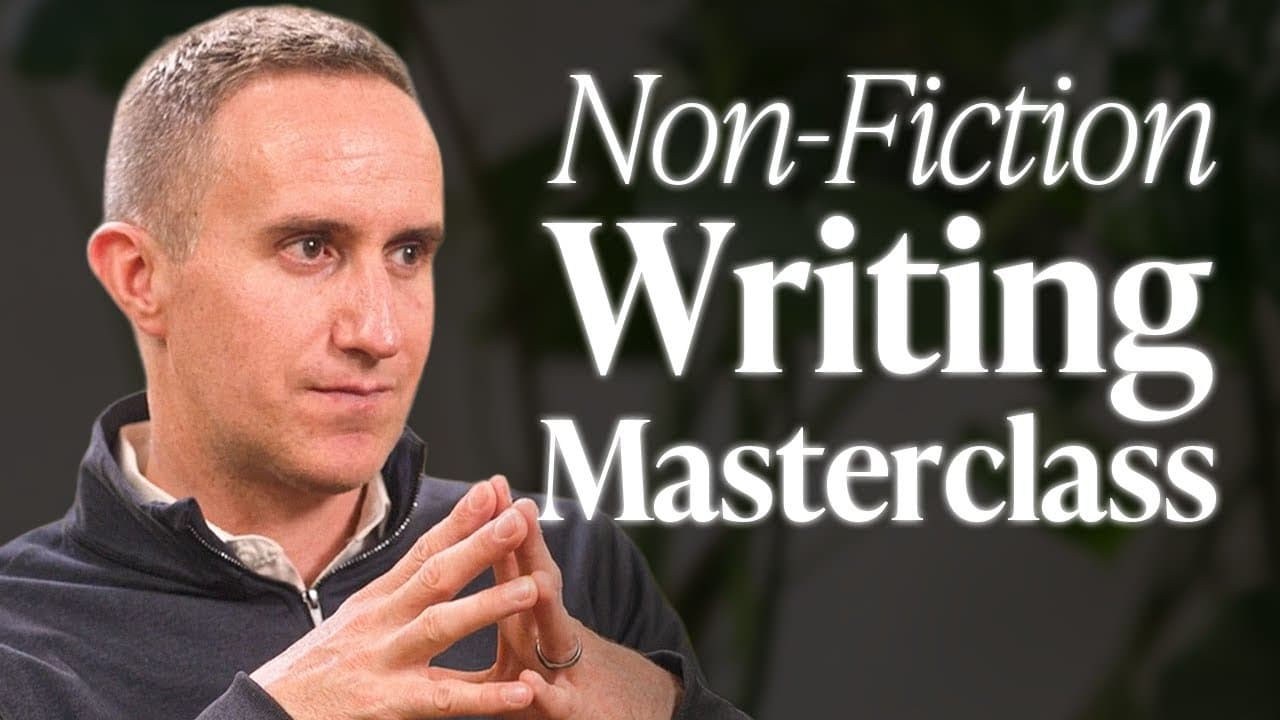
TL;DR
Morgan Housel writes clear nonfiction by getting to the point quickly, expressing deep ideas in immediately understandable language, and using concise human stories instead of abstract information alone. Before writing The Psychology of Money, which sold more than 8 million copies, he honed his craft through more than 4,000 blog posts. Read on for practical techniques for finding stories, testing reader attention, creating honest hooks, and cutting weak passages.
Transcript
Just get to the point. Get to the freaking point. That has always been the case, but it's way more today. Morgan Hel is one of the top non-fiction writers in the world. He is most famous for a book called The Psychology of Money, which has now sold more than 8 million copies. But before he wrote the book, he wrote more than 4,000 blog posts for pub... Read More
Key Insights
- Clear writing is writing that readers can understand immediately. Profound ideas do not require difficult language, and forcing readers to reread a paragraph repeatedly can reflect a failure of communication rather than intellectual depth.
- Concise storytelling preserves attention by delivering substance without unnecessary length. Eric Larson is presented as an author who can communicate in a page and a half what other historians might take 17 or 46 pages to explain, while retaining the essential material.
- Reader attention is more fragile when phones, tablets, and other screens are nearby. A slow or boring passage can trigger the impulse to switch activities, so nonfiction writers must keep moving toward a recognizable point.
- Audience reactions are useful editing signals. Mark Twain reportedly read aloud to his wife and children, noticed when they leaned forward or became bored, and used those responses to identify compelling material and passages that needed cutting.
- A great story can work in only three lines. Morgan Housel collects more stories than he can place in books, and stories without a larger destination can still become useful anecdotes or stand alone as memorable pieces.
- Storytelling is essential for making finance and business engaging. A book limited to market movements or technical information can lose both general readers and finance professionals, while human stories help readers contextualize ideas within their own lives.
- A truthful, specific hook is stronger than a bland generalization. The Vanderbilt family's loss of a fortune equivalent to $300 billion within roughly 60 years makes the relationship between money and happiness more concrete than stating the lesson abstractly.
- Writing is a process of thinking, not merely recording completed ideas. Housel uses ChatGPT frequently but intends to type every letter himself because one sentence can teach the writer something that leads to the next paragraph and further understanding.
- Related book: The Psychology of Money
- Related book: The Art of Spending Money
- Export your Kindle highlights to Glasp: How to Download Highlights and Notes from Kindle
Install to Summarize YouTube Videos and Get Transcripts
Explore YouTube Video Summarizer or Get YouTube Transcript Extractor
Questions & Answers
Q: How does Morgan Housel write clear nonfiction through stories?
Morgan Housel aims to make ideas understandable immediately and communicate as much as possible in few words. He uses human stories to give subjects such as money and business context, helping readers empathize and relate the ideas to their own lives. He also removes material that delays the point or loses the reader’s attention.
Q: How can nonfiction writers get to the point faster?
Identify the essential idea, state it in language readers can understand immediately, and cut anything that slows the passage without adding substance. Housel points to Eric Larson, who can convey in a page and a half what other historians might take 17 or 46 pages to explain without removing the important material.
Q: Why are stories effective in nonfiction about money and business?
Writing only about markets or technical finance can bore general readers and even finance professionals. Stories help readers empathize, contextualize an idea within their own lives, and move closer to the underlying truth. For Housel, storytelling is therefore both a survival technique and a tool for understanding.
Q: What makes a short nonfiction story memorable?
A memorable short story communicates a meaningful situation clearly and economically. Housel says a great story can be only three lines and does not always need a long explanation or a larger argument. His guiding idea is that the person who says the most in the fewest words wins.
Q: How can writers tell whether a passage is boring?
Writers can read their work aloud to other people and observe their reactions. Mark Twain reportedly watched whether his wife and children leaned forward or became bored, then cut material that lost their interest. A reader’s impulse to check a phone can provide a similar warning that the writing has slowed.
Q: Why does clear writing matter more for distracted readers?
Readers may have a phone, another screen, or an iPad nearby, making it easy to leave a boring book. When the writing slows and the point becomes unclear, those alternatives compete for attention immediately. Writers therefore need to maintain momentum and continually give readers a reason to continue.
Q: How does Morgan Housel collect and use stories?
Housel collects stories from what he watches, reads, and hears, although many never enter his books. Some become anecdotes in chapters, while others are gathered into blog posts containing several short stories. He considers a strong story valuable even when it has no immediate place in a broader argument.
Q: How did Morgan Housel develop his nonfiction writing craft?
Before producing his books, Housel wrote more than 4,000 blog posts for publications including The Wall Street Journal and The Motley Fool. That sustained practice helped him hone the craft that he later applied to psychology, investing, and business writing. The Psychology of Money subsequently sold more than 8 million copies.
Summary & Key Takeaways
-
Effective nonfiction communicates deep ideas in language readers can understand immediately. Difficulty is not evidence of quality, and repeated rereading may indicate that the author failed to communicate clearly. Because modern readers have many distractions nearby, writers must reach the point quickly and remove passages that slow attention without adding substance.
-
Stories make subjects such as finance, business, and psychology memorable by placing ideas inside specific human experiences. A concrete account of the Vanderbilt fortune is more compelling than the general claim that wealth cannot guarantee happiness. Honest narrative hooks can attract readers without resorting to exaggeration, deception, or detachment from the truth.
-
Morgan Housel developed his craft by writing more than 4,000 blog posts before producing books that reached millions of readers. He collects many stories, uses some as chapter anecdotes, and sometimes publishes unused ones together. Although he frequently uses ChatGPT, he types his prose himself because composing sentences generates further thought and discovery.
Read in Other Languages (beta)
Share This Summary 📚
Summarize YouTube Videos and Get Video Transcripts with 1-Click
Try YouTube Summary with ChatGPT & Claude or YouTube Transcript Generator
Explore More Summaries from David Perell 📚
Summarize YouTube Videos and Get Video Transcripts with 1-Click
Try YouTube Summary with ChatGPT & Claude or YouTube Transcript Generator