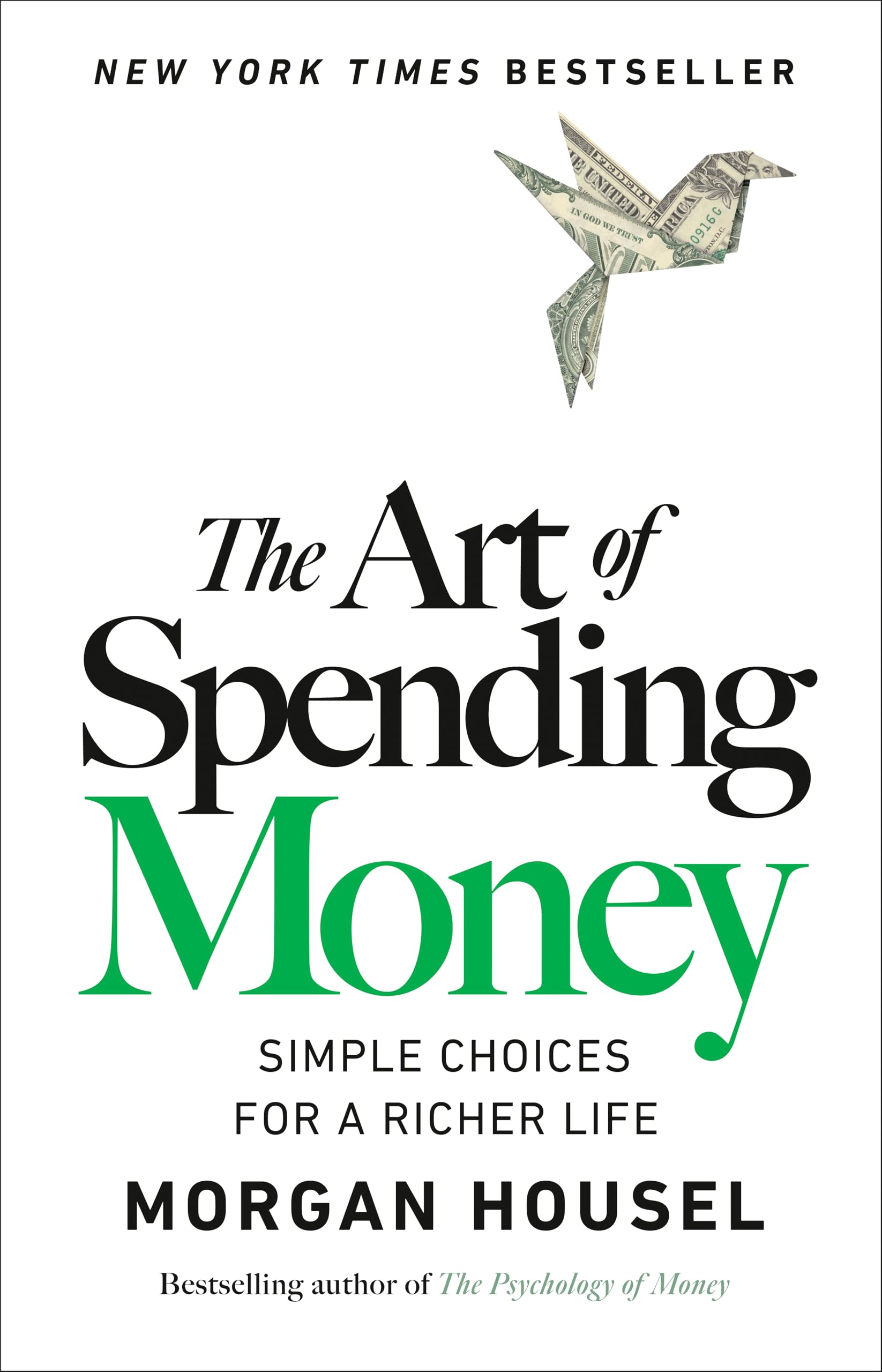
The Art of Spending Money: Simple Choices for a Richer Life
About This Book
The Art of Spending Money argues that money is less about numbers and more about stories—the narratives we tell ourselves about what matters, what makes us happy, and how we measure success. Drawing on psychology, parables, and figures from Warren Buffett to the Vanderbilts, the book insists that personal finance is "more personal than it is finance."
The central thesis is that there are two ways to use money:
- as a tool to live a better life
- as a yardstick of status to measure yourself against others
The first is quiet and personal; the second is loud and performative—and it leads to a worse life.
The emotional heart of the book is contentment. Happiness, the author repeats, is the gap between expectations and circumstances—the best measure of wealth is what you have minus what you want. Because the brain chases dopamine and a moving goalpost, the only way to win the status game is to stop playing. Desire is described as "a hidden form of debt that must be repaid before you get to feel any happiness."
From there the book explores attention and envy (we think we want stuff but really crave respect and admiration), the difference between being rich and being wealthy (control over what money does to your personality), and the trade of money for time, independence, and purpose. It tackles regret-minimization (à la Bezos), the slow drip of "cost" versus the visible "price," raising grounded children, and avoiding greed. Practical anchors include focusing on a handful of big expenses (college, home, car, health insurance, childcare) and experimenting widely with spending while cutting what doesn't bring joy. The closing creed: spend less than you make, quietly compound, let money serve you, and love your family.
Key Takeaways
- 1.The best measure of wealth is what you have minus what you want—desiring less can boost well-being as much as gaining more.
- 2.There are two ways to use money: as a tool for a better life or as a status yardstick; the first is quiet and personal, the second loud and performative.
- 3.Happiness is the gap between expectations and reality—contrast, not amount, is what makes experiences feel good.
- 4.What people really want isn't stuff but respect and admiration, and flashy spending rarely delivers it—often it provokes envy instead.
- 5.The difference between rich and wealthy is control: wealth is having power over what money does to your personality and freedom.
- 6.Good financial decisions come down to minimizing future regret, not simply living for today or saving for tomorrow.
- 7.Independence plus purpose—plus time spent with people you love—is the simple formula for a richer life.
Top Highlights
There are two ways to use money. One is as a tool to live a better life. The other is as a yardstick of status to measure yourself against others. Many people aspire for the former but spend their life chasing the latter.
Highlighted by 4 people
Once you view contentment as the ultimate psychological mountaintop, your goals change. You recognize that the dopamine game
Highlighted by 4 people
All behavior makes sense with enough information.
Highlighted by 3 people
those most capable of delayed gratification are often those who enjoy their work.
Highlighted by 3 people
You think you want nice stuff, but what you really want is respect, admiration, and attention.
Highlighted by 3 people
We value the attention money brings us more than we value the comfort and convenience of stuff that money can buy.
Highlighted by 3 people
All happiness in life is just the gap between expectations and circumstances. The person who has everything but
Highlighted by 3 people
The most powerful definition of wealth is not what you have. What actually matters is the gap between what you have and what you want.
Highlighted by 3 people
A simple life can be the most potent way to enjoy luxury items.
Highlighted by 3 people
If you are rich, you have money in the bank that allows you to buy the stuff you want. If you are wealthy, you have a level of control over what that money does to your personality, your freedom, your desires, ambitions, morals, friendships, and mental health.
Highlighted by 3 people
AI Review
Based on Glasp readers' highlights, this is a highly resonant, quotable book whose ideas about contentment and status are highlighted repeatedly and with strong consensus. The analysis points to a memorable, philosophically grounded read on the psychology of spending.
Pros
- +Strong reader consensus around the contentment message—the highest-shared highlights all reinforce a single coherent thesis
- +Memorable, quotable framing such as wealth being "what you have minus what you want"
- +Practical contrast of money as a tool versus a status yardstick that readers found clarifying
- +Rich use of parables and figures (Buffett, Bezos, the Vanderbilts) that make abstract ideas concrete
- +Actionable anchors like the reverse obituary and focusing on a few big expenses
Cons
- −Heavy thematic repetition—the expectations-vs-reality idea recurs many times across highlights
- −Light on concrete numbers and tactical financial mechanics, by the author's own admission
Glasp AI analysis based on highlights from 4 readers.
Who Should Read This
Anyone who earns and spends money but suspects their financial decisions are driven more by status, envy, and insecurity than by genuine fulfillment. It suits readers who enjoyed behavioral-finance writing in the spirit of Morgan Housel, professionals navigating rising income, parents thinking about money and values, and savers who have trouble letting themselves enjoy what they've built. No financial background is required—the focus is psychology, not investing mechanics.
Frequently Asked Questions
What is the book about?
Who is it for?
What are the key lessons?
Is it worth reading?
What is the difference between being rich and being wealthy in the book?
Does the book say money can't buy happiness?
What is the most actionable idea in the book?
How to Apply What You Read
- 1.Write your reverse obituary—what you want to be remembered for—and use it to decide what spending truly matters.
- 2.Ask of each purchase whether it feeds your soul or is meant to change how others see you, and cut the latter.
- 3.Focus your financial attention on the few big expenses (college, home, car, health insurance, childcare) rather than trivial ones.
- 4.Treat saving as actively purchasing freedom, and view luxuries as occasional treats to preserve the joy of contrast.
- 5.Experiment with different types of spending within your budget and quickly cut whatever isn't bringing you genuine joy.
Discussion Questions
- Q1.When you spend on something nice, how honestly can you tell whether it feeds your soul or is meant to impress others?
- Q2.Where in your life are you playing the status game, and what would it mean to stop playing?
- Q3.How would your spending change if you defined wealth as what you have minus what you want?
- Q4.Have you ever achieved something you thought would make you happy, only to feel unchanged? What does that reveal?
- Q5.What money identity have you formed about yourself, and is it helping or limiting you?
- Q6.If you wrote your reverse obituary today, how well does your current spending support it?
- Q7.Where are you trading money for stuff when you could be trading it for time, independence, or memories?
Recommended Books

Revisit Your Highlights, Deepen Your Understanding
Import your Kindle highlights to review, organize, and share the ideas that matter most to you.
Get the free browser extension