How Does Tyler Cowen Use AI to Write and Read?
TL;DR
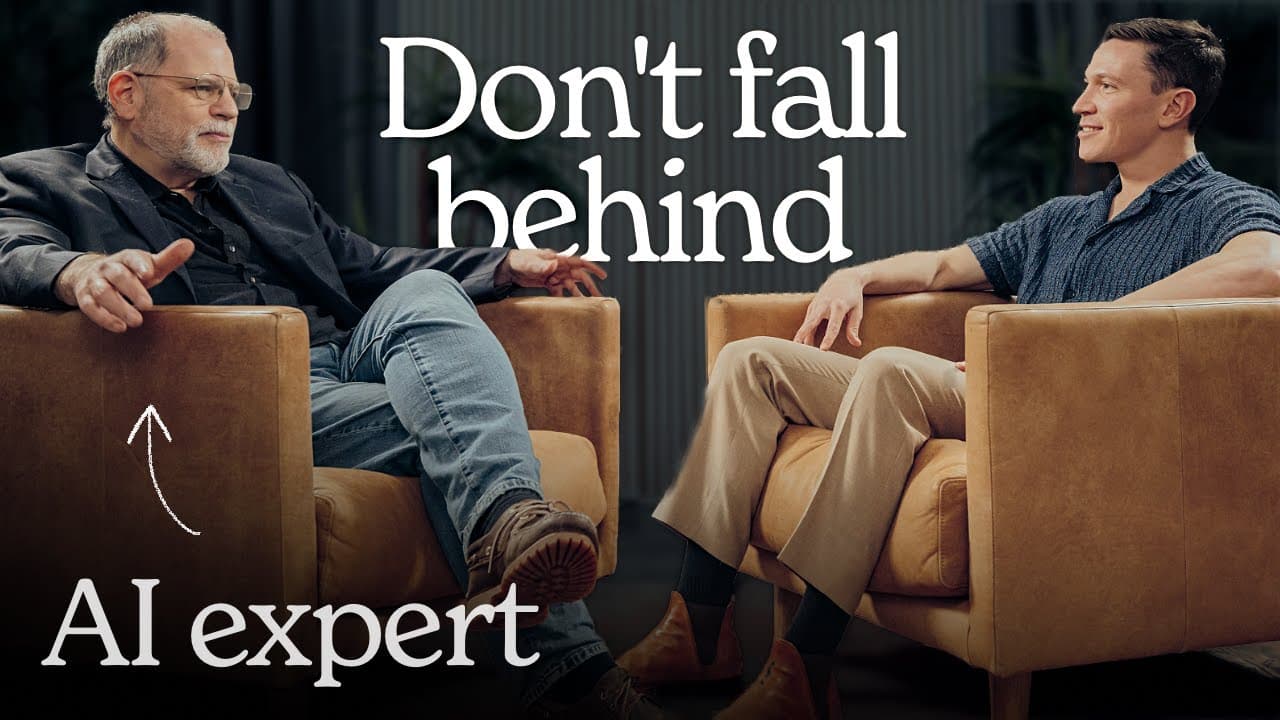
Tyler Cowen uses AI as secondary literature for faster, more active reading and research, but he does not let it write for him. For podcast preparation, he now buys two or three books instead of 20–30 and interrogates leading LLMs for context. He also uses AI to explore literary puzzles, check facts, and identify potentially obnoxious passages while preserving his weird, cryptic voice. Read on for his practical questioning and verification methods.
Transcript
look there are people who know a lot about AI but they don't know anything about writing and there's people who know a lot about writing but they don't know anything about Ai and Tyler Cowan is one of the very few people who's an expert in both we talked about how is your career going to change if you're a writer how is AI going to change writing i... Read More
Key Insights
- Tyler Cowen is one of the few experts in both AI and writing, which lets him speak to how AI changes writing careers, writing in general, and how to learn faster and think better using the tools.
- AI works best as the new secondary literature: Cowen now buys two or three books instead of 20-30 for podcast prep, interrogating the best LLMs to acquire context much more quickly for guests like historian Helen Caster.
- Active questioning improves reading quality, not just speed. Rereading Shakespeare's Richard II or Wuthering Heights, Cowen asks the AI about chapter puzzles and connections, which improves his epistemics and makes learning more fun.
- Hallucinations have declined by more than 10x in the last year with the best reasoning models, and as an interviewer who asks rather than answers questions, a modest degree of hallucination does not trip Cowen up.
- Anything learned from any source, whether a human, Einstein, or Encyclopedia Britannica, must be double-checked, so fact-checking AI output is not an extra burden. Cowen has research assistants fact-check every claim in his books.
- The worst question to ask an AI is what to ask a person, because it produces dull, bland, normy results. Better to ask specific practical questions about historical details, which lead you to your own out-of-left-field questions.
- Cowen refuses to let AI write for him because he wants the writing to be his own weird, cryptic, layered voice. AI tends to smooth out and homogenize writing, which he actively avoids.
- AI is useful for critiquing tone: Agnes Callard suggested asking the AI what readers might find obnoxious, and it correctly flagged a passage where Cowen was being supercilious and condescending.
Install to Summarize YouTube Videos and Get Transcripts
Explore YouTube Video Summarizer or Get YouTube Transcript Extractor
Questions & Answers
Q: How does Tyler Cowen use AI to write and read?
Cowen primarily uses AI as secondary literature, questioning LLMs while preparing interviews or rereading books. For writing, he uses it for background research, fact-checking, and tone criticism, but refuses to let it compose his prose because he wants to preserve his own weird, cryptic voice.
Q: How does Tyler Cowen use AI for podcast preparation?
When preparing for a historian such as Helen Caster, Cowen interrogates leading LLMs about the subjects of her books. Instead of ordering 20–30 books as he once did, he may buy only two or three, acquire context more quickly, and prepare enough material to produce more podcasts.
Q: How does AI improve Tyler Cowen’s reading?
Cowen treats AI as an active reading companion for works such as Shakespeare’s Richard II and Wuthering Heights. He asks what happened in a chapter, which puzzles deserve attention, and how passages connect to later events, making his reading more engaging and improving his understanding.
Q: Why does Tyler Cowen refuse to let AI write for him?
Cowen wants his writing to remain entirely his own, even if an AI could produce stronger prose. He believes AI tends to smooth and homogenize writing, while he wants his work to stay weird, cryptic, layered, and sometimes parable-like.
Q: Does Tyler Cowen use AI to critique his writing?
Yes, particularly for tone. Following Agnes Callard’s suggestion, he asked AI what readers might find obnoxious, and it identified a passage that sounded supercilious and condescending, prompting him to revise it.
Q: How concerned is Tyler Cowen about AI hallucinations?
Cowen says hallucinations are manageable for his research because he is usually gathering questions and perspectives rather than presenting the model’s answers as facts. He says the best reasoning models hallucinate more than 10 times less than a year earlier, but he still double-checks information from AI just as he would information from any other source.
Q: Which AI models does Tyler Cowen use for reading and research?
At the time discussed, Cowen considered OpenAI’s 01 Pro the best model for this work, while also describing Claude as very good. He found DeepSeek useful and fun but unreliable about hallucinations, and noted that model preferences change frequently.
Q: How does Tyler Cowen develop unusual interview questions with AI?
He avoids asking AI what he should ask a guest because he finds the results dull, bland, and conventional. Instead, he asks specific practical questions about historical details, such as Wycliffe’s Bible translation and its patrons, then uses the resulting context to devise his own out-of-left-field questions.
Summary & Key Takeaways
-
Tyler Cowen, expert in both AI and writing, focuses on the practical implications of AI rather than utopian, dystopian, or ethical debates. He uses AI daily to advance his skills, treating experimentation and seeing what works or fails as more productive than theorizing.
-
Cowen's primary use is as secondary literature while reading. Preparing podcasts, he now buys a few books instead of 20-30 and interrogates the best LLMs, acquiring context faster and enabling more podcasts while improving the quality of his pleasure reading.
-
On writing, Cowen never lets AI write for him, wanting his cryptic, parable-like voice preserved. He uses it for background research in areas like law, tone-checking for obnoxious passages, and fact-checking, but insists his writing stay weird and human.
Read in Other Languages (beta)
Share This Summary 📚
Summarize YouTube Videos and Get Video Transcripts with 1-Click
Try YouTube Summary with ChatGPT & Claude or YouTube Transcript Generator
Explore More Summaries from David Perell 📚
Summarize YouTube Videos and Get Video Transcripts with 1-Click
Try YouTube Summary with ChatGPT & Claude or YouTube Transcript Generator