How will AI reshape writing and storytelling today
TL;DR
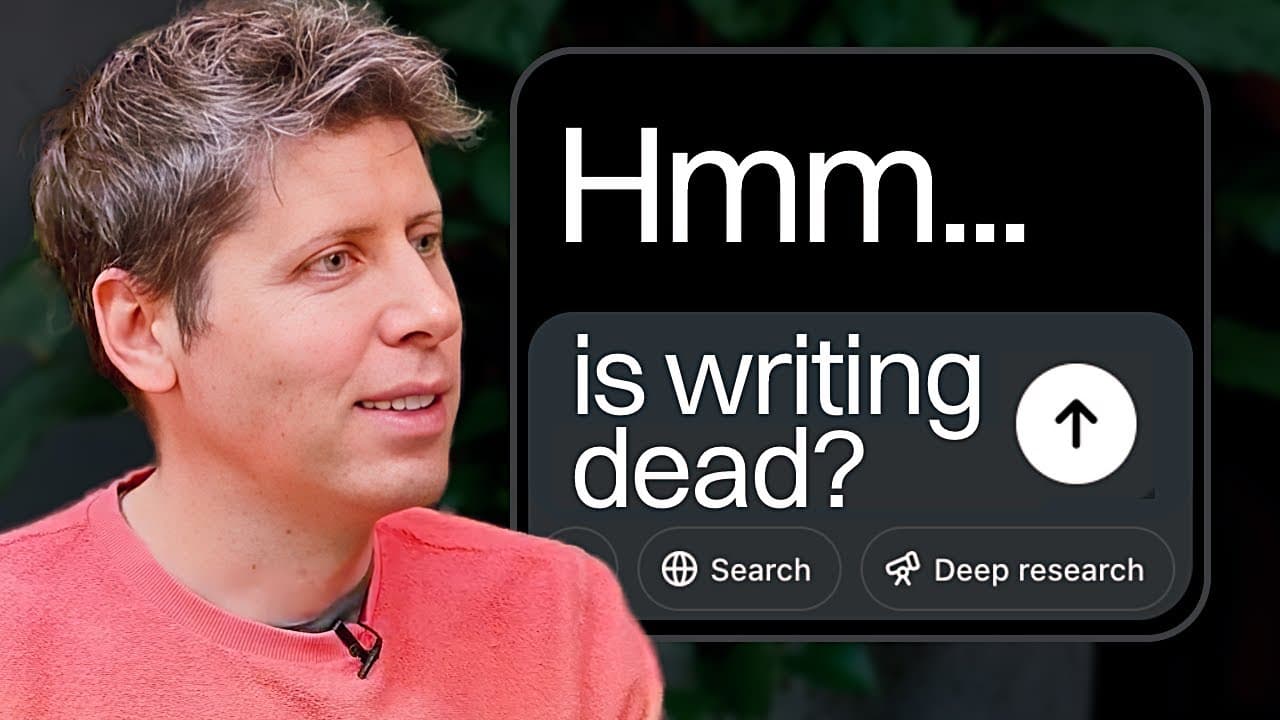
AI will not replace human writing imminently; writers and readers still seek human experience and story. Tools like ChatGPT can improve storytelling with better examples, but real storytelling benefits from human authorship and life stories. Training writers to use AI without losing narrative value is key for the future of writing.
Transcript
I don't see any evidence whatsoever that AI seems to be killing writing. I mean, there's like a lot of bad AI writing like plastered over the internet. Um, and there's like a lot of like bad student assignments that have probably been written by AI, but I don't think anyone's serious. I think it would have to be like full super intelligence before ... Read More
Key Insights
- AI writing is not currently replacing human authors, according to the interview.
- The most engaging writing combines strong storytelling with human perspective, not just polished language.
- Training writers to use AI involves teaching how to use tools without sacrificing narrative quality.
- AI can help with everyday tasks like email and programming, increasing productivity.
- There is potential to improve storytelling by training models on what makes a good story, not only on style.
- Writers should learn to use AI as a tool for discovery and idea generation, not just drafting.
- Voice and cadence in storytelling are areas where AI can grow to support richer narratives.
- Future writing will involve collaboration between humans and AI to balance imagination with technical efficiency.
Install to Summarize YouTube Videos and Get Transcripts
Explore YouTube Video Summarizer or Get YouTube Transcript Extractor
Questions & Answers
Q: A real search query question about the video (How to, What is, Why does). Question 1
How can writers train with AI to keep storytelling engaging while using AI to handle routine tasks? The answer is to focus on story first and use AI to handle repetitive editing, summarize long emails, or generate drafts that you then revise for voice and character. Training involves exposing AI to good and bad storytelling examples, identifying what works, and refining prompts to emphasize narrative arc.
Q: Question 2
What does Sam Altman say about AI replacing human writing? He says there is not enough evidence that AI will kill writing, noting that even with capable AI, people still desire the personal life story of authors. The belief is that human connection and life experience remain central to enjoying great books, and AI would have to reach super intelligence before replacing human authors.
Q: Question 3
How does Altman describe the role of AI in education and storytelling? He suggests that training and using AI to teach writing should focus on balancing beauty and story. The goal is to teach students to craft readable, engaging stories rather than just ornamentation, while also showing how AI can help refine narrative structure and reduce overwriting.
Q: Question 4
What are examples of AI assisting everyday workflows mentioned in the talk? AI helps with programming, email summarization, and supporting healthcare and creative work. For example, programmers report transformations in how they work, and AI can summarize lengthy emails, making it easier to grasp essential points without wading through long threads.
Q: Question 5
What is the potential future of writing with AI according to the interview? The future could involve a new tool for writing that helps generate ideas and discover new possibilities, not just expand bullet points. It envisions computers as tools that enable tasks beyond current capabilities, facilitating a more collaborative writing process.
Q: Question 6
How might we teach writing in a world with AI writing tools? Teaching might involve practical exercises like trimming metaphor usage, cutting unnecessary words, and focusing on storytelling. The aim is to teach students to produce strong narratives, while leveraging AI to support the craft without undermining the story.
Q: Question 7
What does Altman say about AI storytelling quality and future improvements? He notes that current storytelling is not yet strong, but expects improvement as models become smarter and as we train them to be better storytellers. Continued progress will likely enhance how AI can contribute to engaging narratives.
Q: Question 8
Why is the human element important in reading experiences, according to the talk? The speaker emphasizes that readers connect deeply with a writer’s life story and human experiences, which creates meaningful shared moments. This personal connection is a core part of why people read and enjoy books, something AI writing has not yet replicated.
Summary & Key Takeaways
-
AI will not kill writing, even if AI quality improves, and human stories remain central to readers. Writers should focus on storytelling and life narratives rather than purely glossy prose. The future involves blending AI tools with traditional craft to enhance creativity.
-
Writers can leverage AI for everyday tasks, but storytelling still requires a compelling arc and character development. Training approaches may include cutting unnecessary words and refining metaphors to preserve story while improving clarity.
-
AI storytelling is evolving as models get smarter, but education will steer how we use tools to support, not supplant, human creativity. The emphasis shifts toward tools that help discover ideas and enhance writing workflows.
Read in Other Languages (beta)
Share This Summary 📚
Summarize YouTube Videos and Get Video Transcripts with 1-Click
Try YouTube Summary with ChatGPT & Claude or YouTube Transcript Generator
Explore More Summaries from David Perell 📚


Summarize YouTube Videos and Get Video Transcripts with 1-Click
Try YouTube Summary with ChatGPT & Claude or YouTube Transcript Generator