How to Use Writing to Think More Clearly
TL;DR
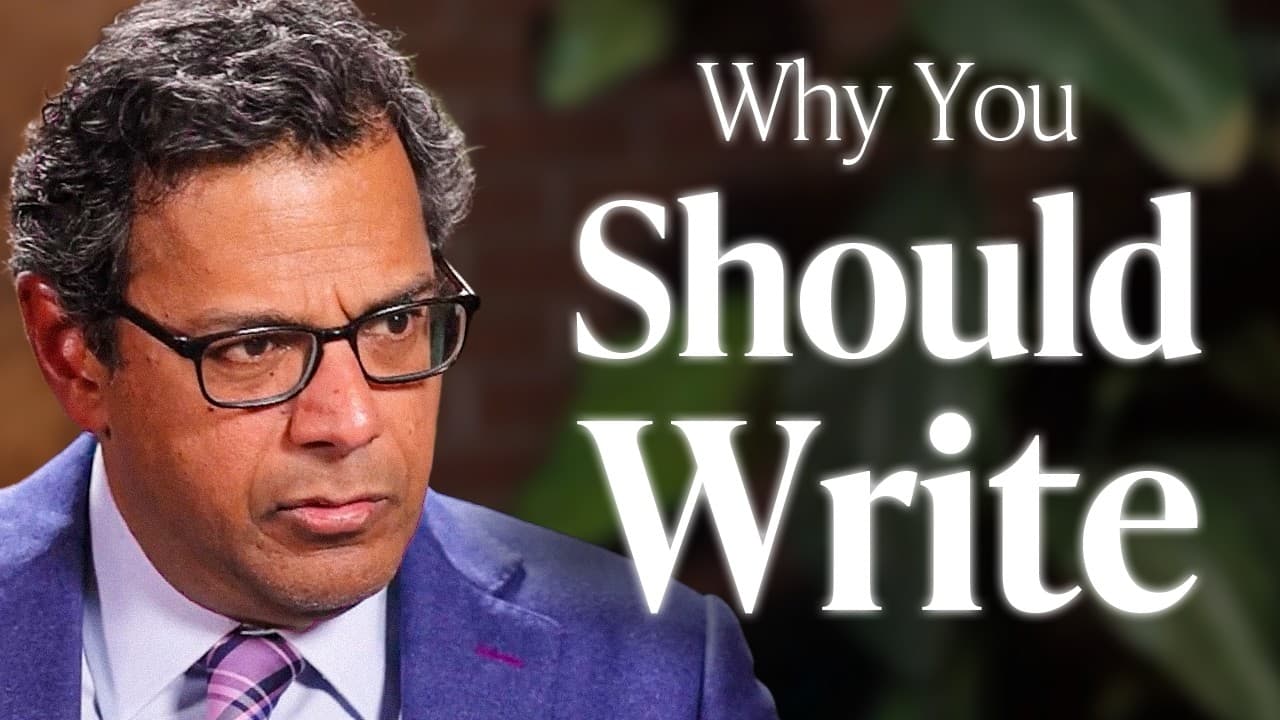
Writing improves thinking through research, repeated revision, and attention to connections between ideas. Atul Gawande developed the craft while training as a surgeon by following work that gave him energy, accepting detailed editorial feedback, and committing about 30 hours each month, using whatever free periods his demanding schedule allowed.
Transcript
Atulawande has written four books and countless articles for the New Yorker. When you think about doctors who write well, he's going to be the first person who comes to mind. What's unique about him is that this isn't something that came naturally to him. The work of research, writing, editing, shaping sentences, telling stories. Those are all thin... Read More
Key Insights
- Career exploration is useful before specialization because people may not initially know what they do well or what gives them energy. Gawande describes saying yes to varied opportunities before 40, then saying no more often after identifying the interests worthy of decades of sustained attention.
- Energy is Gawande's practical test for choosing commitments. He noticed that writing, surgery, and certain research activities energized him, even when they demanded substantial effort, while exhausting activities deserved less attention. This distinction helped him maintain several demanding forms of work over many years.
- Gawande's varied work is unified by an interest in health and humanity. Surgery, public policy, public health, health systems, and writing each allowed him to investigate how medical knowledge can be delivered reliably, made affordable, and navigated by people facing complex needs and consequences.
- Writing was a learned craft for Gawande, not an ability that appeared naturally. His early pieces contained embarrassing weaknesses, including overwrought and conflicting metaphors, but continued practice and specific editorial feedback showed him what worked, what failed, and what needed to be rewritten.
- Rewriting is central to producing stronger work. Gawande had never rewritten an assignment in college, but editorial guidance changed his process. His first New Yorker article went through 22 exchanges and five full rewrites because each round revealed additions or changes that materially improved the piece.
- A modest time budget can sustain serious writing alongside demanding employment. Gawande aimed for 30 hours per month, roughly an average of one hour daily, rather than pursuing an extreme output target. The regular monthly commitment allowed him to keep each project moving forward.
- Writing time does not need to occur in equal daily sessions. Gawande's schedule varied considerably, so he used operating-room turnover for reading, found weekend blocks for drafting, and captured whatever time was available. His monthly average mattered more than maintaining an identical routine every day.
- Editorial anxiety can coexist with productive improvement. Gawande often felt finished and wanted to return his attention to surgical training, yet his editor continued finding meaningful improvements. He tolerated the frustration because every round taught him something new and made the article significantly better.
Install to Summarize YouTube Videos and Get Transcripts
Explore YouTube Video Summarizer or Get YouTube Transcript Extractor
Questions & Answers
Q: How can writing improve the way you think?
Writing can improve thinking by forcing ideas through research, organization, revision, and connection. Gawande's experience shows that an initial draft is only part of the process. Editorial questions repeatedly exposed missing material and opportunities for improvement. Revising the work helped him see more clearly what he meant, which elements belonged together, and where his original treatment was incomplete.
Q: How can a busy professional make time to write?
A busy professional can set a modest monthly target and use irregular openings instead of waiting for an ideal daily schedule. Gawande aimed for 30 hours of writing per month, approximately an hour per day on average. Because his availability varied, he read during operating-room turnover, drafted when he could secure longer periods, and used some weekend time to move projects forward.
Q: Why did Atul Gawande continue writing while training as a surgeon?
Gawande continued because writing gave him energy rather than leaving him exhausted. After demanding days in surgical residency, he still made an hour and a half or two hours for research or drafting. That willingness was a signal that the activity mattered to him. He followed a broader principle of doing more work that energized him and less work that depleted him.
Q: How did Atul Gawande learn to write well?
Gawande learned through practice, candid feedback, and repeated rewriting. His early Slate pieces were imperfect, but his editor, Jake Weisberg, identified what worked and what did not, then asked him to strengthen the first and reduce the second. Gawande gradually developed tolerance for revision, which prepared him for the much more demanding editorial process at The New Yorker.
Q: How much revision did Atul Gawande's first New Yorker article require?
Gawande's first New Yorker article was about 4,000 words and required 22 editorial exchanges, including five complete rewrites. He initially expected the project to take a couple of months, but it lasted nine months. The prolonged process caused anxiety, especially alongside surgical training, yet he accepted it because every round revealed changes that made the article significantly better.
Q: Should early-career professionals say yes to many opportunities?
Gawande endorses a friend's principle of saying yes broadly before 40 because people may not yet know their strengths, sources of energy, or the kinds of work a changing world will create. Trying varied activities provides evidence about what energizes or exhausts them. After identifying durable interests, they can say no more often and invest deeply in those chosen areas.
Q: Does a productive writing routine require writing every day?
Gawande's routine suggests that consistent progress does not require identical daily sessions. His writing time had high variance because surgery controlled much of his schedule. Some periods were used for reading between operations, while weekends offered longer drafting blocks. He measured commitment as 30 hours per month, allowing the average to remain steady even when individual days looked very different.
Q: What makes editorial feedback valuable to a writer?
Editorial feedback is valuable when it identifies specific strengths, weaknesses, omissions, and opportunities for revision. Gawande's early editor explained what he was doing well and poorly, then returned the work for rewriting. At The New Yorker, further requests repeatedly created anxiety, but they also taught him something new and produced clear improvements that he could not reasonably dismiss.
Summary & Key Takeaways
-
Atul Gawande built a career around surgery, public health, health systems, and writing. These activities appeared unrelated, but each helped him examine humanity through health. His guiding career principle was to explore widely before 40, notice which activities created energy, and then decline distractions so he could deepen enduring interests.
-
Gawande began writing in 1996 when his friend Jake Weisberg invited him to contribute to Slate. His first assignment was a diary about serving as a second-year surgical resident. Writing did not come naturally, but the work energized him after demanding hospital days, encouraging him to research, draft, and continue practicing.
-
Editorial feedback taught Gawande that serious writing depends on rewriting. His first New Yorker piece required 22 editorial exchanges and five complete rewrites over nine months. Although each new request created anxiety, the piece kept improving. He sustained writing alongside surgery by targeting 30 hours monthly and using irregular openings between cases and on weekends.
Read in Other Languages (beta)
Share This Summary 📚
Summarize YouTube Videos and Get Video Transcripts with 1-Click
Try YouTube Summary with ChatGPT & Claude or YouTube Transcript Generator
Explore More Summaries from David Perell 📚
Summarize YouTube Videos and Get Video Transcripts with 1-Click
Try YouTube Summary with ChatGPT & Claude or YouTube Transcript Generator