How Did Marketing Genius Harry Dry Rewrite the Same Ad 22 Times?
TL;DR
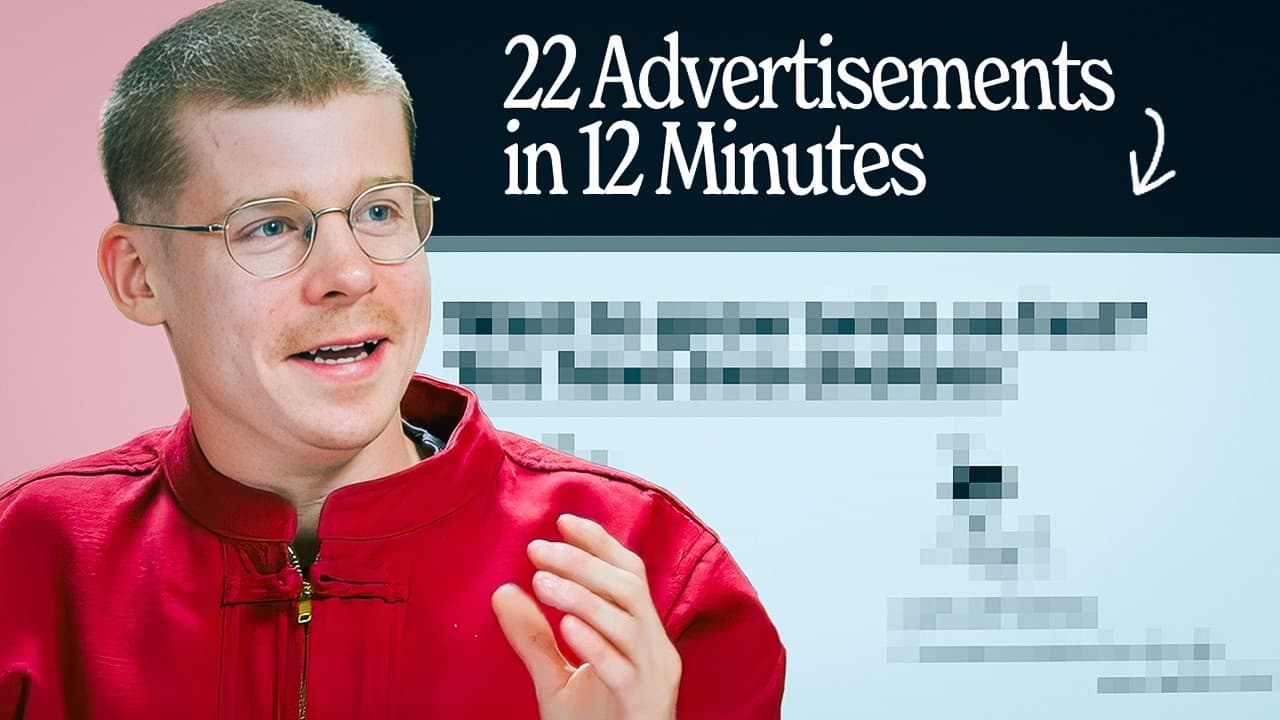
Harry Dry makes an advertising message work by repeatedly refining its central contrast, wording, rhythm, layout, and imagery. Starting with the fact that raising landing-page conversions from 1% to 2% doubles conversions, he contrasts learning copywriting with spending twice as much on growth. He develops the copy directly in Figma and seeks trusted feedback after two or three hours, making the full process worth reading.
Transcript
I want to show you what what how how an ad comes together so I I'm making a course on copyrighting uh this is that I wrote probably for the landing page um probably a little bit too much going on for a billboard but I want to give you the process because it's like there's a lot to it um it's probably about 20 rewrites are you looking at the same th... Read More
Key Insights
- A strong advertisement can begin with one compact numerical observation. Increasing landing page conversions from 1% to 2% represents twice as many conversions, giving Dry a concrete seed from which to build the advertisement’s argument, conflict, headline, and visual structure.
- Conflict is a practical tool for organizing advertising ideas. Dry creates it by dividing a page and listing opposites, including different approaches, opposing beliefs, or competitors, then uses the contrast between spending more money and improving copywriting to make his message easier to grasp.
- Creative references can provide a useful structure without supplying the final message. A Volkswagen advertisement inspires Dry’s side-by-side layout because it contrasts a complicated conventional process with a simpler option, allowing his own advertisement to compare the corporate way with the copywriting way.
- High standards require continuing after a draft starts to feel promising. Dry likes an intermediate version but refuses to approve it, choosing to keep exploring the direction until he has exhausted its possibilities and resolved issues involving clarity, symmetry, line length, rhythm, and layout.
- Unfiltered writing helps generate stronger options. Dry rapidly produces imperfect phrases such as “Go full Zuckerberg” and “throw spaghetti at walls,” treating early ideas as dirty water that must flow before cleaner language appears, rather than judging every possibility as soon as it is written.
- Copy and design function as one creative process in Dry’s workflow. He writes advertisements directly in Figma, newsletters inside the newsletter tool, and landing pages in their actual context because placement, typography, imagery, line length, and surrounding material affect whether the words work.
- External feedback becomes valuable when prolonged work weakens personal judgment. After writing for two or three hours, Dry sends headline options to people whose taste he respects, and their consensus helps him choose “throw money and pray” for the left side of the advertisement.
- Final polish reinforces meaning through rhythm, emphasis, and illustration. Dry bolds phrases involving “twice,” adds an explanatory line connecting 1% to 2% with twice as many conversions, and directs the illustrator to differentiate the frustrated money-thrower from the writer using a typewriter and light bulb.
Install to Summarize YouTube Videos and Get Transcripts
Explore YouTube Video Summarizer or Get YouTube Transcript Extractor
Questions & Answers
Q: How does Harry Dry rewrite an ad until its message works?
He starts with one concrete idea, builds a conflict around it, and repeatedly tests new headlines, wording, and layouts. For this ad, the seed is that increasing landing-page conversions from 1% to 2% doubles conversions, while the opposing approach involves spending twice as much on growth.
Q: How can a simple observation become a complete advertisement?
Start with an observation containing a clear benefit or tension. Dry turns the difference between 1% and 2% conversion into a contrast between spending twice as much on ads and learning copywriting, then develops that contrast through headlines, layout, typography, and illustrations.
Q: Why is conflict useful when writing advertising copy?
Conflict gives readers two ideas they can compare immediately. Dry says it can involve different approaches, opposing beliefs, or competitors; his ad contrasts raising more cash, hiring more staff, and spending more on ads with improving conversions through copywriting.
Q: How did a Volkswagen ad influence Harry Dry's advertisement?
The Volkswagen ad contrasts an ordinary car’s lengthy winter preparation with the simpler step required for a Volkswagen. Dry borrows its side-by-side structure, headings, boxes, and comparative logic to present the corporate way against the copywriting way.
Q: Why keep rewriting an advertisement after finding a promising draft?
A promising draft can still have problems with clarity, symmetry, line length, rhythm, or layout. Dry continues because he would not sign off on the intermediate version, eventually simplifying headings, shortening copy, and improving the parallel structure.
Q: How does Harry Dry generate copy ideas without judging them too early?
He writes many possibilities rapidly and allows weak ideas to appear before evaluating them. Options such as “Go full Zuckerberg,” “throw spaghetti at walls,” and “throw money and pray” emerge from this process, with the last phrase becoming the preferred contrast.
Q: Why does Harry Dry write advertising copy directly in Figma?
He treats copy and design as one process because typography, images, line lengths, and layout affect whether the words work. Developing the ad in Figma exposes issues such as a sentence wrapping onto two lines or headings lacking visual symmetry.
Q: When should a copywriter ask other people for feedback?
Feedback becomes useful when prolonged work makes personal judgment unreliable. After working for two or three hours, Dry sends headline options to friends whose taste he respects, and their consensus helps him choose “throw money and pray.”
Summary & Key Takeaways
-
Harry Dry begins with the observation that raising landing page conversions from 1% to 2% doubles growth. He turns this seed into a conflict between spending twice as much on growth and learning copywriting, then explores headlines, lists, layouts, and opposing labels until the central argument becomes clear.
-
A Volkswagen advertisement inspires the side-by-side structure, with a complicated conventional option contrasted against a simpler alternative. Dry develops the advertisement directly in Figma because copy, typography, illustrations, and layout must work together. Each revision solves one communication problem but can create another problem requiring further iteration.
-
After several hours, Dry asks trusted friends for feedback and selects “throw money and pray” as the strongest contrasting headline. He then emphasizes repeated words, commissions matching illustrations, and directs their emotional details. The finished advertisement presents copywriting as the simpler route to doubling conversions from 1% to 2%.
Read in Other Languages (beta)
Share This Summary 📚
Summarize YouTube Videos and Get Video Transcripts with 1-Click
Try YouTube Summary with ChatGPT & Claude or YouTube Transcript Generator
Explore More Summaries from David Perell 📚
Summarize YouTube Videos and Get Video Transcripts with 1-Click
Try YouTube Summary with ChatGPT & Claude or YouTube Transcript Generator