How to Write Essays With a Five-Step Process
TL;DR
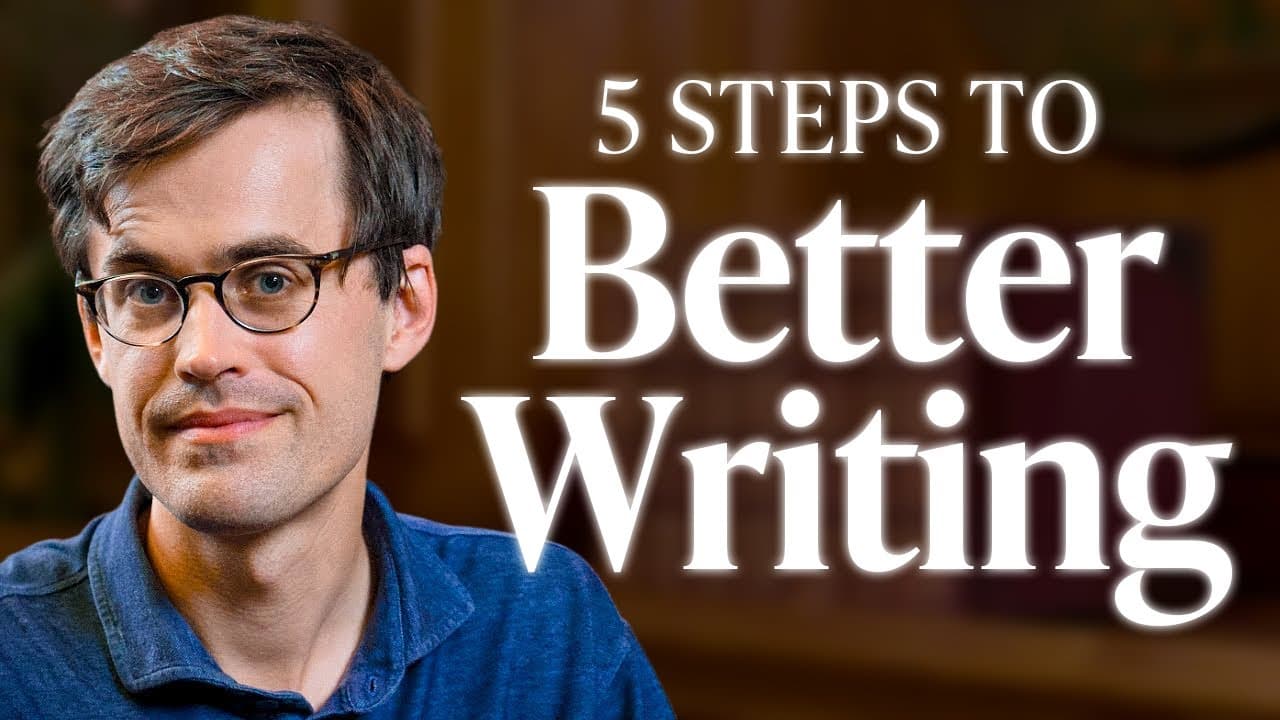
Strong essays begin with sustained exploration, not immediate drafting. Let knowledge, experience, notes, and conversations accumulate until an urgent personal question gives the material direction, then cluster and sequence ideas to shape the reader’s emotional and cognitive state. Draft the core quickly while its energy is alive, and postpone extensive editing until the piece exists as a coherent whole.
Transcript
Well, Henrik, you have a blog that's called Escaping Flatland, and you've written so many pieces over the years. Some of them gone mega viral to Substack. And by writing those pieces, you've developed this five-step method for writing that I think would be a really good way to start. It's basically a five-step method. Anyone can use it. And the ver... Read More
Key Insights
- Strong writing is grounded in accumulated knowledge and experience. Karlsson’s best pieces emerged from subjects he had read about, discussed, or worked on for long periods, allowing him to move beyond simplistic thinking and make the material genuinely his own before drafting.
- An animating question is a personally urgent problem that gives an essay momentum. Karlsson waits until the stakes feel real and the answer matters to him as a person, such as helping him become a better father or husband, before treating the material as ready.
- A topic is not enough to create narrative drive. An essay moves when it opens a question that the writer deeply needs to answer, creating an unresolved loop that carries both writer and reader forward until the inquiry reaches some form of closure.
- The animating question works like a magnetic field for research material. Once it appears, notes, journal entries, stories, images, and arguments can be selected and shaped according to whether they help answer the central question rather than merely displaying interesting information.
- An essay is a unified arrangement of distinct centers. Karlsson groups related material into clusters, then tests how several clusters interact, because a successful essay must create a strong whole instead of presenting separate pieces that happen to sit next to one another.
- Sequencing changes how readers perceive identical material. A story or contextual fact can place readers in a particular emotional state, making them prepared to encounter a later philosophical argument or familiar truth with greater openness and a different interpretation.
- Drafting the core works best when the structure has released momentum. After the clusters snap into an energizing order, Karlsson types quickly to capture the emotional force, stakes, and movement he feels, while leaving extensive correction and refinement for a later stage.
- Early ideas require time and protection before critique. The described process allows curiosity, notes, conversations, and experiments to develop before the writer makes strong promises or exposes fragile ideas to judgment, supporting a more authentic voice and writing that operates as discovery.
Install to Summarize YouTube Videos and Get Transcripts
Explore YouTube Video Summarizer or Get YouTube Transcript Extractor
Questions & Answers
Q: How do you use Henrik Karlsson’s five-step writing process?
Begin by exploring a subject through reading, lived experience, notes, and conversations without forcing an immediate draft. Wait for an urgent personal question to emerge, then gather the material that helps answer it. Group related ideas into clusters, experiment with their linear order, and draft the core quickly when the sequence produces momentum. Edit afterward, including shaping the beginning and ending once the central piece is clearer.
Q: Why should writers wait before drafting a new idea?
A newly exciting idea may not yet be grounded in the writer’s knowledge or experience. Karlsson lets a subject develop through repeated reading, note-taking, conversations, and reconsideration, sometimes returning months later with different language or a changed perspective. This delay helps him move beyond simplistic thinking and discover whether the idea can generate a question important enough to sustain an entire essay.
Q: What is an animating question in essay writing?
An animating question is the unresolved inquiry that gives an essay direction, stakes, and movement. It is more than a broad topic because the writer feels a personal need to discover the answer. Karlsson recognizes it when accumulated material coalesces into something urgent, often connected to how he wants to live or relate to others, and that urgency drives the writing forward.
Q: How does an animating question organize research notes?
The animating question acts like a magnetic field that pulls useful material into shape. Once Karlsson has a clear vantage point, he can examine notes from books, journal entries, stories, images, and arguments according to how they contribute to the inquiry. Relevant elements begin forming clusters, while the emerging structure reveals what still needs to be understood or added to answer the question.
Q: How should writers organize ideas into an essay structure?
Writers can first combine related ideas into clusters that feel like coherent units, then test how those units interact when placed beside one another. Karlsson imagines an essay as a series of centers that must form a strong whole. Because readers encounter essays linearly, the writer must translate an interconnected mental network into an order that creates the intended movement, understanding, and emotional response.
Q: Why does sequencing matter in nonfiction writing?
Sequencing determines the emotional and cognitive state in which readers receive each idea. A story can prepare them emotionally for a later argument, while an unexpected insight can overturn the interpretation produced by earlier material. The conversation’s painting example shows that contextual information can make someone see the same image differently, even though the image itself has not changed. Order therefore shapes meaning.
Q: How can writers know when an essay’s structure is ready?
Karlsson looks for a felt release of energy when the clusters enter the right order. He mentally moves them around, imagining their different colors, feelings, and relationships, until they seem to snap into place. The test is experiential rather than purely analytical: the arrangement should create momentum in his body and make him eager to begin typing the core of the essay.
Q: Why should the first core draft be written quickly?
Writing quickly helps preserve the urgency and emotional momentum created by the animating question and the chosen sequence. Karlsson follows the strongest gradient of energy through the material, hoping that his own excitement, laughter, or tears will become momentum for the reader. He expects substantial later editing, but the immediate goal is a coherent whole rather than a patchwork assembled from isolated fragments.
Summary & Key Takeaways
-
Henrik Karlsson’s process starts with long exploration. Instead of immediately drafting an exciting idea, he reads, makes notes, revisits his assumptions, changes his wording, and discusses the subject with others. The material becomes ready when it produces an urgent question whose answer matters to his life, relationships, or personal development.
-
The animating question functions like a magnetic field. It selects relevant notes, stories, arguments, and images, then pulls them into clusters that each possess internal unity. Karlsson treats an essay as a series of centers whose arrangement must create a larger whole, rather than as disconnected observations placed beside one another.
-
Sequencing determines the reader’s emotional and cognitive experience. Karlsson mentally rearranges clusters until their relationship produces energy, then drafts the core rapidly to preserve that momentum. He values laughter, tears, urgency, and bodily response as signs of vitality, while accepting that substantial editing will be necessary after the coherent first draft exists.
Read in Other Languages (beta)
Share This Summary 📚
Summarize YouTube Videos and Get Video Transcripts with 1-Click
Try YouTube Summary with ChatGPT & Claude or YouTube Transcript Generator
Explore More Summaries from David Perell 📚

Summarize YouTube Videos and Get Video Transcripts with 1-Click
Try YouTube Summary with ChatGPT & Claude or YouTube Transcript Generator