Why Is the US Dollar So Powerful Despite Debt?
TL;DR
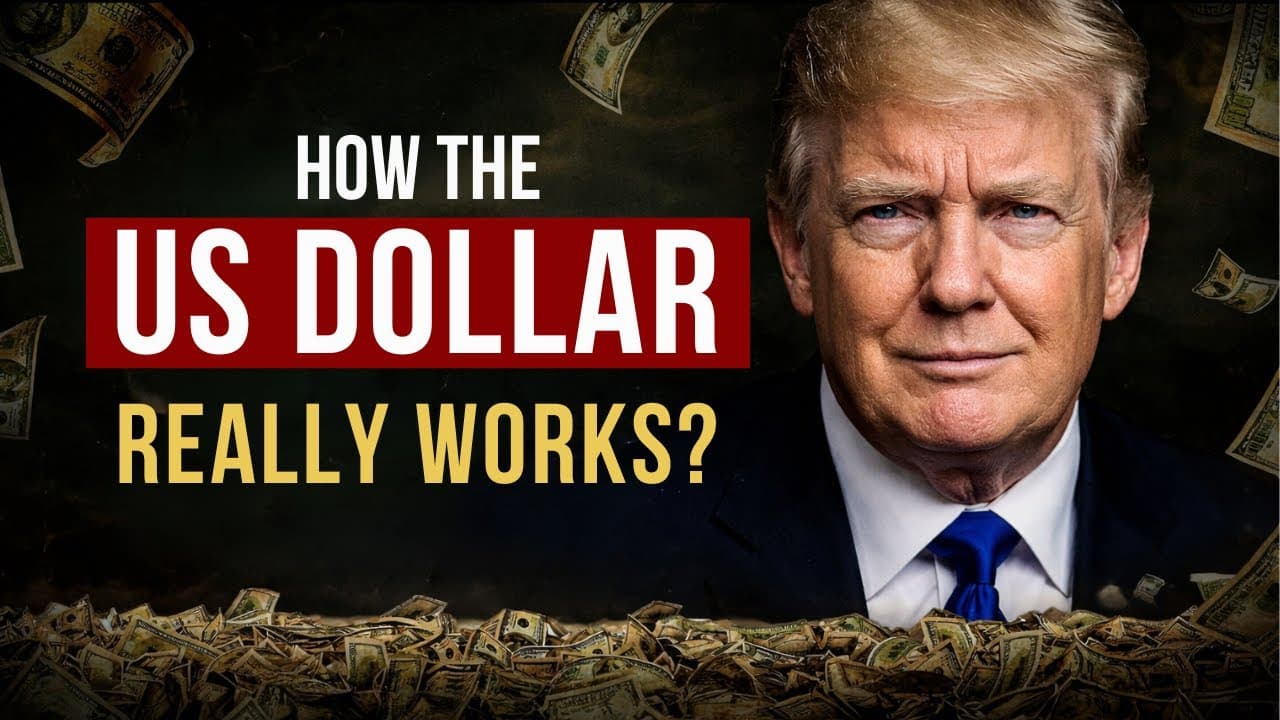
The dollar stays strong because global markets still need it for exchange and reserves, even as the US adds debt and prints money. The Fed creates money to buy bonds, injects liquidity, and lowers rates which stimulates borrowing and spending. Yet hyperinflation seen elsewhere has not occurred in the US so far.
Transcript
ladies and gentlemen the American dollar is a ticking time bomb You know in 1923 after Germany lost the World War I the German government was forced to pay $33 billion in reparations 1923 was disastrous for Germany In that year French and Belgian troops entered the ruer to force the Germans to pay up The Allies presented the London schedule of paym... Read More
Key Insights
- The US debt is described as a major factor in economic risk, yet the video asserts the dollar remains supported by global demand for its usage in trade and reserves.
- The Federal Reserve uses digital money creation to buy bonds, which increases bank reserves and enables more lending to households and businesses.
- Lower interest rates follow the increase in money supply, stimulating borrowing, home construction, and consumer spending that cycle through the economy.
- Asset prices and tax revenues rise as demand strengthens, which helps the government by expanding fiscal capacity through higher revenue.
- Historical examples are used to warn of hyperinflation when money is printed, but the US case is presented as different due to global arrangements and demand for dollars.
- The idea that the dollar’s decline can boost exports is discussed as a mechanism to support growth during liquidity injections.
- The IMF warnings about debt levels are cited to emphasize potential risks, even as the US avoids hyperinflation so far.
- The video claims that despite debt and new money, the global market has often rallied to protect the US economy when needed in recent crises.”],
- Q_and_A":[{
- More videos from this channel:
- More from this channel: Think School
Install to Summarize YouTube Videos and Get Transcripts
Explore YouTube Video Summarizer or Get YouTube Transcript Extractor
Questions & Answers
Q: A real search query question about the video (e.g. 'How to...', 'What is...', 'Why does...', 'When should...'). Question 1
Answer to question 1. Detailed, factual, at least 50 words. Standalone answer citable without additional context.
Q: Question 2
Answer 2. At least 50 words.
Q: Question 3
Answer 3. At least 50 words.
Q: Question 4
Answer 4. At least 50 words.
Q: Question 5
Answer 5. At least 50 words.
Q: Question 6
Answer 6. At least 50 words.
Q: Question 7
Answer 7. At least 50 words.
Q: Question 8
Answer 8. At least 50 words.
Summary & Key Takeaways
-
The video explains how massive US debt and new money creation interact with global demand for dollars, showing why hyperinflation has not yet materialized in the United States. It describes the money creation steps, from the Fed buying bonds to banks lending more, fueling growth and tax revenue.
-
The piece contrasts historical hyperinflations in Germany, Zimbabwe, and Venezuela with the US experience, arguing that global demand for dollars and oil, plus the dollar’s reserve currency status, helps shield the US from similar outcomes.
-
It also highlights debt ceiling discussions, the role of the IMF warning, and how the dollar can depreciate while export demand and oil prices still support its value on the world stage.
Read in Other Languages (beta)
Share This Summary 📚
Summarize YouTube Videos and Get Video Transcripts with 1-Click
Try YouTube Summary with ChatGPT & Claude or YouTube Transcript Generator
Explore More Summaries from Think School 📚






Summarize YouTube Videos and Get Video Transcripts with 1-Click
Try YouTube Summary with ChatGPT & Claude or YouTube Transcript Generator