How to use GitHub Spec Kit for AI coding workflows?
TL;DR
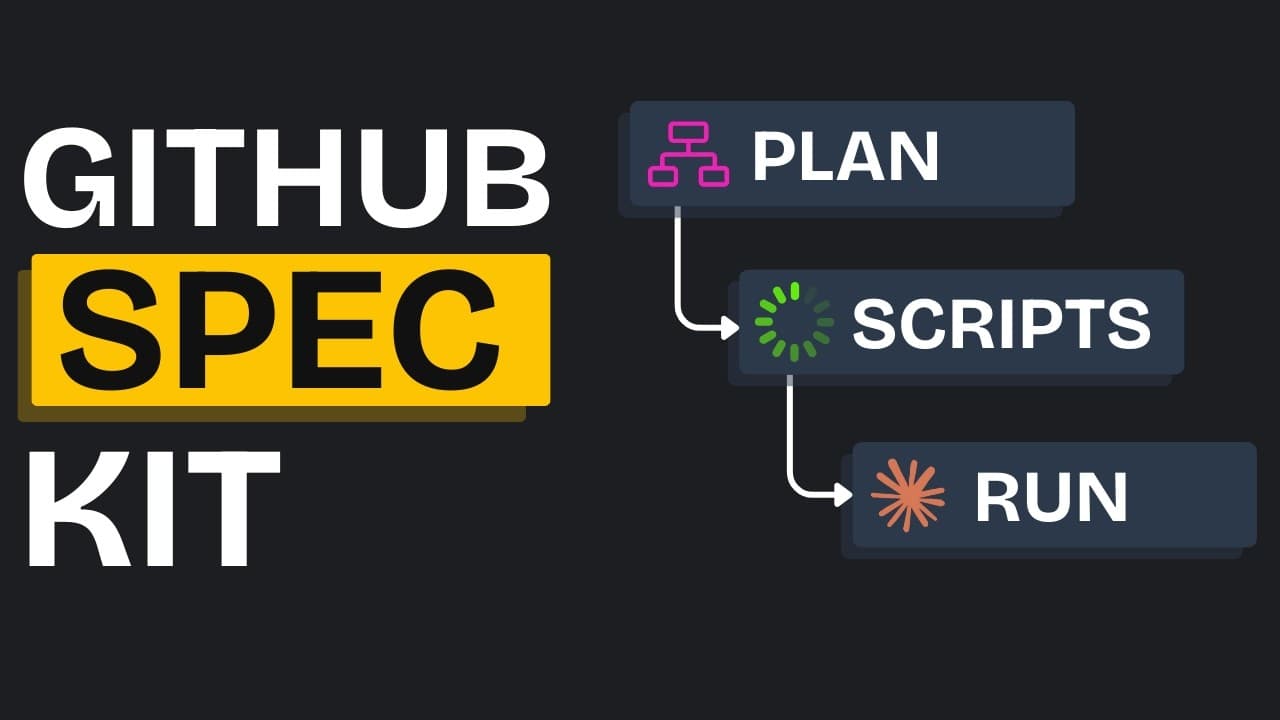
Spec driven development clarifies what to build before coding. The workflow uses plan, specify, and tasks phases with a feature branch system and executable scripts. It demonstrates using Claude Code as the agent, prompts refinement, and parallel task execution to speed up implementation, while noting UI limitations of the resulting app.
Transcript
Vibe coding has been a flawed concept from the start. Even if humans tried to code this way, they'd fail and encounter the same problems AI does. But the way that humans get it done is through something called specdriven development. Now, in simple terms, SDDD means that you clearly write out the exact specifications of the system and only then do ... Read More
Key Insights
- Spec driven development requires writing precise system specifications before implementation.
- The GitHub Spec Kit provides three main commands: plan, specify, and tasks, each serving a distinct phase of development.
- The kit creates a new feature branch and a dedicated spec for that feature to manage version control and scope.
- Executable scripts automate setup, feature creation, and template management to standardize workflows.
- Prompt refinement flags identify areas needing clarification, ensuring requirements stay aligned with project needs.
- Plans are static until fed with explicit details from the user, emphasizing that the agent does not perform independent research.
- Parallel tasks can significantly reduce total execution time compared to strictly sequential tasks.
- The workflow integrates with Claude Code, Gemini CLI, Cursor AI, and GitHub Copilot to streamline AI-assisted coding.
- More videos from this channel:
- More from this channel: AI LABS
Install to Summarize YouTube Videos and Get Transcripts
Explore YouTube Video Summarizer or Get YouTube Transcript Extractor
Questions & Answers
Q: What is spec driven development and why is it used in AI coding?
Spec driven development is a workflow where the exact specifications of the system are written before any coding begins. This approach aligns all stakeholders, ensures that AI agents work from a clear scope, and helps avoid scope creep. In AI coding, it translates vague prompts into structured requirements, enabling more predictable and maintainable implementations.
Q: What are the three main commands in the GitHub Spec Kit workflow?
The three main commands are plan, specify, and tasks. Plan focuses on technical implementation details, specify expands requirements into concrete specifications, and tasks breaks the plans into actionable steps. Together they guide the feature from idea to testable code, with version control integration via feature branches.
Q: How does the Spec Kit handle feature branches and specs?
For each feature, the spec kit creates a new feature number, a new git branch, and a dedicated directory containing a spec for that feature. This structure helps manage version control and keeps feature work isolated from the main branch, supporting feature-driven development and clean rollbacks if needed.
Q: What role does prompt refinement play in the workflow?
Prompt refinement identifies areas where the agent is unclear or where more detail is required. It marks these sections with needs clarification, and the user provides the missing information. This process ensures that the final specification is thorough and aligned with project goals before moving to implementation.
Q: Why does the video emphasize executable scripts in the Spec Kit?
Executable scripts handle setup and feature scaffolding automatically, reducing manual boilerplate work. They create new feature directories, copy templates, and prepare spec files, which accelerates the workflow and minimizes repetitive tasks. This makes the spec-driven process more repeatable and scalable across projects.
Q: What limitations of the Spec Kit are discussed in the video?
One limitation is that all tasks must be run manually; there is no automatic task execution by the agent. While many tasks can be parallelized, the user still instructs each task, which can slow down very large projects. The video also notes that UI polish may require a separate feature to improve the final product.
Q: How is testing integrated into the spec driven workflow?
Testing is central to the third phase of implementation. The plan and tasks phases generate tests that should be written before moving forward. Writing tests early ensures that any code changes can be verified against expected behavior, and CI/CD pipelines can re-run tests to catch regressions as new features are added.
Q: What agents are demonstrated as compatible with the Spec Kit and why?
The video demonstrates Claude Code as a coding agent and mentions compatibility with Gemini CLI, Cursor AI, and GitHub Copilot. These agents help transform prompts into structured specs, execute plan and specify steps, and accelerate coding workflows. The combination aims to improve clarity, collaboration, and speed in AI-assisted development.
Summary & Key Takeaways
-
Spec driven development starts with clear specifications before coding, then uses a structured workflow to implement, test, and deliver features.
-
The video shows how GitHub Spec Kit creates product specs, branch management, and automated scripts to support plan and specify phases.
-
The presenter discusses strengths and limitations, including the need for manual task execution and potential UI improvements after initial implementation.
Read in Other Languages (beta)
Share This Summary 📚
Summarize YouTube Videos and Get Video Transcripts with 1-Click
Try YouTube Summary with ChatGPT & Claude or YouTube Transcript Generator
Explore More Summaries from AI LABS 📚



Summarize YouTube Videos and Get Video Transcripts with 1-Click
Try YouTube Summary with ChatGPT & Claude or YouTube Transcript Generator