How can India fix its broken healthcare system?
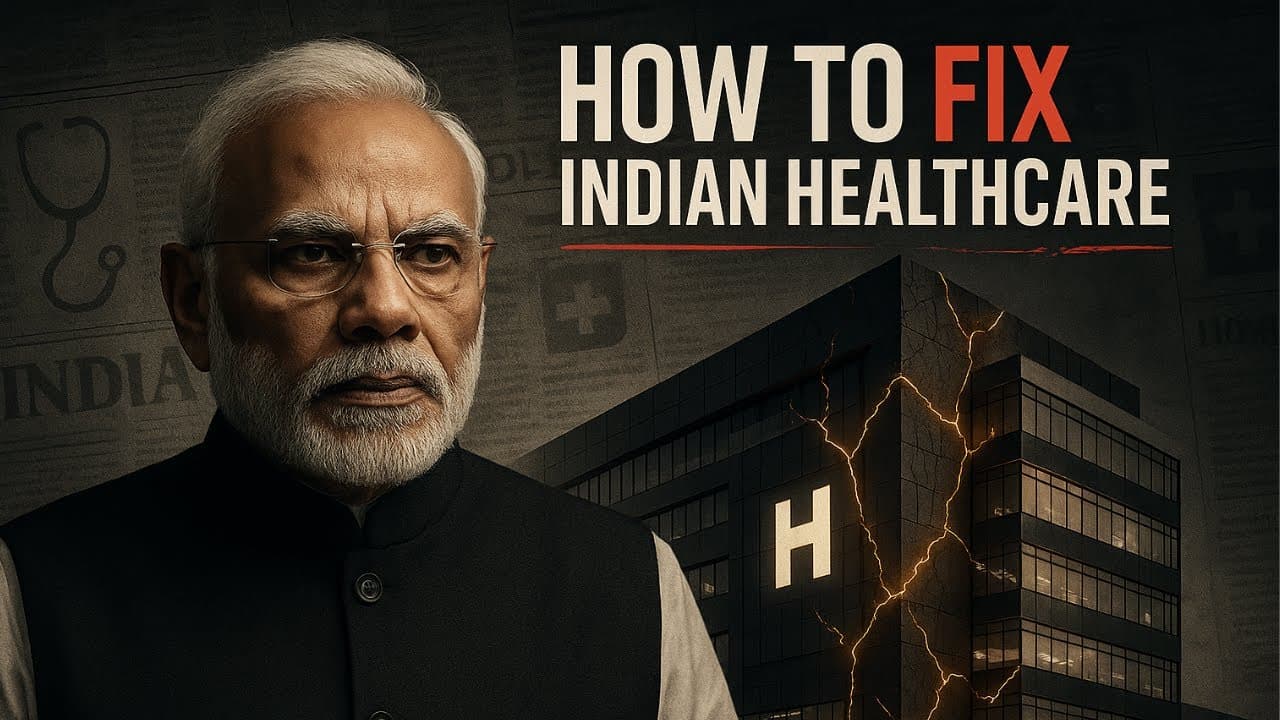
TL;DR
The hospital business model hinges on securing doctors with guaranteed payments and exploiting referrals, creating incentives that favor profits over patients. It also lacks transparent billing and clear cost structures, which erodes trust. Superhealth offers a patient centric, price transparent approach and aims to open more hospitals to improve access.
Transcript
In India, we are expanding health infrastructure and providing affordable healthcare to all. What exactly is the fundamental flaw in the business model of the healthare system of India? A crisis when it comes to hospital beds, infrastructure already swamped, doctors and patients are equally stuck in the system. India didn't have very good quality c... Read More
Key Insights
- The hospital business model relies on minimum guarantee payments to doctors, creating a baseline expense regardless of patient volume.
- MG recovery is a key metric used to assess whether new hospital doctors meet revenue targets set by administration.
- Hospitals compete for doctors through commissions, which can drive up costs and influence where patients seek care.
- Outpatient footfall is typically high, but the real challenge is outpatient to inpatient conversion which drives revenue.
- Hospitals prioritize revenue generation via doctor recruitment and referrals before focusing on patient outcomes.
- An entry strategy for new hospitals includes shortlisting doctors by potential revenue contribution rather than clinical skill alone.
- The cost to build a hospital is high, roughly 2 crores per bed, making early debt-funded operations common.
- Superhealth differentiates itself by aiming for transparent pricing, reduced wait times, and a patient-centric business model.
- More videos from this channel:
- More from this channel: Think School
Install to Summarize YouTube Videos and Get Transcripts
Explore YouTube Video Summarizer or Get YouTube Transcript Extractor
Questions & Answers
Q: A real search query about the video: How does the current hospital revenue model work in India?
The hospital revenue model centers on attracting doctors with minimum guarantees, which are monthly payments irrespective of patient inflow, to secure their services. This ensures doctors have a predictable base income while hospitals attempt to maximize profitability by increasing patient volume and referrals. MG recovery tracks whether these guarantees are being offset by actual revenue from patients, highlighting the tension between guaranteed costs and real earnings.
Q: What is the role of doctors in hospital profit strategies?
Doctors are recruited using commissions around 20 percent of the revenue they generate. Hospitals lure doctors with guaranteed monthly payments to ensure steady patient inflow. This setup ties a significant portion of physician income to hospital performance, creating incentives to route patients through the hospital, sometimes prioritizing revenue over clinical necessity, and shaping hospital competitiveness.
Q: Why is cost transparency a concern in Indian hospitals?
Patients report unclear bills and expectations that the final cost will exceed the initial quote. This lack of transparency is tied to how revenue models are built around guaranteed payments and referrals, which can obscure real prices. The absence of upfront, predictable pricing undermines trust and complicates patient decision-making.
Q: What does the term MG recovery mean in this context?
MG recovery measures how much revenue a hospital actually recovers relative to the minimum guarantee paid to doctors. If actual patient-generated revenue falls short of the guaranteed payments, the hospital faces a shortfall. This metric helps hospital management monitor doctor performance and profitability, guiding decisions about compensation and doctor retention.
Q: How does outpatient to inpatient conversion affect hospital finances?
Outpatient footfall is high and relatively easy to attract, but the critical financial driver is the conversion rate from outpatient visits to inpatient admissions. A higher conversion translates into greater revenue per doctor and hospital, while a lower rate squeezes margins. Managing this funnel is essential for profitability.
Q: What is the proposed distinction of Superhealth from conventional hospitals?
Superhealth aims to change the model by eliminating long wait times and introducing transparent pricing, focusing on ethical patient care. It seeks to align incentives away from purely revenue-centric practices toward trust and efficiency, potentially reshaping how hospitals compete through patient experience, service clarity, and cost openness.
Q: What are the key costs involved in building a hospital per bed?
Building a hospital incurs substantial capital expenditure, with a typical figure cited as around 2 crores per bed. This encompasses land, construction, equipment, medicines, and staffing. The high upfront cost necessitates debt-funded models and strong revenue streams from the outset to meet debt obligations and achieve profitability.
Q: What challenges does the video identify about hospital layouts and operations?
The video notes that disastrous hospital layouts can impede efficient care and patient experience. Poor design affects patient flow, wait times, and overall safety. Addressing these structural and operational issues is part of the broader argument for a more patient-centric, transparent, and efficiently run healthcare system.
Summary & Key Takeaways
-
The podcast explains that hospital economics in India are driven by minimum guarantees to doctors and revenue from referrals, which can distort patient care and pricing. It also highlights the lack of cost transparency and the perception that hospital bills can be unpredictable. The host and guest discuss a patient-first, trust-based model as an alternative.
-
The conversation explores how doctors are monetized via commissions, with a focus on physician migration to higher guarantees and the pressure to meet revenue targets. It emphasizes the need for transparency, better hospital layouts, and balanced incentives to improve patient outcomes.
-
The episode introduces Superhealth as a potential model that prioritizes trust, efficiency, and ethics, including zero wait times and transparent pricing, as a contrast to conventional hospitals. It frames hospital design and business practices as critical to scalable, ethical healthcare expansion.
Read in Other Languages (beta)
Share This Summary 📚
Summarize YouTube Videos and Get Video Transcripts with 1-Click
Try YouTube Summary with ChatGPT & Claude or YouTube Transcript Generator
Explore More Summaries from Think School 📚






Summarize YouTube Videos and Get Video Transcripts with 1-Click
Try YouTube Summary with ChatGPT & Claude or YouTube Transcript Generator