How can Indigo compete with Emirates internationally?
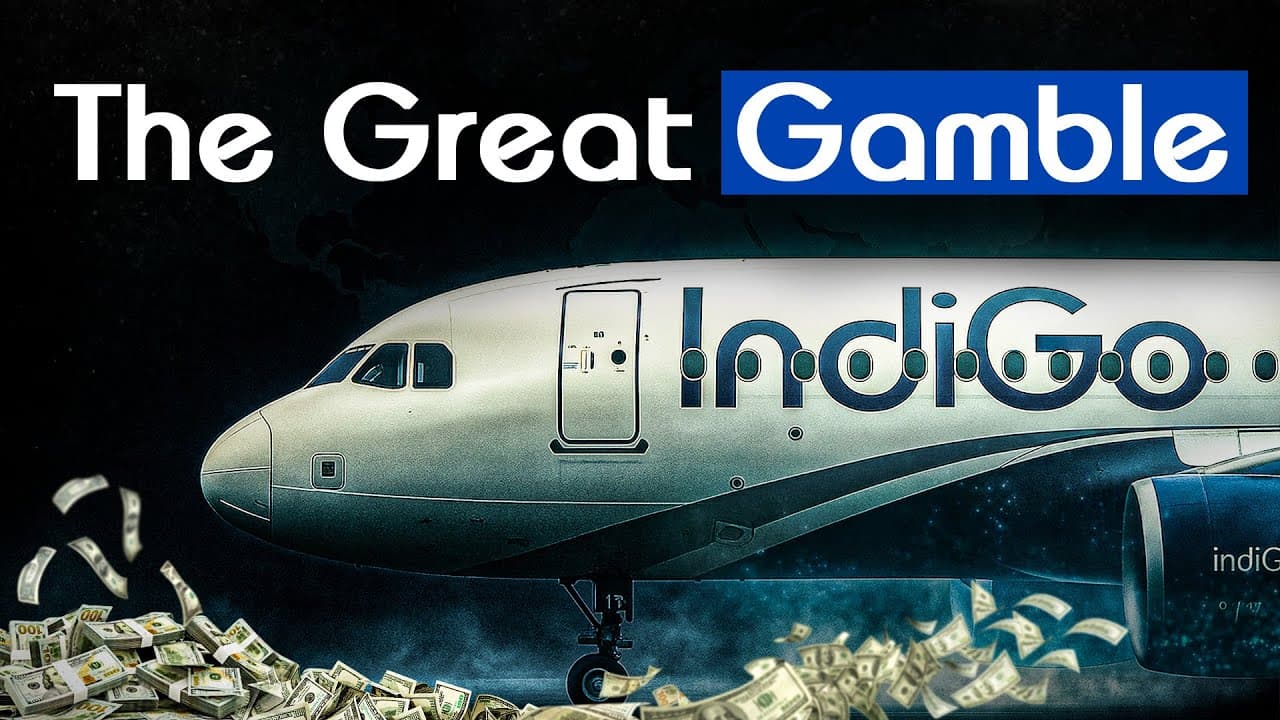
TL;DR
Indigo must balance its razor thin margins, tight cost control, and scale with the realities of international competition backed by oil wealth. Short-haul growth is feasible, but long-haul expansion faces higher costs, fuel currency risk, and premium service expectations. The key is building a low-cost global network while managing forex, taxes, and price sensitivity.
Transcript
Ladies and gentlemen, Indigo Airlines is about to play the greatest gamble in its history. A gamble so dangerous, so unpredictable that it could either make Indigo the Emirates of India or land them in trouble like King Fisher and Jet Airways. Check. Ladies and gentlemen, fasten your seat belts for we're ready for takeoff. Indigo, India's largest a... Read More
Key Insights
- Indigo’s low-cost playbook focuses on cost discipline, one fleet type, and selling basics as optional luxuries, enabling lower per-seat maintenance and higher volume.
- Fuel tax differences create a significant cost gap between Indian airlines and international peers, potentially altering profitability year over year.
- The rupee trap makes imported aviation fuel more expensive when the rupee weakens, elevating operating costs without increasing distance flown.
- Price sensitivity in India means small fare changes can shift demand rapidly to alternate transport modes, impacting profitability during shocks.
- Short-haul routes are more feasible for Indigo to establish an international footprint, leveraging existing strengths in regional markets.
- Long-haul routes demand widebody fleets, higher load factors, and premium service expectations, which challenge the low-cost model.
- Oil-backed carriers like Emirates enjoy government support and large-scale capital, enabling aggressive pricing and global network expansion.
- Historical failures of low-cost cross-continental ventures (eg, Wow Airlines, Norwegian) serve as cautionary benchmarks for Indigo’s international gamble.
- More videos from this channel:
- More from this channel: Think School
Install to Summarize YouTube Videos and Get Transcripts
Explore YouTube Video Summarizer or Get YouTube Transcript Extractor
Questions & Answers
Q: A real search query about Indigo's international move: How does Indigo plan to compete with Emirates in international markets?
Indigo plans to leverage its cost discipline, single fleet type, and efficient operations to offer low base fares while monetizing extras through add-ons. It targets short-haul international routes first, where it can reuse a proven business model and existing hubs, before attempting long-haul expansion that requires different aircraft, service levels, and longer investment horizons. The strategy relies on volume, scale, and a reputation for reliability to create a robust network that can compete on price and convenience against oil-backed giants.
Q: Why is Indigo’s expansion described as a gamble?
The gamble stems from fundamental cost asymmetries: Indigo operates on razor-thin margins and low fuel taxes, while Gulf carriers benefit from oil money and government backing, enabling outsized investment and resilience. International expansion also introduces currency risk, fuel price volatility, and demand sensitivity that can flip profitable routes into losses. Historical cases of low-cost cross-continental attempts show debts mounting if growth outpaces cash flow and network synergy.
Q: What are the three deadly traps in the Indian aviation market?
The three traps are VAT on aviation fuel, the rupee depreciation increasing fuel costs priced in dollars, and price sensitivity where small fare increases reduce demand as customers switch to bus or train. VAT adds significant annual costs, currency risk inflates fuel expenditure, and price sensitivity compresses margins during downturns or shocks, explaining why profitable Indian airlines are rare.
Q: Why are short-haul routes considered Indigo’s entry point for international expansion?
Short-haul routes use narrow-body aircraft and align with Indigo’s existing fleet and cost structure, enabling rapid network builds with lower capital risk. They allow Indigo to test the international market, establish brand presence, and gain experience in cross-border operations without the higher fixed costs and service expectations of long-haul flights. Successful short-haul growth can lay the groundwork for later long-haul ventures.
Q: What risks come with long-haul international expansion for Indigo?
Long-haul expansion requires widebody aircraft, higher fuel burn, and premium service levels which conflict with Indigo’s low-cost model. It also involves longer investment horizons and greater exposure to currency and fuel price volatility. Additionally, competition from oil-backed carriers with strong brand equity and government support can erode Indigo’s price advantage and restrict network growth if demand falters.
Q: How does fuel tax impact Indian airlines compared to international peers?
Fuel tax in India adds VAT that raises operating costs by significant margins, affecting profitability. Compared with zero-tax regimes in places like London or Dubai, Indian airlines face sustained higher landed fuel costs per liter. Over a year, these costs accumulate, reducing margins, limiting pricing flexibility, and impacting the ability to sustain aggressive international expansion without offsets in efficiency or pricing.
Q: What lessons do Wow Airlines and Norwegian Air offer for Indigo?
Both Wow Airlines and Norwegian Air illustrate the risk of overexpansion and high debt from attempting long-haul, low-cost models. They show that aggressive international growth without sustainable cash flow or tight cost controls can lead to service disruptions, refunds issues, and eventual insolvency. Indigo should balance ambition with prudent capacity growth, funding discipline, and network profitability.
Q: What would help Indigo succeed against Emirates and Qatar in international markets?
Key enablers include building a scalable low-cost network that connects major hubs with efficient connectivity, maintaining tight cost control, and leveraging strong domestic demand to create robust cash flow. Additionally, securing favorable currency hedges, optimizing fuel efficiency, and delivering reliable service at competitive prices can create a compelling value proposition that competes with oil-backed giants on value rather than purely on luxury.
Summary & Key Takeaways
-
Indigo built profits in a price sensitive market by sticking to a no-frills model, uniform fleets, and selling basic services as add-ons to drive revenue.
-
International expansion is risky because long-haul routes require widebody aircraft, higher fuel costs, and competition from oil-backed giants who enjoy state support.
-
The case contrasts Indigo with Emirates and Qatar, highlighting the capital and political advantages of Gulf carriers and the challenges for a low-cost Indian airline to scale internationally.
Read in Other Languages (beta)
Share This Summary 📚
Summarize YouTube Videos and Get Video Transcripts with 1-Click
Try YouTube Summary with ChatGPT & Claude or YouTube Transcript Generator
Explore More Summaries from Think School 📚






Summarize YouTube Videos and Get Video Transcripts with 1-Click
Try YouTube Summary with ChatGPT & Claude or YouTube Transcript Generator