How do animals recognize and react to babies?
TL;DR
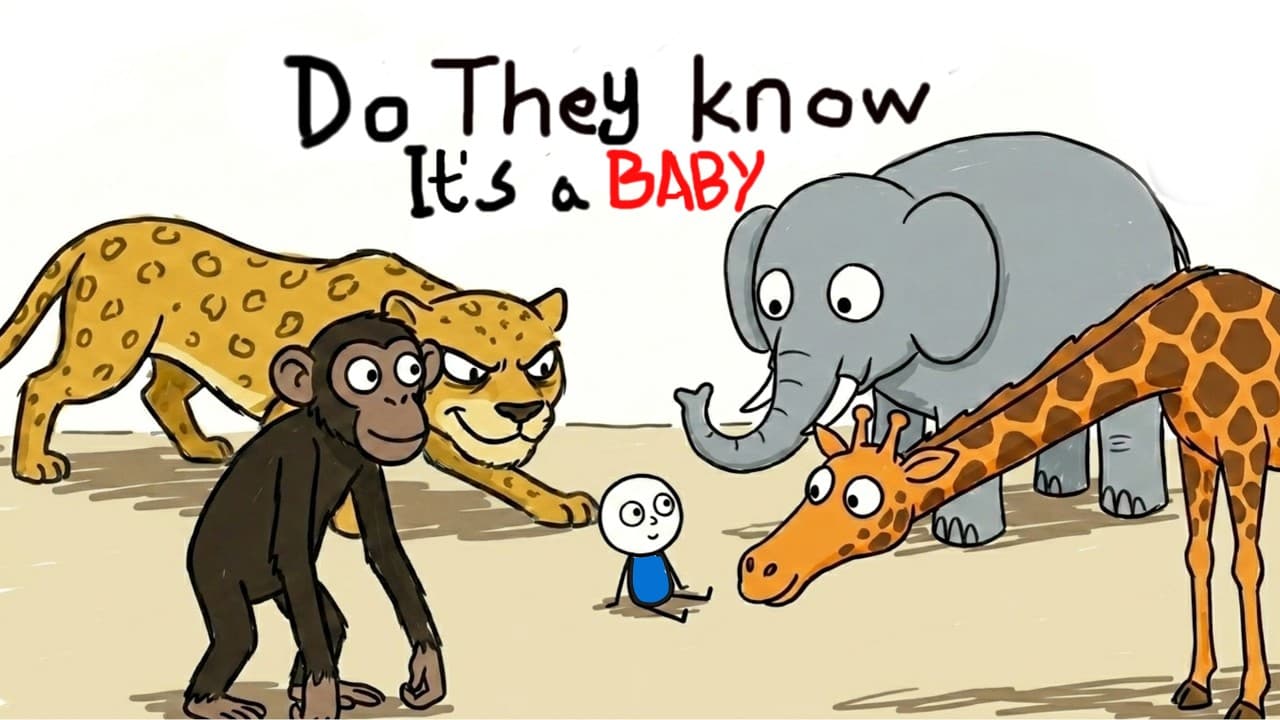
Animals recognize babies across species by infant-like features and distress cries, triggering care or competition depending on the species and context. The same recognition can cause nurturing in some animals and aggression or reproductive strategies in others, showing that caregiving is not universal but context driven by biology and evolution.
Transcript
A research team placed a 3 week old kitten in front of a Rottweiler. The dog had never encountered a cat before. It had not been socialized with smaller animals, but what the dog did next was unexpected. The dog lowered its head and it lay down and began licking the kitten in slow, careful strokes. The kitten crawled between its front legs and fell... Read More
Key Insights
- Babies trigger instinctive caregiving responses across mammal species due to shared infantile features.
- The brain shows a rapid response to infant faces, activating reward and care circuits before conscious processing.
- Baby cries elicit attention and caregiving across species, even without prior exposure to the species making the sound.
- Recognition of a baby can lead to protection in some animals and exploitation in others, showing context dependent outcomes.
- Hormonal influences modulate caregiving responses in nursing mammals, linking physiology to behavior.
- Cross species observations include dogs nursing kittens and leopards guarding infant baboons, illustrating flexible caregiver behavior.
- The cuckoo parasitism study demonstrates how a begging call can hijack parental care, amplifying food delivery despite non parental offspring.
- Ultimate insight is that the detection system is conserved but the resulting action mirrors species specific evolution and ecology.
Install to Summarize YouTube Videos and Get Transcripts
Explore YouTube Video Summarizer or Get YouTube Transcript Extractor
Questions & Answers
Q: A real search query question about the video (e.g. 'How to...', 'What is...', 'Why does...', 'When should...'). Question 1
What triggers caregiver responses to infant cues across different mammals, and how quickly does the brain process these cues? The video explains that infant like features and distress cries activate caregiving and protective instincts, often within milliseconds, and that this rapid response can occur even when the infant is from a different species. This indicates a shared neural mechanism for recognizing young across mammals.
Q: Question 2
How does the leopard example illustrate different outcomes after recognizing a baby? The leopard carries and grooms the infant baboon, showing care and protection rather than predation. This contrast with other cases demonstrates that recognition can lead to nurturing in some contexts and non nurturing outcomes in others, depending on ecological factors and species behavior.
Q: Question 3
What is the significance of cross species baby cries in experiments, and what do they reveal about mammal perception? The cross species cry experiments show that adults respond to high pitched, urgent cries regardless of species, suggesting a universal sensitivity to infant distress that guides caregiving and attention, even without prior experience with the species.
Q: Question 4
What is the role of infantile features in triggering caregiving responses, and are these features universal? The video notes that infant like proportions such as large eyes and rounded heads trigger care across species, pointing to a shared schema for recognizing babies, which then can be exploited by strategies like brood parasitism.
Q: Question 5
How does male infanticide relate to infant recognition, and what does this say about the care system? When males recognize non offspring infants, some respond with lethal strategies to resume reproduction, showing that recognition does not guarantee care and that evolutionary pressures can invert the response from protection to competition.
Q: Question 6
What does the cuckoo chick tell us about manipulation of parental care, and how is it accomplished? Cuckoo chicks exploit the host bird by producing a begging call that sounds like many hungry chicks, triggering excessive feeding despite being unrelated, illustrating how vocal signals can hijack care systems.
Q: Question 7
Are there examples of care across species without genetic relatedness, and what do they imply about empathy? Yes, dogs nursing kittens and hens caring for ducklings show caregiving across species boundaries, implying that caregiving can be driven by shared hormonal and perceptual cues beyond kinship.
Q: Question 8
What overarching conclusion does the video reach about recognizing a baby and the resulting behavior? The evidence suggests that animals do recognize babies across species and respond with a range of behaviors from protection to exploitation, and the choice depends on biology, hormones, and evolutionary history rather than a single universal rule.
Summary & Key Takeaways
-
In this video, researchers show that infant like features trigger caregiving reactions across mammals, and that brains respond to baby faces within a fraction of a second, guiding instinctive behavior.
-
Cross species experiments demonstrate that hearing infant cries reliably draws attention from adults of unrelated species, even without prior exposure, indicating deep neural wiring for protecting young.
-
The video explains that recognizing a baby does not guarantee care; some animals redirect the response toward competition or reproduction, revealing that protective behavior is not universal and depends on ecological and evolutionary pressures.
Read in Other Languages (beta)
Share This Summary 📚
Summarize YouTube Videos and Get Video Transcripts with 1-Click
Try YouTube Summary with ChatGPT & Claude or YouTube Transcript Generator
Explore More Summaries from Ink Explainer 📚





Summarize YouTube Videos and Get Video Transcripts with 1-Click
Try YouTube Summary with ChatGPT & Claude or YouTube Transcript Generator