How Did Ancient Humans Create Fun and Pleasure?
TL;DR
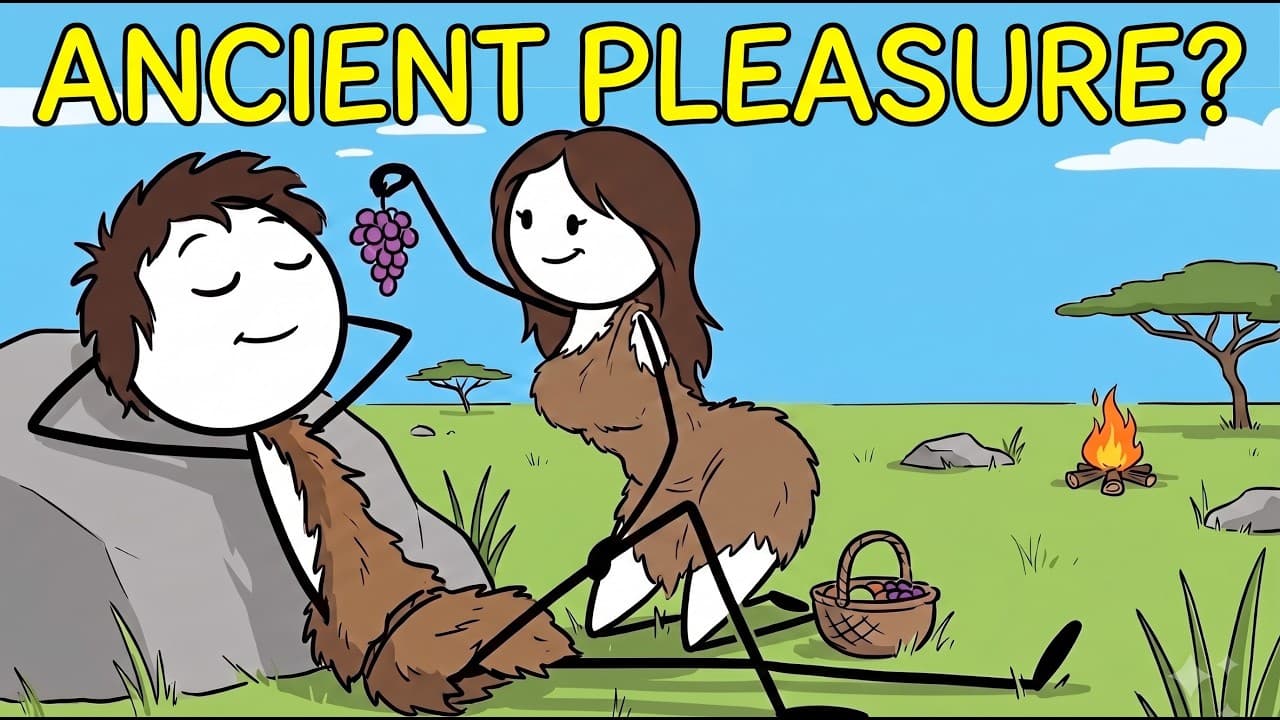
Ancient humans turned free time and boredom into music, games, gambling, sexual art, and eventually commercial pleasure. Archaeological finds, including 40,000-year-old flutes, ancient knucklebones, the Royal Game of Ur, and the Ain Sakhri lovers sculpture, show that entertainment developed long before farming or writing, while cities, strangers, money, and prices later transformed some pleasures into market transactions.
Transcript
The last time you were bored, you reached for your phone without even deciding to. Music, a game, something to watch. That reach is one of the oldest things about it. 40,000 years ago, a human sat by a fire with the same restless itch you get, and no phone, and nothing invented yet to kill it. So, they made their own fun from scratch. And what they... Read More
Key Insights
- Music is among humanity's earliest known crafted pleasures, as flutes from southern Germany were made from vulture bone, swan bone, and mammoth ivory around 40,000 years ago, long before people planted crops or developed writing.
- The Hohle Fels flute is a carefully engineered instrument with five finger holes and a carved mouthpiece. Its maker had to understand that a hollow bone produced sound, that holes changed notes, and that their placement affected the resulting melody.
- Music is a tool for social cohesion because shared singing, playing, breathing, and movement align people in a common rhythm. The account argues that this coordination encouraged connected groups to share more, fight less, and endure harsh Ice Age conditions.
- Knucklebones are early gaming pieces made from four-sided sheep ankle bones that could land unpredictably when thrown. Archaeologists have found examples worn smooth by repeated play, suggesting that games of chance were a recurring activity rather than an isolated experiment.
- Gambling is described as older than money because players could stake possessions, such as arrowheads, on unpredictable throws before coins existed. Games therefore introduced measurable wins and losses, allowing recreation to transfer real value between participants.
- The Royal Game of Ur is a 4,600-year-old board game made with wood, shell, and lapis lazuli. Boards, dice, and pieces were found in royal tombs, and a later Babylonian clay tablet preserved rules that researchers could decode.
- Sexual expression became art thousands of years before writing, as shown by the roughly 11,000-year-old Ain Sakhri lovers and a human figure from Hohle Fels dated to around 40,000 years ago. These objects associate bodies and attraction with personal artistic creation.
- Cities are presented as the force that commercialized pleasure because thousands of strangers could not rely solely on kinship, reputation, and reciprocal favors. Money, prices, and trade enabled goods, labor, beer, and eventually sex to become market transactions.
Install to Summarize YouTube Videos and Get Transcripts
Explore YouTube Video Summarizer or Get YouTube Transcript Extractor
Questions & Answers
Q: How much free time did ancient hunter-gatherers have?
Hunter-gatherer studies cited in the account measured the work of obtaining food and water and making or repairing tools at roughly 4–6 hours per day. That estimate challenges the idea that ancient people spent every waking moment struggling to survive. After essential work and eating were finished, people could still have substantial time for conversation, music, games, artistic creation, sex, and other social activities.
Q: What is the oldest musical instrument discussed in the evidence?
The account highlights a roughly 40,000-year-old flute discovered at Hohle Fels in southern Germany. Reassembled from 12 fragments, it was made from a griffon vulture's wing bone and included five finger holes and a carved mouthpiece. Nearby caves also produced instruments made from swan bone and mammoth ivory, with some dated as far back as 43,000 years.
Q: Why did prehistoric humans invest effort in making music?
Prehistoric music provided pleasure, but it may also have strengthened group cohesion. When people sing, play, or move together, their timing and breathing align, creating a stronger feeling of connection. The account argues that closely bonded Ice Age groups would be more inclined to share resources, experience less internal conflict, and survive adversity, so music could indirectly support survival without producing food or catching prey.
Q: How were knucklebones used as early dice?
Knucklebones were small sheep ankle bones with four differently shaped sides. When thrown, they landed in ways that players could not fully control, making them suitable for games of chance. Archaeologists have found such bones at ancient sites across the world, often worn smooth from repeated throwing. Players could also bet possessions on outcomes, turning unpredictable play into a transfer of real value.
Q: Why is gambling described as older than money?
Gambling did not require coins or a formal currency because players could wager objects they already owned. One person might risk an arrowhead on whether a knucklebone throw defeated another player's result. The winner then received something valuable from the loser. This meant random games could redistribute property before money existed, making betting one of the earliest ways that entertainment acquired measurable stakes.
Q: What was the Royal Game of Ur?
The Royal Game of Ur was a board game played in ancient Mesopotamia. Boards found by Leonard Woolley in the royal tombs of Ur during the 1920s were about 4,600 years old and contained 20 squares, dice, and playing pieces. They were crafted from wood, shell, and deep blue lapis lazuli. A later Babylonian clay tablet recorded rules that Irving Finkel decoded, allowing the game to be played again.
Q: What does the Ain Sakhri lovers sculpture reveal about ancient pleasure?
The Ain Sakhri object is a hand-sized calcite pebble carved into two people facing and embracing each other. It is about 11,000 years old and is identified as the oldest known sculpture of two people having sex. Because it was not found in a grave or as an offering, the account suggests that a living person may have owned and carried this private object connected to attraction and desire.
Q: How did cities turn pleasure into a commercial activity?
Small groups of roughly 30–50 people could exchange food, tools, help, and favors through family ties, shared history, and reputation. Mesopotamian cities formed about 6,000 years ago and placed thousands of strangers together, weakening those personal systems. Money, prices, and trade enabled exchanges between people who owed one another nothing. Once goods and labor could receive prices, sex could also enter the market.
Summary & Key Takeaways
-
Hunter-gatherers were not necessarily occupied by survival every waking hour. Studies cited in the account estimate that obtaining food and water and maintaining tools required roughly 4–6 hours daily. Remaining time, combined with active human brains, social groups, capable hands, and boredom, created favorable conditions for music, play, art, and other pleasures.
-
Archaeological objects preserve several forms of ancient recreation. Bone and ivory flutes show that people made music around 40,000 years ago. Worn knucklebones document games of chance, while the 4,600-year-old Royal Game of Ur demonstrates sophisticated board gaming. Ancient sculptures also connect human artistic expression with attraction and sexual desire.
-
Pleasure became commercial when cities replaced small communities in which goods and favors circulated through kinship and reputation. Mesopotamian cities brought thousands of strangers together, creating demand for money, prices, and impersonal trade. Once grain, tools, labor, and beer could receive prices, sexual services could also be tested against the emerging market.
Read in Other Languages (beta)
Share This Summary 📚
Summarize YouTube Videos and Get Video Transcripts with 1-Click
Try YouTube Summary with ChatGPT & Claude or YouTube Transcript Generator
Explore More Summaries from Ink Explainer 📚

Summarize YouTube Videos and Get Video Transcripts with 1-Click
Try YouTube Summary with ChatGPT & Claude or YouTube Transcript Generator