How did ancient humans treat illness before modern medicine
TL;DR
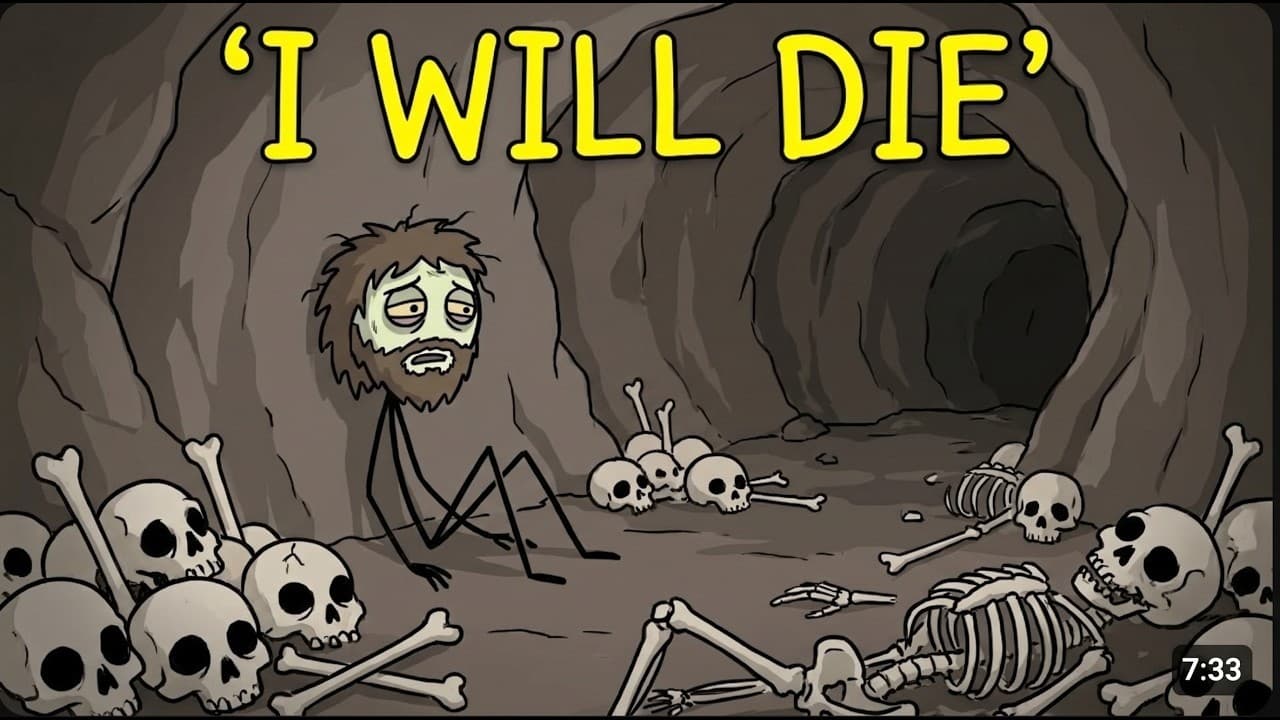
Ancient humans improvised to treat sickness using ritual, observation, and plant remedies while they cared for each other. They used early surgeries like trepanation and learned to identify remedies that reduced fever or healed wounds. Social support and community rituals also improved recovery, laying groundwork for future medicine.
Transcript
The last time you got sick, you probably did what everyone does. You opened Chat GPT, searched your symptoms online. You took something from the medicine cabinet. Maybe you called a doctor. Maybe you just spent three miserable days on the couch rewatching something you'd already seen before. But either way, you understood what was happening to you.... Read More
Key Insights
- Illness was once explained through demons or divine punishment, not biology.
- Early healers tried to drive illness away by communicating with unseen forces.
- Trepanation, a skull drilling procedure, was performed long ago and could leave patients alive.
- Willow bark was used to reduce fever and contains the precursor to salicylic acid.
- Ancient remedies included turmeric, garlic, honey, ginger, and other plants with medicinal use.
- Rituals, social presence, and community care produced real biological effects like reduced stress and pain.
- Modern medicine did not erase the value of care and presence in healing outcomes.
- Humans consistently observed outcomes and passed knowledge through generations to improve care
Install to Summarize YouTube Videos and Get Transcripts
Explore YouTube Video Summarizer or Get YouTube Transcript Extractor
Questions & Answers
Q: What caused illness in ancient cultures according to the video
Ancient cultures believed illness was caused by non natural forces such as demons or punishment from the gods. This view placed illness outside the body and attributed its origin to supernatural agents. While they lacked microscopic explanations, these beliefs motivated early healers to perform rituals and seek ways to restore balance and remove the intruding force.
Q: Who were the first healers and what did they do
The earliest healers were not doctors in the modern sense but people who believed they could communicate with the cause of illness and persuade it to leave. They used ritual, song, and shamans to influence the perceived source of sickness, attempting to cure through spiritual communication and communal acts rather than by medical science alone.
Q: What evidence shows ancient trepanation occurred and what does it imply
Trepanation, drilling a hole in the skull, is documented from around 10,000 years ago. The fact that the skulls show healing around the edges indicates the patient survived. This implies early humans performed invasive procedures and had some understanding of surgical outcomes, even without modern neuroscience or sterilization concepts.
Q: How did willow bark become linked to fever reduction
Willow bark was used in ancient Egyptian medicine around 1500 BCE to reduce fever. The active compound later identified as salicin is converted in the body to salicylic acid, which is the active ingredient in aspirin. This shows a practical trail from observation of plant effects to later chemical synthesis used in modern medicine.
Q: Which other plants were noted as having medicinal use
Ancient cultures documented diverse plant remedies such as turmeric, garlic, honey, ginger, and echinacea. These substances were observed to affect sickness, wounds, and pain, and were passed down through generations. Though the exact mechanisms were unknown at the time, their continued use demonstrated practical, empirical knowledge shaping later pharmacology.
Q: What role did ritual and community play in healing
Rituals and community involvement played a crucial role by providing social support, staying awake with the sick, and offering a sense of care. This social presence could lower stress hormones and reduce pain, contributing to measurable improvements in healing. The placebo-like effect arose from belief and companionship.
Q: How does modern medicine relate to ancient care according to the video
Modern medicine brings advanced treatments like antibiotics and vaccines, yet the video emphasizes that compassionate care remains important. The surrounding care, time spent with patients, and a supportive environment influence recovery outcomes beyond the specific medical intervention, showing continuity between ancient care practices and contemporary medicine.
Q: What general lesson about human health emerges from this history
The overarching lesson is that humans have always responded to illness with a mix of trial, error, and care. The impulse to act, to not surrender, and to learn from outcomes built the foundation of medicine. Across generations, observation, improvisation, and communal support repeatedly improved survival in the face of disease.
Summary & Key Takeaways
-
Ancient humans faced illness without medical science and responded with improvised care, spiritual practices, and observation of outcomes. They developed early healing roles and practices that combined body, mind, and social support to survive infections and injuries.
-
Plant-based remedies formed a key part of early healing, with knowledge passed down across generations, including willow bark for fever and other herbs later integrated into modern medicine.
-
Even without scientific understanding, persistent experimentation and communal care helped ancient societies combat disease, ultimately shaping the human approach to healthcare across millennia.
Read in Other Languages (beta)
Share This Summary 📚
Summarize YouTube Videos and Get Video Transcripts with 1-Click
Try YouTube Summary with ChatGPT & Claude or YouTube Transcript Generator
Explore More Summaries from Ink Explainer 📚

Summarize YouTube Videos and Get Video Transcripts with 1-Click
Try YouTube Summary with ChatGPT & Claude or YouTube Transcript Generator