How Did Humans Start Drinking Alcohol in History?
TL;DR
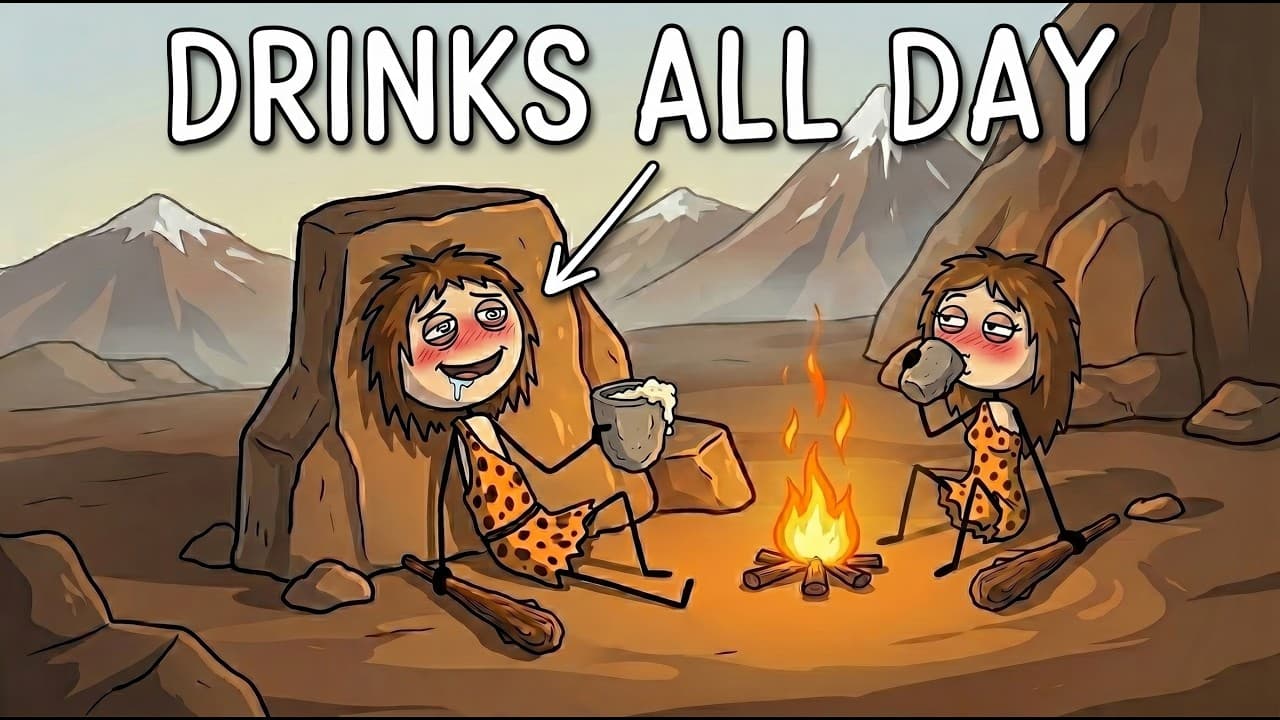
Alcohol drinking predates farming and civilization, emerging millions of years ago when fruit fermentations made primates feel good. Later, humans deliberately brewed in caves around 13,000 years ago, and beer became integral to labor, religion, and daily life in ancient societies. The story suggests alcohol may have helped shape human civilization.
Transcript
Right now, you're probably drunk or about to get drunk. And the last time you had a drink, beer, wine, whatever, you probably just drank it and forgot about it. But what you did is one of the oldest things a human being can do. It's older than writing, older than farming. It actually predates humans beings entirely. Because our relationship with al... Read More
Key Insights
- Alcohol origins predate civilization, starting 10 million years ago with fruit fermentation attracting early primates.
- Natural fermentation in fallen fruit provided early intoxicating effects that humans and ancestors sought out.
- Natufians in 13,000 year old Israel used stone mortars with residues showing fermented grains, indicating deliberate brewing.
- Göbekli Tepe shows large scale gathering rituals with fermented grain residues, hinting at social brewing before farming.
- Patrick McGovern argued farming may have begun for beer rather than bread, shifting the standard farming narrative.
- Jiahu in central China yields the oldest confirmed recipe blending rice, honey, grapes, and hawthorn berries.
- Ancient Egypt integrated beer into daily life, employment, and medicine, showing beer as food, water filter, and ritual offering.
- The overarching idea is that alcohol may have helped drive social, economic, and religious structures in early human history.
Install to Summarize YouTube Videos and Get Transcripts
Explore YouTube Video Summarizer or Get YouTube Transcript Extractor
Questions & Answers
Q: A real search query question about the video (e.g. 'How to...', 'What is...', 'Why does...'). Question 1
What is the earliest evidence that humans or human ancestors drank alcohol and how was it discovered? The earliest evidence described involves 10 million years ago when primates consumed fermented fruit on a forest floor, providing a feeling of light intoxication that likely influenced future behaviors. This idea is supported by the argument that natural fermentation produced ethanol in fallen fruit, attracting primates and shaping taste preferences long before humans learned to brew intentionally.
Q: Question 2
How did Natufians contribute to our understanding of ancient brewing and what site illustrates this? The Natufians, around 13,000 years ago, used stone mortars carved into bedrock and left residues of soaked and germinated grains, indicating beer production in a cave setting. This discovery challenges the notion that farming preceded brewing and shows deliberate fermentation existed prior to agriculture.
Q: Question 3
What role does Göbekli Tepe play in the history of alcohol according to the video? Göbekli Tepe reveals large stone circles and vats with chemical traces of fermented grain, suggesting that nomadic hunter gatherers brewed beer for large gatherings and rituals before farming. This site supports the idea that alcohol supported social organization and ritual life in pre agricultural societies.
Q: Question 4
Who is Patrick McGovern and what is his perspective on the origins of farming in relation to alcohol? Patrick McGovern is a leading expert on ancient alcohol who argues that farming might have started to produce beer rather than bread. He contrasts beer making, which requires less processing than bread, with the idea that the desire to drink could have motivated early agricultural activity.
Q: Question 5
What is the youngest archaeological evidence for alcohol mentioned in the video and what does it show? The Jiahu site in central China provides the oldest confirmed recipe for an alcoholic drink around 7000 BCE, combining rice, honey, grapes, and hawthorn berries. The chemical analysis confirms the fermentation process and demonstrates a sophisticated, multi ingredient approach to early brewing.
Q: Question 6
How was beer used in ancient Egypt and what purposes did it serve beyond being a beverage? In ancient Egypt, beer served multiple roles: it was a daily wage for workers, a safer alternative to Nile water, a source of calories and nutrients, and it appeared in temples and medical prescriptions. This demonstrates beer as a multifaceted component of daily life and state functioning.
Q: Question 7
What argument does the video make about the relationship between alcohol and civilization? The video argues that alcohol did not simply accompany civilization but may have helped drive it. From primitive brewing to complex ceremonial sites, alcohol appears in key social, economic, and religious activities, potentially motivating group cooperation and organized labor across eras.
Q: Question 8
What is the central takeaway about the history of alcohol according to the video description and sources? The central takeaway is that alcohol has a deep, long prehistory, starting with accidental fermentation in fruit and evolving into deliberate brewing and complex social systems. The story spans from early Africa to the Natufians, Göbekli Tepe, Jiahu, and ancient Egypt, illustrating alcohol's possible role in shaping human civilization.
Summary & Key Takeaways
-
Alcohol use began long before farming, with primates attracted to fermented fruit as sugars fermented naturally.
-
Humans later engineered brewing in caves and at sites like Göbekli Tepe, suggesting social and ritual roles for alcohol in hunter gatherer communities.
-
By 7000 BCE, recipes appeared and beer became embedded in work, religion, and medicine across ancient civilizations.
Read in Other Languages (beta)
Share This Summary 📚
Summarize YouTube Videos and Get Video Transcripts with 1-Click
Try YouTube Summary with ChatGPT & Claude or YouTube Transcript Generator
Explore More Summaries from Ink Explainer 📚

Summarize YouTube Videos and Get Video Transcripts with 1-Click
Try YouTube Summary with ChatGPT & Claude or YouTube Transcript Generator