What Causes Aerodynamic Drag in Fluids?
TL;DR
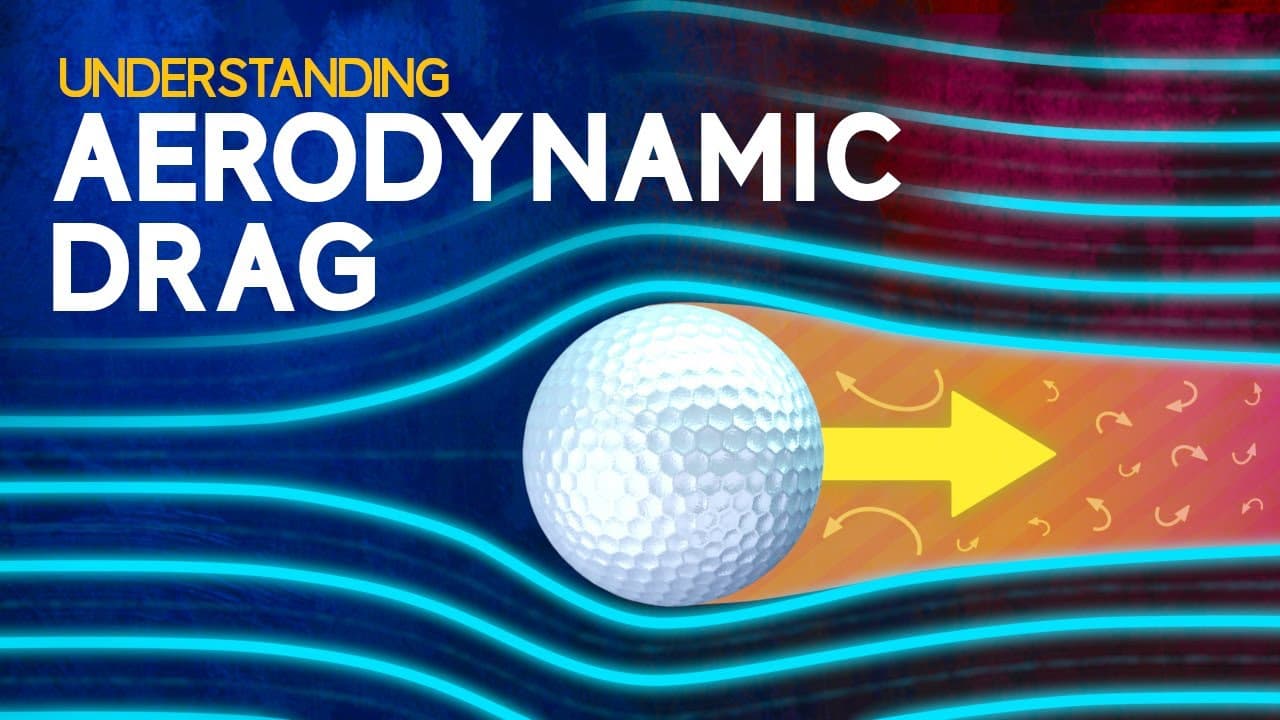
Aerodynamic drag is a force exerted by a fluid on an object moving through it, primarily caused by pressure distribution and shear stresses. Engineers aim to minimize drag to improve vehicle efficiency. Techniques like using turbulence to delay flow separation and innovations like artificial shark skin can significantly reduce drag and fuel consumption.
Transcript
Thanks to CuriosityStream for sponsoring this video. Watch thousands of documentaries and get access to Nebula for free when you sign up using the link in the description. When fluid flows past an object, or an object moves through a stationary fluid, the fluid exerts a force on the object. We can split the force into two components
- one acting in... Read More
Key Insights
- Aerodynamic drag is caused by pressure distribution and shear stresses on an object in fluid flow.
- Drag can be split into friction drag, caused by shear stresses, and pressure drag, caused by pressure differences.
- Flow separation increases pressure drag; minimizing flow separation is crucial for reducing drag.
- Turbulence can delay flow separation, reducing pressure drag but increasing friction drag.
- Streamlined shapes like teardrop designs reduce flow separation and pressure drag.
- Artificial shark skin microstructures can reduce friction drag by modifying the turbulent boundary layer.
- The drag coefficient is a critical parameter in calculating drag force and varies with Reynolds number.
- Stokes' Law provides an analytical solution for drag force on spheres at low Reynolds numbers.
Install to Summarize YouTube Videos and Get Transcripts
Explore YouTube Video Summarizer or Get YouTube Transcript Extractor
Questions & Answers
Q: How is aerodynamic drag defined?
Aerodynamic drag is a force exerted by a fluid on an object moving through it or when an object is stationary in a flowing fluid. It is caused by the pressure distribution around the object and shear stresses acting on its surface. Reducing aerodynamic drag is crucial for improving the efficiency and performance of vehicles and other objects moving through fluids.
Q: What are the main components of drag?
The main components of drag are friction drag and pressure drag. Friction drag is caused by shear stresses acting tangentially to the object's surface due to fluid viscosity, while pressure drag arises from pressure differences around the object, especially if flow separation occurs. Understanding these components is vital for optimizing designs to minimize drag.
Q: How does flow separation affect drag?
Flow separation occurs when the fluid boundary layer detaches from an object's surface, creating a wake of recirculating flow. This results in a low-pressure region behind the object, significantly increasing pressure drag. Minimizing flow separation is essential for reducing drag, as it can lead to unwanted vibrations and instability in vehicles.
Q: Why is turbulence important in drag reduction?
Turbulence can delay flow separation, reducing pressure drag by allowing the boundary layer to remain attached to the object's surface longer. This is beneficial for streamlined shapes, as it minimizes drag and improves efficiency. However, turbulence also increases friction drag due to larger shear stresses, so a balance between these effects is necessary.
Q: What role does shape play in minimizing drag?
The shape of an object significantly influences drag. Streamlined shapes, such as teardrop designs, reduce flow separation and pressure drag. For streamlined bodies, friction drag becomes more significant, so maintaining laminar flow is crucial. The geometry relative to the flow direction determines the overall drag force, requiring careful design to balance pressure and friction drag.
Q: How can artificial shark skin reduce drag?
Artificial shark skin mimics the microstructure of shark scales, which have microscopic ridges aligned with the flow direction. These ridges modify the turbulent boundary layer near the object's surface, reducing friction drag. Applying this technology to commercial aircraft could decrease total drag force by about 2%, leading to substantial fuel savings, though manufacturing challenges remain.
Q: What is the drag coefficient and how is it used?
The drag coefficient (C-D) is a dimensionless number that encapsulates the effects of an object's geometry and flow conditions on drag. It is used in the drag equation to calculate the total drag force. The drag coefficient varies with Reynolds number and is determined experimentally or through simulations, playing a vital role in aerodynamic analysis.
Q: What is Stokes' Law and its application?
Stokes' Law provides an analytical solution for the drag force acting on a sphere at low Reynolds numbers, where flow separation does not occur. It is defined as 24 divided by the Reynolds number. Stokes' Law is used to calculate the terminal velocity of a sphere in a fluid and is applied in viscometers to measure fluid viscosity by timing a sphere's descent in a liquid.
Summary & Key Takeaways
-
Aerodynamic drag is a force resulting from fluid flow past an object, caused by pressure distribution and shear stresses. Engineers strive to reduce drag to enhance fuel efficiency in vehicles. Techniques such as turbulence to delay flow separation and innovations like artificial shark skin show promise in reducing drag significantly.
-
Drag forces are divided into friction drag, due to shear stresses, and pressure drag, due to pressure differences. Streamlined shapes help minimize drag by reducing flow separation. Turbulence can delay flow separation, decreasing pressure drag but increasing friction drag. Artificial shark skin can reduce friction drag by altering the turbulent boundary layer.
-
The drag coefficient, a key factor in drag force calculations, depends on the object's geometry and flow conditions. Stokes' Law offers an exact solution for drag on spheres at low Reynolds numbers. Understanding and optimizing these factors is crucial for improving vehicle performance and reducing fuel consumption.
Read in Other Languages (beta)
Share This Summary 📚
Summarize YouTube Videos and Get Video Transcripts with 1-Click
Try YouTube Summary with ChatGPT & Claude or YouTube Transcript Generator
Explore More Summaries from The Efficient Engineer 📚




Summarize YouTube Videos and Get Video Transcripts with 1-Click
Try YouTube Summary with ChatGPT & Claude or YouTube Transcript Generator