What Is Aerodynamic Lift and How Does It Work?
TL;DR
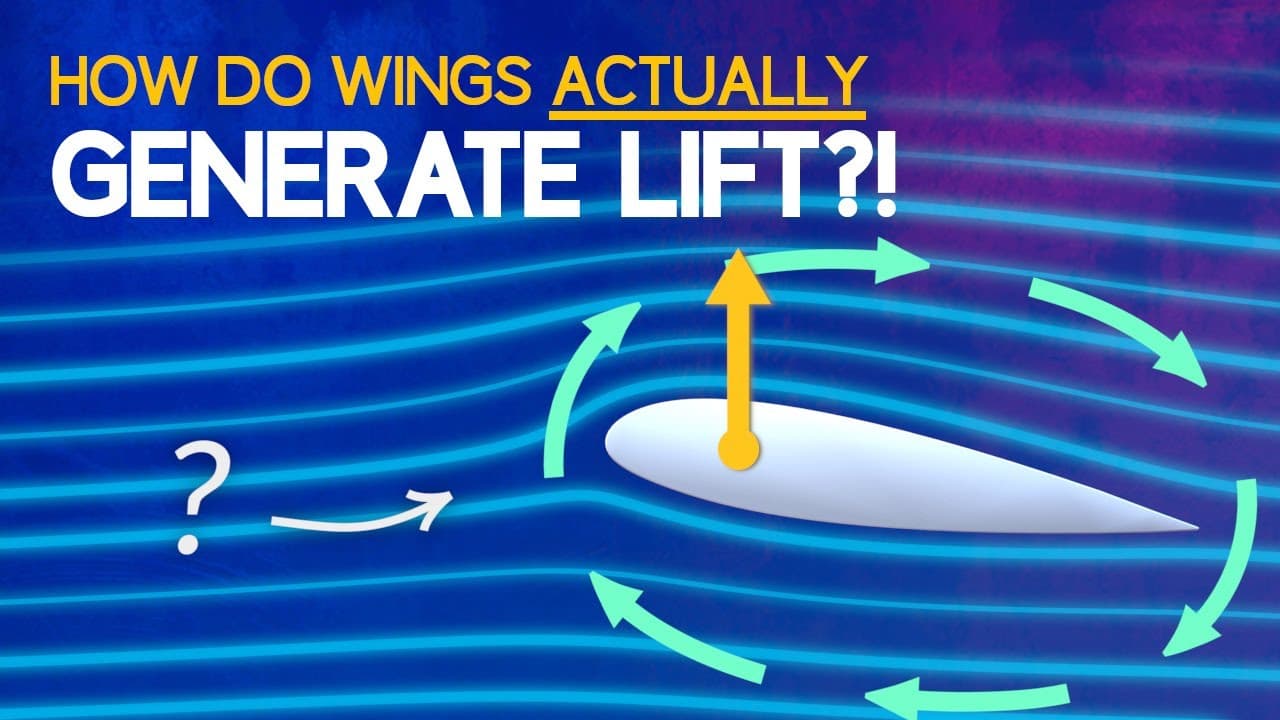
Aerodynamic lift is the force that enables aircraft to fly, created by the pressure distribution around an airfoil. It primarily stems from the faster airflow over the airfoil's top surface, resulting in lower pressure compared to the higher pressure underneath. Factors such as airfoil shape, angle of attack, and flow separation significantly influence the amount of lift generated.
Transcript
Thanks to CuriosityStream for sponsoring this video. Since well before the first Wright brothers flight in 1903, and all the way to the present day, mankind has been fascinated by taking to the skies. Once thought to be impossible, heavier-than-air flight is only a reality because of the lift generated by aircraft wings. But lift is a complicat... Read More
Key Insights
- 🛩️ Lift is the force that allows aircraft to fly, and it is generated by the pressure distribution around an airfoil, which is an optimized shape designed to produce high lift-to-drag ratios.
Install to Summarize YouTube Videos and Get Transcripts
Explore YouTube Video Summarizer or Get YouTube Transcript Extractor
Questions & Answers
Q: How is lift created on an airfoil?
Lift is created on an airfoil due to the pressure difference caused by a combination of factors, including the flow velocity, pressure distribution, and the down-turning of the fluid.
Q: What is the difference between Bernoulli's Principle and Newton's Third Law explanations for lift?
Bernoulli's Principle explains lift based on fluid velocity and pressure, while Newton's Third Law focuses on the behavior of the fluid and the reaction forces acting on the airfoil.
Q: How does the shape of an airfoil affect lift?
The shape of an airfoil, including its camber and angle of attack, can greatly impact the amount of lift generated. Increasing camber or angle of attack can increase lift until a critical angle is reached, causing flow separation and reduced lift.
Q: What is flow separation and how does it affect lift?
Flow separation occurs when the airflow detaches from the surface of the airfoil, leading to reduced lift and increased drag. It is typically caused by reaching a critical angle of attack.
Summary & Key Takeaways
-
Lift is the force that allows aircraft to fly and is generated by the pressure distribution around an airfoil.
-
Two main explanations for lift are based on Bernoulli's Principle (velocity and pressure) and Newton's Third Law (upwash and downwash).
-
Factors like airfoil shape, angle of attack, and flow separation can greatly affect lift and the performance of an aircraft.
Read in Other Languages (beta)
Share This Summary 📚
Summarize YouTube Videos and Get Video Transcripts with 1-Click
Try YouTube Summary with ChatGPT & Claude or YouTube Transcript Generator
Explore More Summaries from The Efficient Engineer 📚



Summarize YouTube Videos and Get Video Transcripts with 1-Click
Try YouTube Summary with ChatGPT & Claude or YouTube Transcript Generator