How to make AI agents reliable with human in the loop
TL;DR
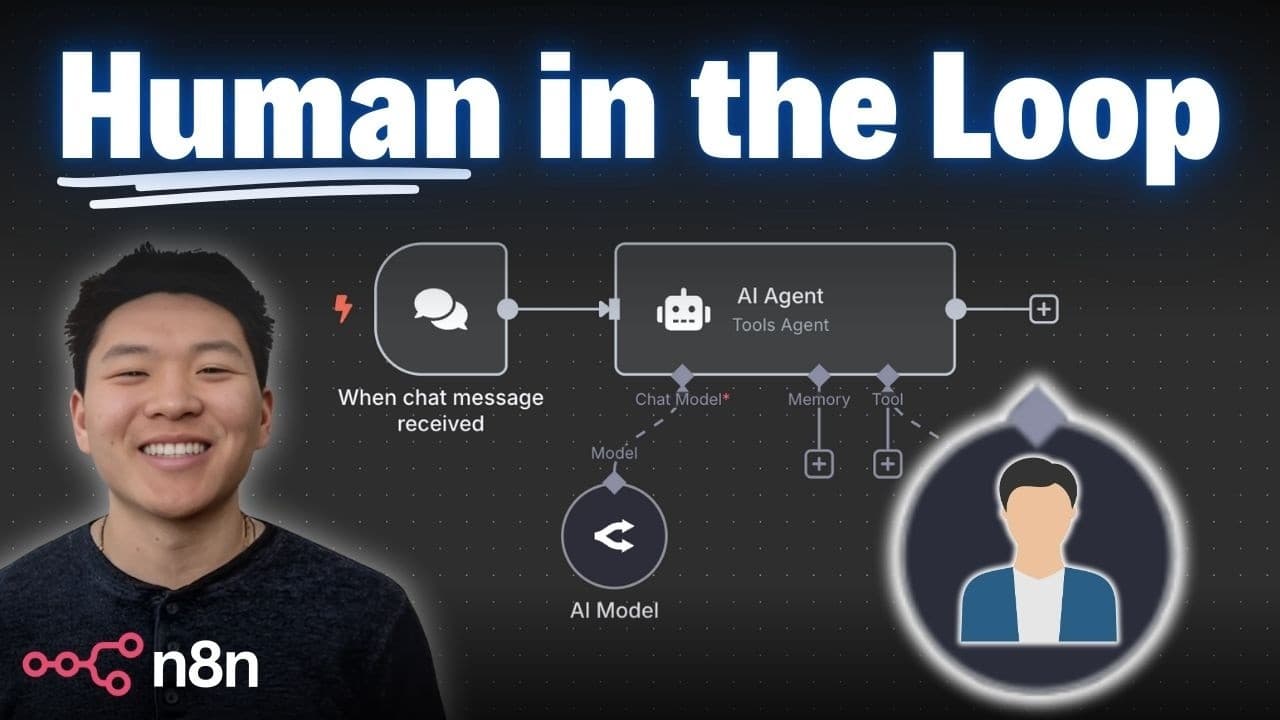
The key to reliability is a human in the loop that approves or declines content before it goes out. The system supports an unlimited revision loop where feedback prompts the agent to rewrite until it meets approval. This approach balances speed with control, allowing automated content creation while keeping client-facing outputs safe.
Transcript
Okay, our workflow is actively listening for us in Telegram and I'm going to ask it to make an expost about coffee at night. So, as you can see, this first agent is going to search the internet using Tavi and create that initial X post for us. Now, we just got a message back in our Telegram that says, "Hey, is this post good to go?" Drinking coffee... Read More
Key Insights
- HITL stops automated output before publication by requiring human approval.
- The revision loop repeats updates until the human approves, ensuring content quality.
- Feedback can be given as simple yes or no, or as detailed text to guide revisions.
- A post variable stores the current draft so revisions reference the latest version.
- The system demonstrates a no-code HITL flow using Telegram as the trigger.
- Prompts clearly define the AI agent role and acceptable outputs for reliable results.
- Tavly search is used for real-time web information to inform each post.
- The workflow can be adapted to automate emails, content, or client-facing messages.
- More videos from this channel:
- More from this channel: Nate Herk | AI Automation
Install to Summarize YouTube Videos and Get Transcripts
Explore YouTube Video Summarizer or Get YouTube Transcript Extractor
Questions & Answers
Q: What is human in the loop in AI workflows?
Human in the loop is a process where a human reviews AI-generated content before it is published or sent to clients. The loop pauses automation to allow approval or detailed feedback, and then the system revises the output until the human is satisfied. This prevents errors and maintains quality in automated tasks.
Q: How does the revision loop work in the example?
In the example, after the initial content is created, the workflow waits for human feedback. If declined or criticized, the revision path is triggered, and the agent generates a new version based on the guidance. This cycle repeats indefinitely until the content receives approval for posting.
Q: What tools are used to trigger and manage the HITL process?
The HITL process is managed through a no-code workflow that uses Telegram as the trigger, a post variable to track the current draft, and a loop with a denial or feedback path. This setup lets users review and guide content without coding.
Q: What role does the post variable play in the workflow?
The post variable stores the latest content output so that every revision references the newest draft. It ensures that, regardless of how many times the content is revised, the final post reflects the most recent approved version before posting.
Q: How can feedback be provided in the HITL loop?
Feedback can be provided in two ways: a simple yes or no decision, or detailed text instructions. The system then uses this input to adjust the next version, guiding the AI to address specific concerns and improve accuracy and relevance.
Q: What is the purpose of using Tavly search in the workflow?
Tavly search is used to fetch real-time information to inform the AI’s content. It helps ensure the generated post cites sources and includes current facts, making the content more credible and grounded in up-to-date information.
Q: Why is a no-code HITL flow valuable?
A no-code HITL flow makes reliable AI workflows accessible to non-programmers, enabling rapid setup and iteration. It provides a transparent approval process, reduces risk of errors, and scales content creation while preserving human oversight for quality control.
Q: Can this HITL approach be applied to different content types?
Yes, the same HITL approach can be applied to emails, content creation, or client-facing messages. By changing prompts and review criteria, teams can adapt the loop to ensure consistency, accuracy, and appropriate tone across various output types.
Summary & Key Takeaways
-
A human-in-the-loop setup pauses automation for review before posting, ensuring quality and compliance. The process includes both simple approval and text-based feedback to guide revisions. This creates a reliable pipeline where automation handles speed and humans provide final judgment.
-
The workflow uses Telegram as the trigger and a post variable to preserve the latest approved output. It demonstrates how to structure prompts and responses to support iterative revisions. The result is a repeatable, reviewable pattern that stops at the approval gate.
-
The video also explains how to set up a no-code HITL workflow in a repeatable template, emphasizing the importance of explicit feedback loops. It shows how to document steps so teams can reuse the approach across different content types.
Read in Other Languages (beta)
Share This Summary 📚
Summarize YouTube Videos and Get Video Transcripts with 1-Click
Try YouTube Summary with ChatGPT & Claude or YouTube Transcript Generator
Explore More Summaries from Nate Herk | AI Automation 📚





Summarize YouTube Videos and Get Video Transcripts with 1-Click
Try YouTube Summary with ChatGPT & Claude or YouTube Transcript Generator