How to defend against zero-click AI amplified attacks?
TL;DR
Zero-click attacks can infiltrate devices without user action, and AI agents can amplify this risk. Protect yourself by applying guardrails to AI agents, restricting their capabilities, and implementing least privilege, access controls, and monitoring. Real world examples like Pegasus and EchoLeak show why proactive defense is essential for individuals and organizations.
Transcript
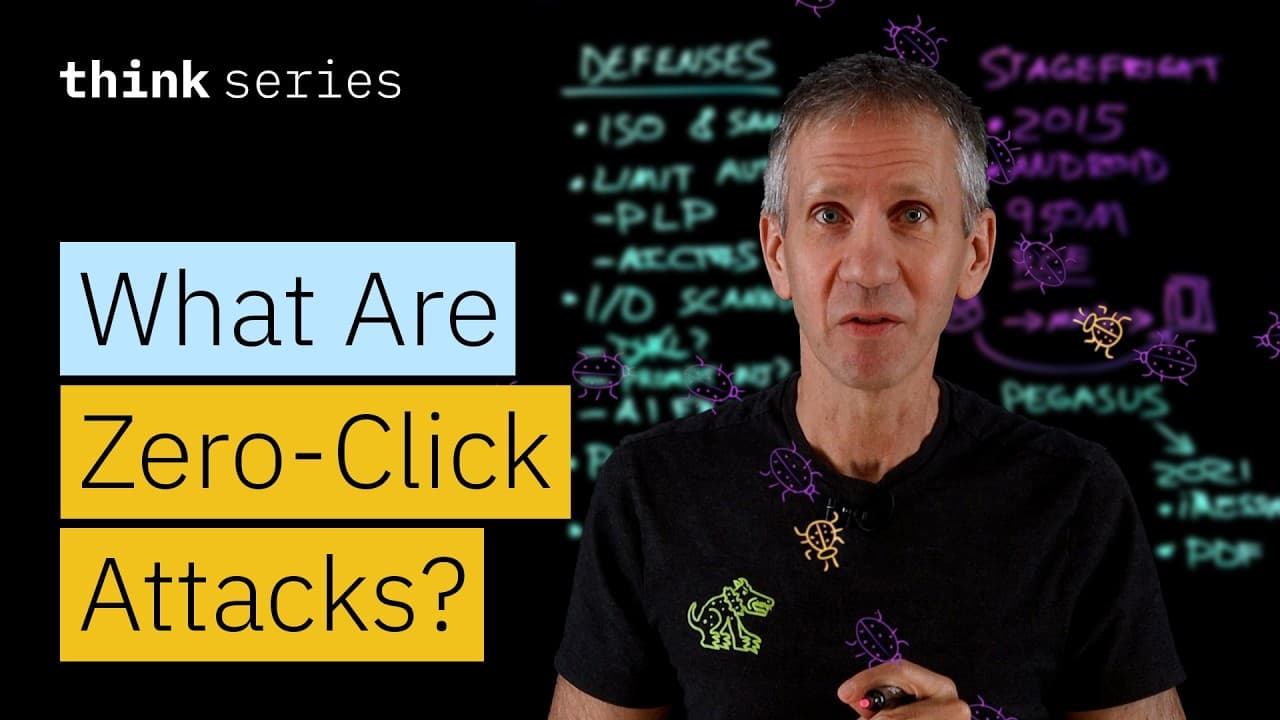
Bang! You just got hacked. You say you didn't do anything? Doesn't matter. You got hacked anyway. Welcome to the world of zero-click attacks. These nasty buggers can get you without a single tap, click or download, and AI agents can be exploited to make them even worse. In this video, we're going to take a look at what zero-click attacks are, how A... Read More
Key Insights
- Zero-click attacks do not require user action to compromise a device and rely on exploited software bugs.
- AI agents can amplify risk when given broad access or autonomy, making containment and governance essential.
- The cost of data breaches grows when AI tools are used without proper security policies, as shown by modern governance gaps.
- Historical zero-click examples include remote code execution via MMS on Android and invisibly injected prompts in email systems.
- Pegasus demonstrated full device control through zero-click exploits affecting smartphones and messaging apps.
- EchoLeak illustrates automated data exfiltration through prompt injection in AI copilots without user awareness.
- Guardrails such as sandboxing, least privilege, and restricted visibility limit what AI agents can access or do.
- Organizations should implement AI governance policies and security testing to mitigate zero-click amplification risks.
- More videos from this channel:
- More from this channel: IBM Technology
Install to Summarize YouTube Videos and Get Transcripts
Explore YouTube Video Summarizer or Get YouTube Transcript Extractor
Questions & Answers
Q: What is a zero-click attack and why does it matter today?
A zero-click attack is an intrusion that happens without any user action. An attacker exploits software bugs to run code, take control of a device, or access data. It matters because it can bypass user caution and leverage complex ecosystems, including AI agents, to escalate damage and exfiltrate information silently.
Q: How can AI agents amplify the risk of zero-click attacks?
AI agents can operate autonomously across systems, and if misconfigured, they can perform actions beyond what users intend. This amplification occurs when agents access sensitive data, execute commands or exfiltrate information, turning a single vulnerability into widespread compromise.
Q: What are some real world zero click attack examples mentioned?
Stagefright on Android illustrated remote code execution via multimedia messages affecting hundreds of millions of devices. Pegasus demonstrated zero-click implants through phone software, enabling access to cameras, microphones, messages and more. EchoLeak showed how prompt injection could exfiltrate data from AI copilots via email content.
Q: What is prompt injection and how does it relate to zero-click attacks?
Prompt injection is when adversaries embed hidden instructions in input that mislead an AI system into performing unintended actions. In zero-click contexts, such injections can trigger data leakage or policy violations without user interaction, exploiting the AI's context and processing pipeline.
Q: What defenses can reduce zero-click vulnerability when using AI agents?
Defenses include isolating and sandboxing AI agents, applying least privilege so agents have only essential capabilities, implementing strict access controls, and continuously auditing agent behavior and prompts to prevent unauthorized actions.
Q: What role does the principle of least privilege play in defenses?
The principle of least privilege minimizes what an AI agent can access or execute. By restricting visibility and capability, potential damage from a compromised agent is contained, making it harder for attackers to exfiltrate data or take control.
Q: Why is AI governance important for data breach risk reduction?
AI governance provides policies, procedures, and oversight for how AI tools are used, who can deploy them, and how data is accessed. This reduces uncertainty, ensures security controls are in place, and helps prevent misuses that could lead to breaches.
Q: What practical steps should organizations take now to prepare for future zero-click risks?
Organizations should implement robust access controls, sandbox AI workloads, enforce least privilege, conduct regular security testing of AI integrations, monitor AI workflows for anomalies, and educate staff about zero-click risks and prompt injection scenarios to stay ahead of evolving threats.
Summary & Key Takeaways
-
Zero-click attacks exploit software bugs to gain remote control without user interaction, and AI agents can magnify these threats when not properly constrained. Guardrails, sandboxing, and least privilege reduce exposure and prevent unintended actions by automated agents.
-
Historically notable incidents such as Pegasus and EchoLeak illustrate how attackers leverage zero-click vectors and AI context to exfiltrate data, underscoring the need for robust policies, detection, and containment.
-
Defenses emphasize isolating AI agents, restricting their access, and establishing governance for AI use across systems to mitigate evolving zero-click and AI-enabled risks.
Read in Other Languages (beta)
Share This Summary 📚
Summarize YouTube Videos and Get Video Transcripts with 1-Click
Try YouTube Summary with ChatGPT & Claude or YouTube Transcript Generator
Explore More Summaries from IBM Technology 📚





Summarize YouTube Videos and Get Video Transcripts with 1-Click
Try YouTube Summary with ChatGPT & Claude or YouTube Transcript Generator