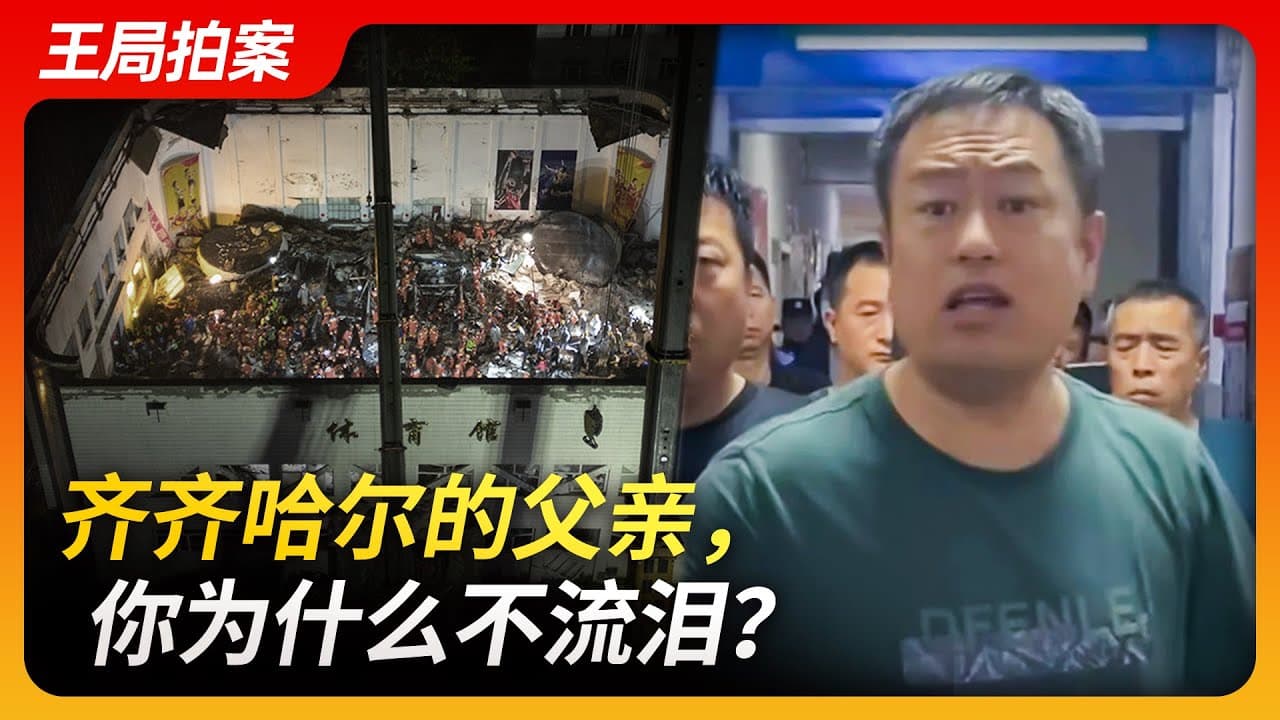
What caused the gym collapse at No 34 Middle School?
TL;DR
The gym roof collapse was triggered by a heavy layer of perlite placed on the roof for months, plus possible rain weight, which exceeded the roof’s load capacity. Rescue efforts continued through the night, but 11 of 19 buried individuals died, and questions arose about officials' communication with families during the emergency.
Transcript
“No. 34 Middle School in Qiqihar” "Around 4 o'clock, a gymnasium roof collapse accident occurred." "After the accident happened at 4 o'clock." "The children were sent to various hospitals one after another," "including the First Hospital..." The person speaking is a father. His daughter is a student at No. 34 Middle School in Qiqihar City. I do not... Read More
Key Insights
- Perlite buildup on the roof was a key contributing factor to the collapse by increasing load beyond design capacity.
- A total of 19 individuals were buried, including 17 players and two coaches, with 4 escaping on their own and 11 losing their lives.
- Rescue operations continued through the night, but communication with families was criticized as lacking or delayed by officials.
- The incident raised questions about safety inspections and responsibility among the school, construction company, and education bureau.
- The gym used for volleyball training had restricted access for regular students, focusing on the volleyball team and coaches.
- Media coverage captured a tension between emergency response and the emotional needs of families awaiting updates.
- Investigations suggested potential accountability for major production safety accidents involving multiple parties.
- Public discourse highlighted a pattern in disaster response that emphasizes stabilization of families over proactive information sharing.
- More videos from this channel:
- More from this channel: 王志安
Install to Summarize YouTube Videos and Get Transcripts
Explore YouTube Video Summarizer or Get YouTube Transcript Extractor
Questions & Answers
Q: What caused the No 34 Middle School gym roof collapse?
The collapse appears to have been caused by a heavy layer of perlite placed on the roof for eight months, which increased the load beyond the roof’s designed capacity. Rain may have further added weight, and the structural design of gym roofs with limited mid span support could not accommodate such loading. These factors together led to the sudden failure of the roof system and the debris hazard that followed, trapping and injuring numerous people.
Q: How many people were buried and how many survived in the No 34 incident?
According to the report, 19 people were buried under the debris, comprising 17 volleyball players and two coaches. Four managed to crawl out on their own, leaving 15 still trapped. Among those trapped, 11 people lost their lives. This sequence outlines the severity of the collapse and the tragic outcome for the families involved.
Q: What role did perlite play in the incident?
Perlite was used as exterior insulation on the roof and was stacked several layers high. Its lightweight nature can become significantly heavier when wet, which could drastically increase the roof load. Critics argued that the prolonged presence of perlite on the roof for months amplified the risk of collapse by adding substantial weight beyond what the roof could safely bear.
Q: Were there any delays or issues with rescue operations?
Rescue teams arrived within twenty minutes of the collapse and worked through the night, but the narrative suggests delays in obtaining clear information and updates for families. The focus on rescuing victims appeared to be intense, yet the lack of timely communication with grieving families drew strong criticism, reflecting on procedural gaps during emergencies.
Q: What questions were raised about government officials and communication?
Observers asked why government officials from the education department and other agencies did not communicate with families and coordinate better with hospitals and doctors. The criticism centered on perceived delays in providing updates, addressing families’ demands, and showing empathy during a crisis, potentially affecting public trust and accountability.
Q: What other institutions were implicated in the aftermath of the collapse?
The incident implicated the school administration, the construction company responsible for material placement, and the local education bureau. Investigations suggested possible accountability for major production safety accidents, highlighting systemic issues in oversight, construction practices, and safety compliance that extended beyond the immediate collapse site.
Q: What was unusual about the school gym’s use before the collapse?
The gym was reserved for volleyball training and lessons for players and coaches, with regular students not allowed to train there. This confined use may have influenced how safety measures were applied and monitored, and it underscores the broader context of how facilities used for elite sports may have different oversight compared with general school facilities.
Q: What themes emerged about disaster reporting and family impact?
A central theme was the contrast between visible rescue efforts and the emotional turmoil of families awaiting news. While firefighters and officials focused on the rescue, families repeatedly sought information and reassurance, highlighting the human cost of disasters and the need for compassionate, transparent communication from authorities during crises.
Summary & Key Takeaways
-
The incident involved a gym roof collapse at No 34 Middle School in Qiqihar that buried 19 people, including 17 female volleyball players and two coaches, leading to multiple injuries and 11 fatalities. The event exposed concerns about building safety, material loads, and accountability among authorities. Follow-up discussions questioned the adequacy of communication with families during the rescue.
-
The investigation noted that perlite was used as insulation and potentially contributed to the collapse, particularly if stacked layer upon layer for eight months. It also highlighted perceived gaps in coordination between the school, construction company, and government offices before and after the disaster.
-
The broader narrative contrasted rescue efforts with family distress, illustrating how officials prioritized scene management over transparent updates to families and media, while prompting calls for accountability for all parties involved.
Read in Other Languages (beta)
Share This Summary 📚
Summarize YouTube Videos and Get Video Transcripts with 1-Click
Try YouTube Summary with ChatGPT & Claude or YouTube Transcript Generator
Explore More Summaries from 王志安 📚






Summarize YouTube Videos and Get Video Transcripts with 1-Click
Try YouTube Summary with ChatGPT & Claude or YouTube Transcript Generator