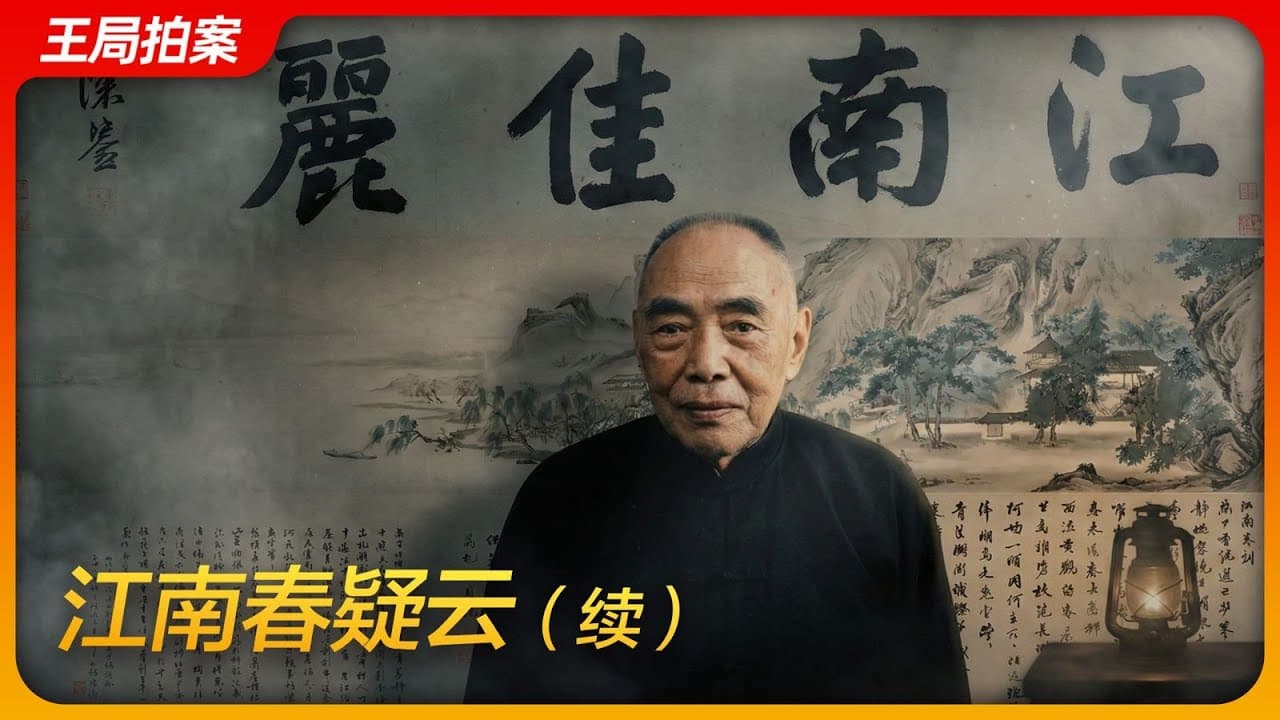
Is 'Spring in Jiangnan' a Genuine Artifact?
TL;DR
The video explores the controversy surrounding the authenticity and handling of the painting 'Spring in Jiangnan.' It argues that there is insufficient evidence to support claims of insider conspiracy within the Nanjing Museum. The painting underwent multiple appraisals, and questions remain about its sale and provenance.
Transcript
Today, let's continue the story around the Spring in Jiangnan controversy. In yesterday's discussion, I mainly laid out the two biggest questions surrounding this painting. First, whether it's authentic or not, and second, whether there were problems in the way it was later handled and sold. Right now, people are arguing fiercely over both points. ... Read More
Key Insights
- The authenticity of 'Spring in Jiangnan' is debated, with no consensus among experts.
- Initial appraisals labeled the painting as fake, but some question the appraisal process's accuracy.
- The Nanjing Museum's handling of the painting has led to suspicions of conspiracy.
- Xu Huping, a key figure, lacked expertise in paintings, casting doubt on conspiracy claims.
- The painting's provenance is complicated by claims of fake invoices and disputed ownership.
- The Pang family, original donors, have a strained relationship with the Nanjing Museum.
- The museum's internal processes and lack of transparency have fueled ongoing disputes.
- Comparisons to international museum practices highlight procedural shortcomings in China.
Install to Summarize YouTube Videos and Get Transcripts
Explore YouTube Video Summarizer or Get YouTube Transcript Extractor
Questions & Answers
Q: How was the 'Spring in Jiangnan' painting appraised?
The 'Spring in Jiangnan' painting underwent three appraisals. The first in 1961 concluded it was fake, with Zhang Heng's team examining over 50,000 works rapidly. A second appraisal in 1964 upheld this view. A third, undated appraisal between 1986 and 1990 lacks clear documentation, leading to suspicions about its validity.
Q: What are the conspiracy theories about the painting?
Conspiracy theories suggest insiders at the Nanjing Museum colluded to label 'Spring in Jiangnan' as fake, sell it cheaply, and later profit from it. However, these claims are undermined by the lack of solid evidence, especially given that key figures like Xu Huping lacked expertise in painting appraisal.
Q: Why is the Pang family involved in the controversy?
The Pang family originally donated the painting and other relics to the Nanjing Museum. They feel disrespected and excluded from decisions about the painting, especially since they were not informed about its appraisals or sale. Their strained relationship with the museum has fueled their legal actions and public statements.
Q: What procedural flaws are highlighted in the video?
The video highlights flaws in Chinese museum management, such as lack of transparency and communication with donors. Unlike international practices, Chinese museums often fail to notify donors about appraisals or sales, leading to disputes. The video suggests reforms are needed to ensure better management and donor relations.
Q: What is Xu Huping's role in the controversy?
Xu Huping, a former deputy director of the Nanjing Museum, is suspected of being involved in the painting's appraisal and sale. However, he specialized in ceramics, not paintings, casting doubt on his ability to recognize the painting's authenticity. His limited power in the 1980s further weakens conspiracy claims.
Q: How does the video compare Chinese and international museum practices?
The video contrasts Chinese museum practices with those in places like the UK and Japan. It criticizes the lack of transparency and donor communication in China, noting that international museums often have public notice requirements and auction processes for deaccessioning items, which help prevent disputes and ensure accountability.
Q: What are the implications of the painting's provenance?
The painting's provenance is complicated by claims of fake invoices and disputed ownership. While some argue it was sold in the 1990s, others insist it was acquired in 2001. The lack of clear documentation and the involvement of figures like Lu Ting add to the painting's contested history, impacting its market value and authenticity claims.
Q: What reforms are suggested for Chinese museums?
The video suggests Chinese museums should adopt practices similar to international institutions, focusing on transparency, donor communication, and clear procedures for appraisals and sales. It advocates for museums to be defined as institutions for preservation rather than ownership, to prevent disputes and ensure relics are managed responsibly.
Summary & Key Takeaways
-
The 'Spring in Jiangnan' painting's authenticity is questioned, with past appraisals labeling it as fake. The Nanjing Museum's handling has sparked conspiracy theories, but evidence for insider collusion remains weak. The painting's provenance and sale are contentious, with claims of fake invoices and disputed ownership.
-
Xu Huping, involved in the painting's later appraisals, lacked expertise in paintings, casting doubt on conspiracy theories. The Pang family, who donated the painting, have a strained relationship with the Nanjing Museum, feeling disrespected and excluded from decisions about the painting.
-
The controversy highlights procedural flaws in Chinese museum management, especially compared to international practices. The lack of transparency and communication with original donors has fueled disputes, suggesting a need for reform in how cultural relics are appraised and managed in China.
Read in Other Languages (beta)
Share This Summary 📚
Summarize YouTube Videos and Get Video Transcripts with 1-Click
Try YouTube Summary with ChatGPT & Claude or YouTube Transcript Generator
Explore More Summaries from 王志安 📚

Summarize YouTube Videos and Get Video Transcripts with 1-Click
Try YouTube Summary with ChatGPT & Claude or YouTube Transcript Generator