中共三中全会将如何应对中美脱钩?
TL;DR
中共二十届三中全会的延迟反映了中国面临的经济挑战,特别是由于房地产市场下滑导致的消费者信心不足。会议的核心在于准备全面脱钩美国,并加强对国有企业的支持,显示出党对经济改革的新方向和战略规划。
Transcript
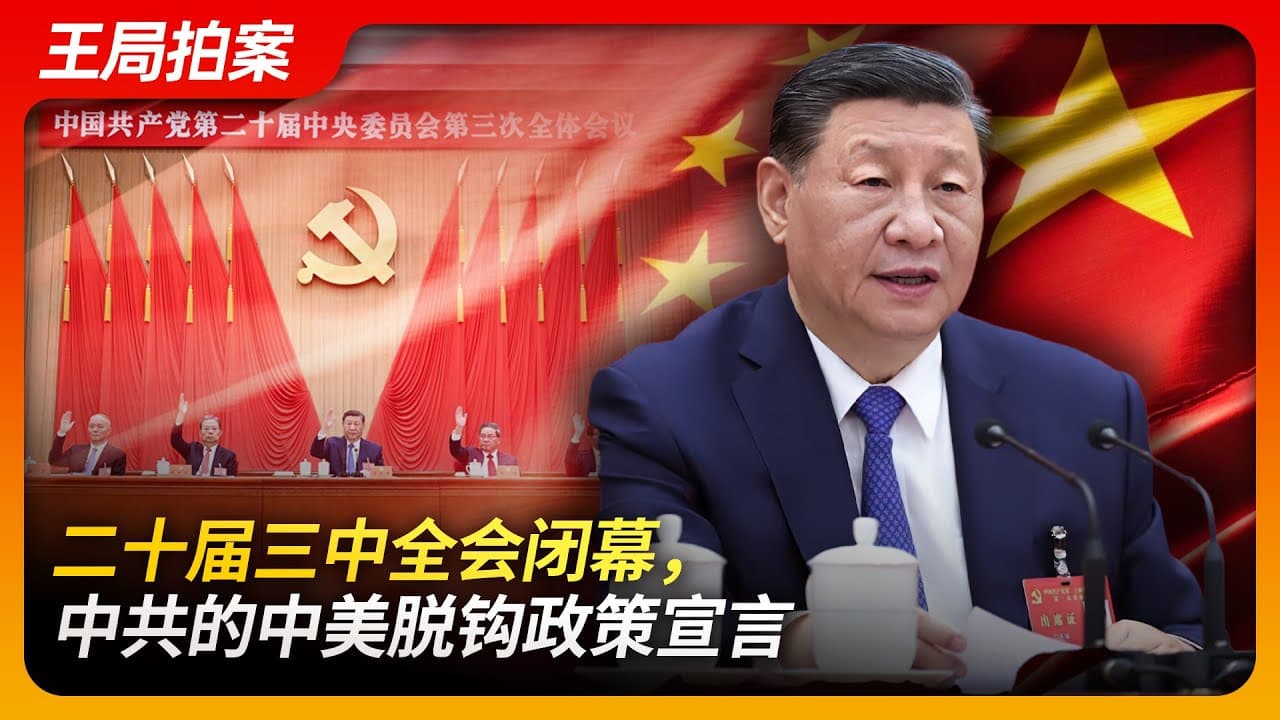
Today, we will talk about the 20th Central Committee's third plenary session that ended in Beijing last week. This third plenary session was held from July 14th to July 18th, lasting 4 days. This meeting attracted wide attention from domestic and international media, mainly for two reasons, in my opinion. The first reason is that the 20th Central C... Read More
Key Insights
- 😀 The delay of the 20th Central Committee's third plenary session reflects both internal power dynamics and significant economic challenges China is facing.
- 😮 A sharp decline in China’s GDP growth rates indicates insufficient domestic demand and rising consumer apprehension, primarily tied to the real estate market's downturn.
- 💠 Xi Jinping's personal involvement in drafting economic policies underscores his commitment to shaping the Party's direction, particularly regarding economic reforms.
- 🤳 Preparing for a US-China decoupling reflects a strategic pivot towards self-reliance in crucial industrial sectors, intending to mitigate future trade impacts.
- 😮 The primary focus on state enterprises reaffirms the rising dominance of state control in the economy, possibly leading to tensions with the private sector.
- 🖤 Lack of clarity on government-market relations indicates a potentially regressive economic approach, prioritizing state intervention over market dynamics.
- 🤩 The session's strategic decisions signal China's ambition to innovate and lead in key industrial areas, aiming for a comprehensive economic transformation by 2029.
Install to Summarize YouTube Videos and Get Transcripts
Explore YouTube Video Summarizer or Get YouTube Transcript Extractor
Questions & Answers
Q: What were the main reasons for the delay of the third plenary session?
The third plenary session was significantly delayed due to Xi Jinping’s perceived power struggles within the party and the pressing economic challenges China faced. Typically, this session sets the course for economic policy and direction; however, a year-long wait led analysts to speculate about internal discord, as well as external pressures from the post-pandemic economic downturn and ongoing trade tensions with the U.S.
Q: How has the economic performance of China influenced the plenary session's discussions?
China's economy did not recover as quickly as anticipated after the pandemic, with GDP growth rates dropping from 5.3% in the first quarter to 4.7% in the second quarter. This downturn highlighted internal issues such as inadequate domestic demand, largely due to faltering real estate values, and external pressures from the U.S.-China trade war, pressing authorities to address these challenges aggressively during the session.
Q: What are the implications of Xi Jinping's leadership style in the context of this plenary session?
Xi Jinping's personalized leadership approach was evident during the plenary session, where he chaired the document drafting group. Unlike past practices where such duties often fell to the Premier, this signifies his centralization of power and prioritization of economic policy, reflecting his desire to firmly imprint his ideology on the party’s future trajectory.
Q: What does "Chinese-style modernization" entail as discussed in the plenary?
"Chinese-style modernization" combines market economy principles with strong Party leadership, aiming to maintain control while leveraging economic methods for resource allocation. This approach seeks to unify political authority and economic functionality while maintaining an authoritarian governance style, limiting external influences and ensuring the party's dominance in state affairs.
Q: How will potential U.S.-China decoupling impact China's economic strategies?
The session highlighted China's readiness for a comprehensive decoupling from the United States over the next five years. This strategy necessitates building independent industrial and supply chains, fostering self-sufficiency, and addressing vulnerabilities highlighted by previous trade conflicts. Such measures aim to bolster China's resilience to external economic pressures.
Q: What does the document propose regarding the role of state-owned enterprises?
The plenary session stressed the need to strengthen state-owned enterprises, pushing them to become "bigger, better, and stronger." This shift implies a return to prioritizing state control over the economy, which contrasts with previous reforms that encouraged privatization and market competition, raising concerns about equity between public and private sectors.
Q: How can we interpret the lack of focus on government-market relations in the resolutions from the plenary?
The absence of references to the relationship between government and the market suggests a potential regression in perspectives, focusing instead on enhancing the Party's role in economic management. This omission raises concerns that excessive intervention may further undermine economic confidence, complicating efforts for market-driven growth.
Q: What role does domestic demand play in the proposed strategy moving forward?
Stimulating domestic demand is key to addressing China's economic challenges. The plenary emphasized the need for a unified market and reforms in fiscal and tax systems to enhance consumer confidence. Without revitalizing domestic consumption, achieving sustainable economic growth amidst declining foreign trade and external pressures may be problematic.
Summary & Key Takeaways
-
The 20th Central Committee's third plenary session, delayed by nearly a year, discussed China's economic challenges and the strategy for future reforms.
-
Internal issues like declining consumer confidence and external pressures from trade wars dominate the current economic landscape, raising questions about the effectiveness of proposed changes.
-
Key outcomes suggest China is preparing for a decoupling from the US, with strategic shifts towards self-reliance and enhancing state-owned enterprises, indicating deeper governance and economic reforms.
Read in Other Languages (beta)
Share This Summary 📚
Summarize YouTube Videos and Get Video Transcripts with 1-Click
Try YouTube Summary with ChatGPT & Claude or YouTube Transcript Generator
Explore More Summaries from 王局拍案 📚
Summarize YouTube Videos and Get Video Transcripts with 1-Click
Try YouTube Summary with ChatGPT & Claude or YouTube Transcript Generator