Why Is Taiwan Holding a Mass Recall Vote?
TL;DR
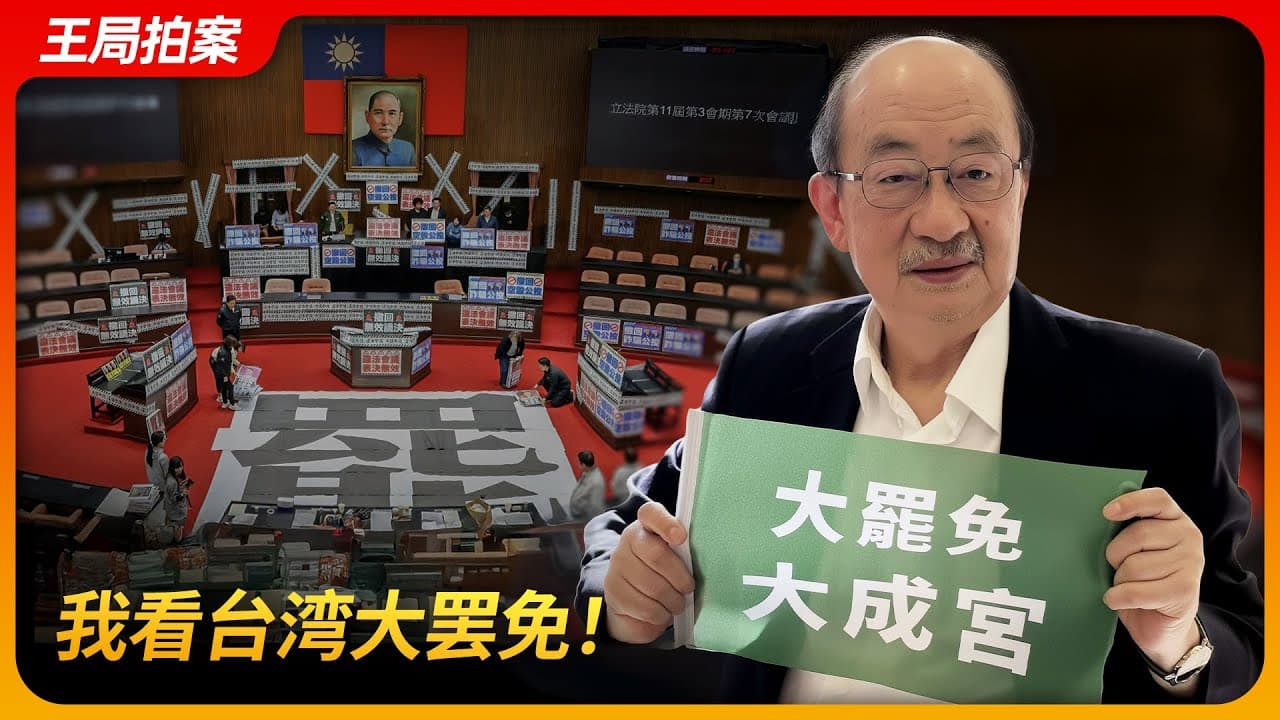
Taiwan’s mass recall vote grew out of a divided government in which the DPP controls the presidency while a KMT and TPP alliance leads the legislature. After fierce disputes over legislative powers, constitutional review, budgets, and Ko Wen-je’s arrest, DPP-aligned activists backed recalls that could alter the legislative balance through subsequent by-elections.
Transcript
The Central Election Commission has just put up the official notice. Taiwan's big recall vote is set for July 26th. That's just a month away. On that day, half the island will once again plunge into a massive round of elections. There are 24 Kuomintang legislators facing recall votes. On top of that, Hsinchu's mayor, Cao Hung-an, is also up for rec... Read More
Key Insights
- Taiwan’s July 26 recall vote covers 24 KMT legislators, Hsinchu mayor Kao Hung-an, and two city council members. The synchronized voting turns separate recall cases into an island-wide political event during a year that was not originally scheduled for a major election.
- Taiwan’s government is divided because Lai Ching-te and the DPP control the presidency and executive branch, while the KMT and TPP together command a legislative majority. This arrangement makes executive proposals dependent on approval from political opponents and increases institutional conflict.
- The Legislative Yuan has 113 seats, with 52 held by the KMT, 51 by the DPP, eight by the TPP, and two by independents after the presidential election discussed in the transcript. The KMT and TPP alliance consequently enabled Han Kuo-yu to become legislative speaker.
- The legislative reform dispute centered on proposed investigative authority, contempt powers, and presidential questioning before parliament. The KMT and TPP passed the reforms despite DPP opposition, but the Constitutional Court later found many provisions unconstitutional and invalidated them.
- Ko Wen-je’s arrest intensified cooperation between the TPP and KMT because the TPP regarded the case as an effort by the DPP to eliminate it politically. The strengthened opposition alliance then continued confronting the government through legislative action, including blocking or freezing proposed budgets.
- The mass recall strategy seeks to change legislative control by removing KMT lawmakers and allowing the DPP to compete for their seats in subsequent by-elections. DPP caucus leader Ker Chien-ming publicly raised this possibility on January 14, and supportive civic organizations quickly mobilized.
- Taiwan’s 2016 legal reform reduced the first-stage recall signature requirement from 2 percent to 1 percent and the second-stage requirement from 13 percent to 10 percent. It also removed the 50 percent turnout requirement that had previously made successful recalls extremely difficult.
- A recall now succeeds when supporting votes outnumber opposing votes and equal at least 25 percent of all registered voters in the district. The removals of Kaohsiung mayor Han Kuo-yu and legislator Chen Po-wai demonstrate how the revised rules enabled recalls that became embedded in partisan retaliation.
Install to Summarize YouTube Videos and Get Transcripts
Explore YouTube Video Summarizer or Get YouTube Transcript Extractor
Questions & Answers
Q: Why is Taiwan holding a mass recall vote?
Taiwan is holding the recall votes after conflict between the DPP-controlled executive branch and the KMT-TPP legislative majority escalated. The opposition alliance advanced legislative reforms and blocked or froze government budgets, while the DPP felt unable to implement its agenda. DPP caucus leader Ker Chien-ming suggested recalling KMT legislators so subsequent by-elections might change the legislature’s balance, and supportive civic groups mobilized behind that strategy.
Q: When is Taiwan’s mass recall vote scheduled?
The Central Election Commission scheduled the mass recall vote for July 26, one month after the official notice discussed in the transcript. The same day will include votes concerning 24 KMT legislators, Hsinchu mayor Kao Hung-an, and two city council members. The event is unusual because the year was not supposed to contain a major election, yet the recall process created another large round of voting.
Q: How did Taiwan’s divided government contribute to the recalls?
Lai Ching-te won the presidency, but no party captured a majority of the 113 legislative seats. The KMT won 52 seats, the DPP 51, the TPP eight, and independents two. Cooperation between the KMT and TPP gave the opposition control of the legislature, leaving the DPP executive dependent on hostile lawmakers for approval. Repeated disputes encouraged DPP supporters to pursue recalls as a route to changing legislative control.
Q: What legislative reforms caused conflict between the parties?
The KMT and TPP proposed expanding legislative oversight through investigative authority, contempt powers, and a requirement allowing lawmakers to demand that the president appear for questioning. The DPP strongly opposed the measures, and lawmakers physically fought over control of the podium during the debate. Although the opposition alliance passed the legislation, the Constitutional Court later ruled that many provisions were unconstitutional and declared them invalid.
Q: How did Taiwan’s 2016 reform change recall rules?
The 2016 amendment lowered the initial signature requirement from 2 percent of district voters to 1 percent and reduced the second-stage petition requirement from 13 percent to 10 percent. It also eliminated the rule requiring at least 50 percent turnout. Under the revised system, supporting votes must exceed opposing votes and must equal at least 25 percent of all registered voters in the relevant district.
Q: Why was Han Kuo-yu successfully recalled as mayor?
Han Kuo-yu won the Kaohsiung mayoral election but soon chose to run for president, a decision that angered many Kaohsiung voters. After he lost the 2020 presidential election and returned to the city, civic groups pursued his recall. On June 6, 2020, turnout reached 43 percent and more than 930,000 people supported removal, making him the first sitting mayor in Taiwan’s history to be successfully recalled.
Q: What happened in the recall of legislator Chen Po-wai?
After the DPP supported Han Kuo-yu’s removal, the KMT responded by targeting figures associated with the DPP camp, including Chen Po-wai. His recall vote took place in August 2021. Turnout exceeded 51 percent, and his high disapproval contributed to a successful removal vote. According to the transcript, Chen thereby became the first legislator in Taiwan’s history to be successfully recalled.
Q: How could the recalls change Taiwan’s legislature?
Successful recalls would remove targeted KMT legislators and trigger follow-up by-elections for their seats. If the DPP then won enough of those contests, it could potentially overturn the KMT-TPP legislative advantage and end the divided arrangement in which the DPP controls the presidency but not parliament. The strategy therefore treats recall votes as the first stage of an effort to reconstruct the legislature’s partisan balance.
Summary & Key Takeaways
-
Taiwan scheduled recall votes for July 26 against 24 KMT legislators, Hsinchu mayor Kao Hung-an, and two city council members. The campaign is exceptional because the year was not originally an election year. The speaker views the scale of the effort as a troubling consequence of escalating partisan confrontation.
-
The conflict began after Lai Ching-te won the presidency while no party secured a legislative majority. The KMT held 52 seats, the DPP 51, the TPP eight, and independents two. Cooperation between the KMT and TPP therefore gave them control of the legislature and helped elect Han Kuo-yu as speaker.
-
Taiwan’s 2016 recall-law amendments lowered signature requirements, eliminated the 50 percent turnout rule, and required supporting votes to exceed opposing votes and equal at least 25 percent of registered voters. Later recalls of Han Kuo-yu and Chen Po-wai showed how the mechanism could become part of recurring partisan competition.
Read in Other Languages (beta)
Share This Summary 📚
Summarize YouTube Videos and Get Video Transcripts with 1-Click
Try YouTube Summary with ChatGPT & Claude or YouTube Transcript Generator
Explore More Summaries from 王志安 📚

Summarize YouTube Videos and Get Video Transcripts with 1-Click
Try YouTube Summary with ChatGPT & Claude or YouTube Transcript Generator