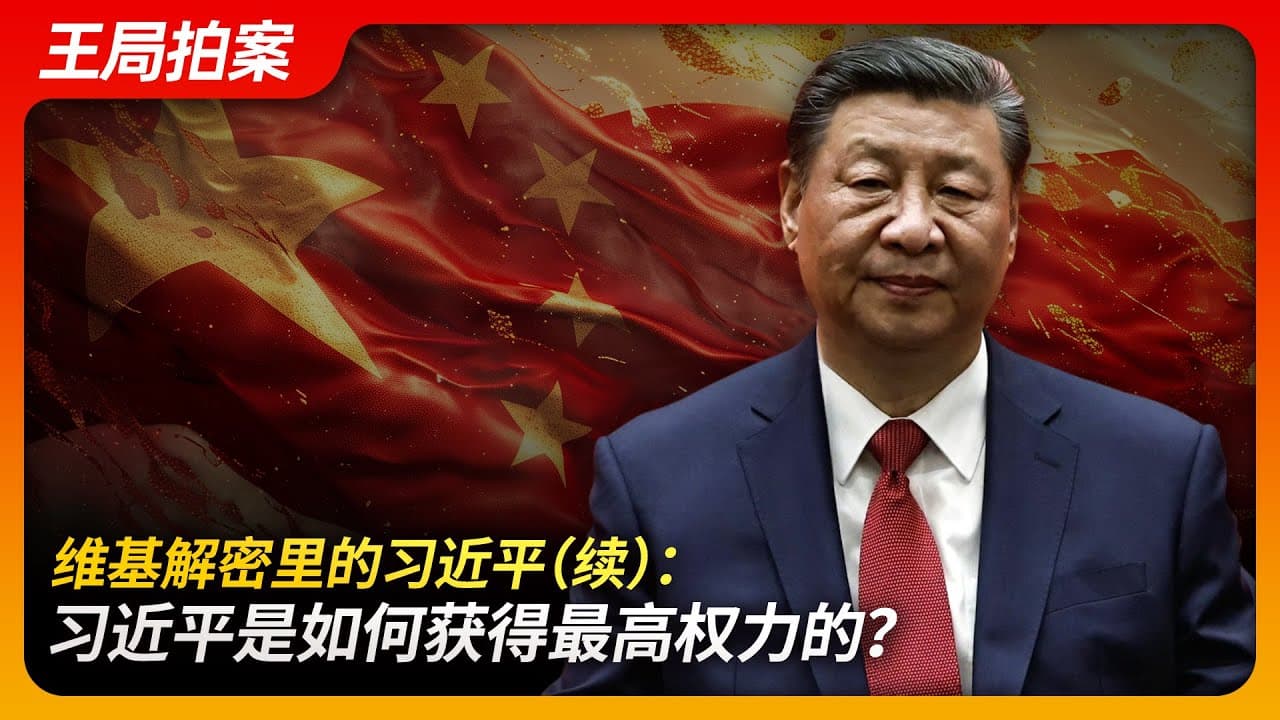
How Xi Jinping Rose to Power: A WikiLeaks Analysis
TL;DR
Xi Jinping's rise to power was marked by strategic maneuvers and internal party dynamics, as revealed by WikiLeaks documents. He emerged as a key figure in Chinese politics due to his princeling status, strategic alliances, and significant roles in regional governance. His ascent illustrates the complex interplay of influence and decision-making within the Chinese Communist Party.
Transcript
A few days ago, I talked about Xi Jinping in the WikiLeaks documents. After the program aired, some people commented saying, \ Why? Because the content about Xi Jinping in the entire episode was actually not much. Could you read through the WikiLeaks documents about Xi Jinping systematically and then tell us about it? So, in these past few days, we... Read More
Key Insights
- Xi Jinping's rise to power involved significant internal party dynamics and compromises within the Communist Party.
- WikiLeaks documents reveal that Xi Jinping was a dark horse candidate who emerged due to various factors, including his princeling status.
- Xi Jinping's appointment as Shanghai Party Secretary was a pivotal moment in his political career, marking his ascent to higher echelons of power.
- The downfall of Chen Liangyu, a Jiang faction member, played a crucial role in Xi Jinping's rise.
- Xi Jinping's strategic alliances, notably with Zeng Qinghong, helped him secure key political positions.
- U.S. intelligence closely monitored Xi Jinping's rise and provided detailed profiles of his personality and political maneuvers.
- Xi Jinping's political style is characterized by pragmatism, strategic foresight, and a focus on power consolidation.
- The internal selection process within the Communist Party played a crucial role in Xi Jinping's ascension to the highest power.
Install to Summarize YouTube Videos and Get Transcripts
Explore YouTube Video Summarizer or Get YouTube Transcript Extractor
Questions & Answers
Q: How did Xi Jinping rise to power in China?
Xi Jinping rose to power through a combination of strategic alliances, internal party dynamics, and his princeling status. His appointment as Shanghai Party Secretary marked a significant turning point, and his ability to navigate the complex political landscape of the Communist Party helped him secure higher positions. WikiLeaks documents reveal that his rise was facilitated by key figures within the party and the downfall of rivals like Chen Liangyu.
Q: What role did the WikiLeaks documents play in understanding Xi Jinping's rise?
The WikiLeaks documents provided detailed insights into Xi Jinping's rise to power, revealing the internal party dynamics and strategic maneuvers that facilitated his ascent. These documents highlighted key events, such as his appointment as Shanghai Party Secretary and his strategic alliances, which played a crucial role in his political career. They also offered a glimpse into the U.S. intelligence's understanding of China's political landscape.
Q: What were the key factors that contributed to Xi Jinping's rise to power?
Key factors contributing to Xi Jinping's rise included his princeling status, strategic alliances with influential figures like Zeng Qinghong, and his roles in regional governance. The internal party dynamics, including the downfall of rivals like Chen Liangyu, also played a significant role. His pragmatic and strategic approach to politics helped him navigate the complex landscape of the Communist Party.
Q: How did Xi Jinping's appointment as Shanghai Party Secretary impact his political career?
Xi Jinping's appointment as Shanghai Party Secretary was a pivotal moment that marked his ascent to higher political echelons. It demonstrated his ability to secure key positions within the Communist Party and navigate internal party dynamics. This role provided him with a platform to showcase his leadership skills and set the stage for his eventual rise to China's highest political positions.
Q: What role did strategic alliances play in Xi Jinping's rise to power?
Strategic alliances played a crucial role in Xi Jinping's rise to power. His relationship with influential figures like Zeng Qinghong helped him secure key political positions. These alliances enabled him to navigate the complex internal dynamics of the Communist Party and gain the support needed to ascend to higher leadership roles. His ability to form and maintain these alliances was instrumental in his political success.
Q: How did the downfall of Chen Liangyu affect Xi Jinping's rise?
The downfall of Chen Liangyu, a member of the Jiang faction, created a power vacuum that Xi Jinping capitalized on. It removed a significant rival and allowed Xi to gain a foothold in Shanghai, a crucial political base. This event was instrumental in his rise, as it demonstrated his ability to navigate the internal party power struggles and seize opportunities to advance his political career.
Q: What insights did U.S. intelligence gather about Xi Jinping during his rise to power?
U.S. intelligence closely monitored Xi Jinping's rise, gathering detailed insights into his personality, political maneuvers, and strategic alliances. They characterized him as ambitious, calculating, and focused, with a deep-seated desire for power. These insights provided a comprehensive understanding of Xi's political style and the factors that contributed to his ascent within the Communist Party.
Q: What does Xi Jinping's rise reveal about the internal dynamics of the Chinese Communist Party?
Xi Jinping's rise reveals the complex internal dynamics and power struggles within the Chinese Communist Party. His ascent was marked by strategic alliances, internal compromises, and the ability to navigate party politics. The process highlights the role of princeling status, regional governance experience, and strategic foresight in securing key leadership positions within the party. His rise also underscores the importance of internal selection processes in determining China's political leadership.
Summary & Key Takeaways
-
Xi Jinping's rise to power was facilitated by his princeling status and strategic alliances. WikiLeaks documents reveal that he emerged as a key figure due to his ability to navigate complex party dynamics. His appointment as Shanghai Party Secretary marked a turning point, setting the stage for his ascent to China's highest political positions.
-
The downfall of Chen Liangyu, a member of the Jiang faction, was a significant event that aided Xi Jinping's rise. U.S. intelligence closely monitored these developments, providing insights into Xi's political maneuvers and personality. His pragmatic and strategic approach helped him consolidate power within the Communist Party.
-
WikiLeaks documents highlight the internal selection process within the Communist Party that ultimately led to Xi Jinping's rise. His ability to form strategic alliances and navigate political challenges played a crucial role in his ascent. Xi's leadership style is marked by pragmatism, strategic foresight, and a focus on power consolidation.
Read in Other Languages (beta)
Share This Summary 📚
Summarize YouTube Videos and Get Video Transcripts with 1-Click
Try YouTube Summary with ChatGPT & Claude or YouTube Transcript Generator
Explore More Summaries from 王志安 📚



Summarize YouTube Videos and Get Video Transcripts with 1-Click
Try YouTube Summary with ChatGPT & Claude or YouTube Transcript Generator