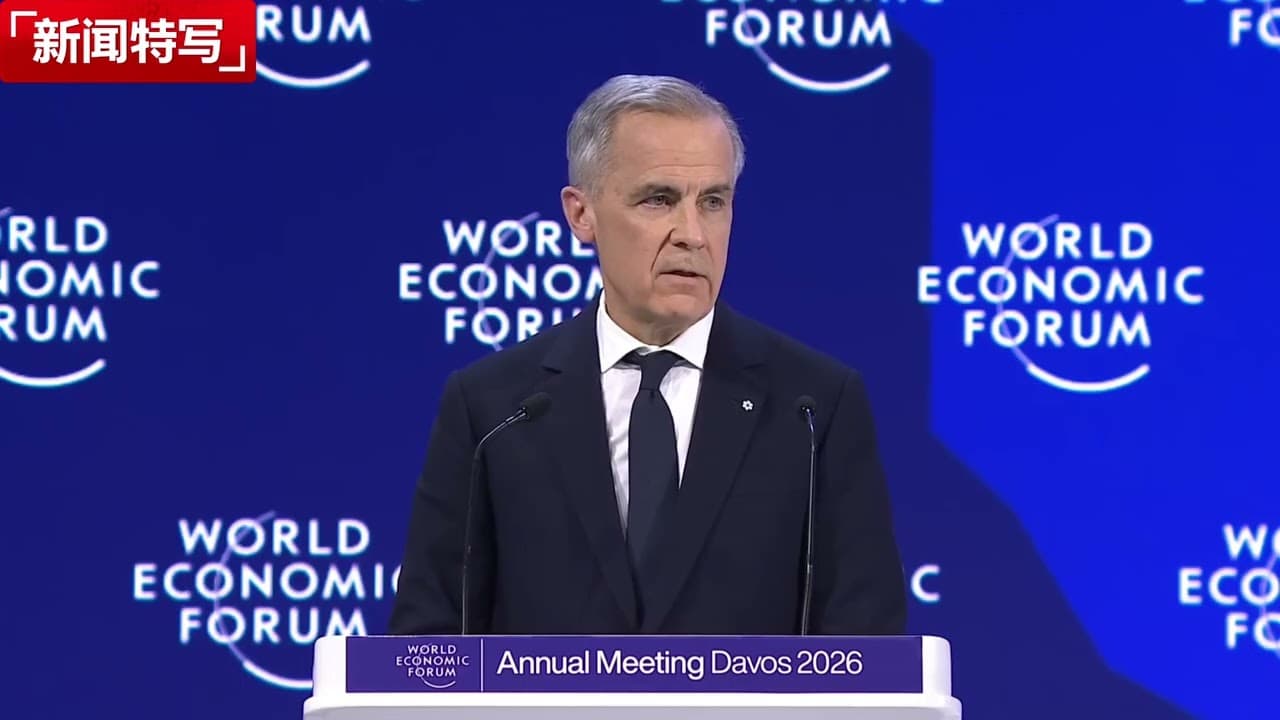
How will Canada adapt to a fading rules-based order?
TL;DR
The speech argues that the rules-based international order is breaking down and that middle powers like Canada must adopt value-based realism, combining principled defense of sovereignty with pragmatic coalitions. Canada is boosting domestic strength, diversifying trade and defense, and building issue-specific coalitions to manage great power competition without relying on old norms.
Transcript
Hi everyone. It's a great honor for me to introduce Mark Carney, Prime Minister of Canada, along with Giddy Rockman from the Financial Times. Much of the dialogue over the next few days will focus on where the puck is going. You like that, Mark? You know, okay. where [snorts] the puck is going next in the global economy, which makes this a fitting ... Read More
Key Insights
- The rules-based order is fading, and the current system relies on illusion rather than equal enforcement of norms.
- Mid-sized powers must build strategic autonomy in energy, minerals, finance, and supply chains to avoid subordination.
- Canada is adopting value-based realism, combining principled values with pragmatic, incremental progress.
- Strength at home is a prerequisite for credible international influence and capacity to shape coalitions.
- Canada plans to cut taxes and boost investment to fund domestic resilience and strategic capabilities.
- The country is diversifying alliances and trade through broad partnerships and new strategic deals with multiple regions.
- Canada emphasizes building coalitions by issue, not relying on a single multilateral institution or alliance.
- Arctic sovereignty and NATO alignment remain central to Canada’s security posture and perceived credibility.
- More videos from this channel:
- More from this channel: 王志安
Install to Summarize YouTube Videos and Get Transcripts
Explore YouTube Video Summarizer or Get YouTube Transcript Extractor
Questions & Answers
Q: What is the core claim about the rules-based order in the speech?
The core claim is that the rules-based order is fading and that the strong can act with impunity while the weak suffer. This necessitates a shift toward strategic autonomy where nations build resilience, diversify alliances, and adopt pragmatic coalitions to protect sovereignty and economic interests without depending on traditional institutions as the sole source of security.
Q: Why does Canada advocate value-based realism?
Canada advocates value-based realism to balance principled commitments with pragmatic compromises. This approach recognizes that progress is often incremental, that not all partners share every value, and that engagement should be broad and selective. It aims to protect sovereignty while leveraging cooperation with like-minded partners to address complex global challenges.
Q: What domestic policies support Canada’s foreign strategy?
Domestic policies include tax cuts on income, capital gains, and business investment, removal of interprovincial trade barriers, and rapid investment in energy, AI, critical minerals, and trade corridors. These measures are designed to strengthen the economy, create resilience, and fund defense and strategic capabilities to back Canada’s international posture.
Q: How does Canada intend to build international influence?
Canada intends to build influence by creating dense, issue-based coalitions, diversifying partnerships, joining and negotiating trade agreements, and cooperating with democracies on AI and critical minerals. This approach reduces reliance on a single institution and enhances Canada’s ability to shape outcomes through practical, value-aligned collaborations.
Q: What role do coalitions play in Canada’s strategy?
Coalitions are central and are built on shared values and interests, coordinated on a per-issue basis rather than through static blocs. This allows Canada to engage broadly with partners who align on specific goals, creating flexible, resilient networks that can adapt to changing geopolitics without overcommitting to rigid alliances.
Q: How is Canada addressing Arctic security?
Canada emphasizes Arctic sovereignty and alignment with Greenland and Denmark, supporting their right to determine Greenland’s future. It also underscores NATO solidarity and investments in northern defenses, signaling a proactive stance on security and environmental governance in Arctic regions.
Q: What is meant by 'variable geometry' in Canada’s strategy?
Variable geometry refers to forming different coalitions for different issues, rather than relying on a single path. This strategy enables Canada to work with a broad set of partners, selecting participants based on shared values and interests for each problem, thereby maximizing effectiveness and minimizing strategic vulnerability.
Q: How does Canada view globalization and trade amid great-power rivalry?
Canada sees globalization as something to be navigated carefully, not abandoned. It supports broad engagement with open markets while diversifying away from dependencies that give excessive leverage to rivals. The goal is to protect prosperity through resilient supply chains, diversified trade deals, and cooperative security arrangements that do not rely on any single power.
Summary & Key Takeaways
-
Canada confronts a declining rules-based order and urges strategic autonomy rather than fortress building, arguing for pragmatic, coalition-based action.
-
Canada outlines domestic strengthening measures, including tax cuts and large-scale investments, to back its foreign policy and ensure resilience.
-
The approach emphasizes flexible, issue-based coalitions, expanding partnerships, and active leadership in Arctic sovereignty and security frameworks.
Read in Other Languages (beta)
Share This Summary 📚
Summarize YouTube Videos and Get Video Transcripts with 1-Click
Try YouTube Summary with ChatGPT & Claude or YouTube Transcript Generator
Explore More Summaries from 王志安 📚





Summarize YouTube Videos and Get Video Transcripts with 1-Click
Try YouTube Summary with ChatGPT & Claude or YouTube Transcript Generator