How does China's cadre healthcare system extend leaders' lives?
TL;DR
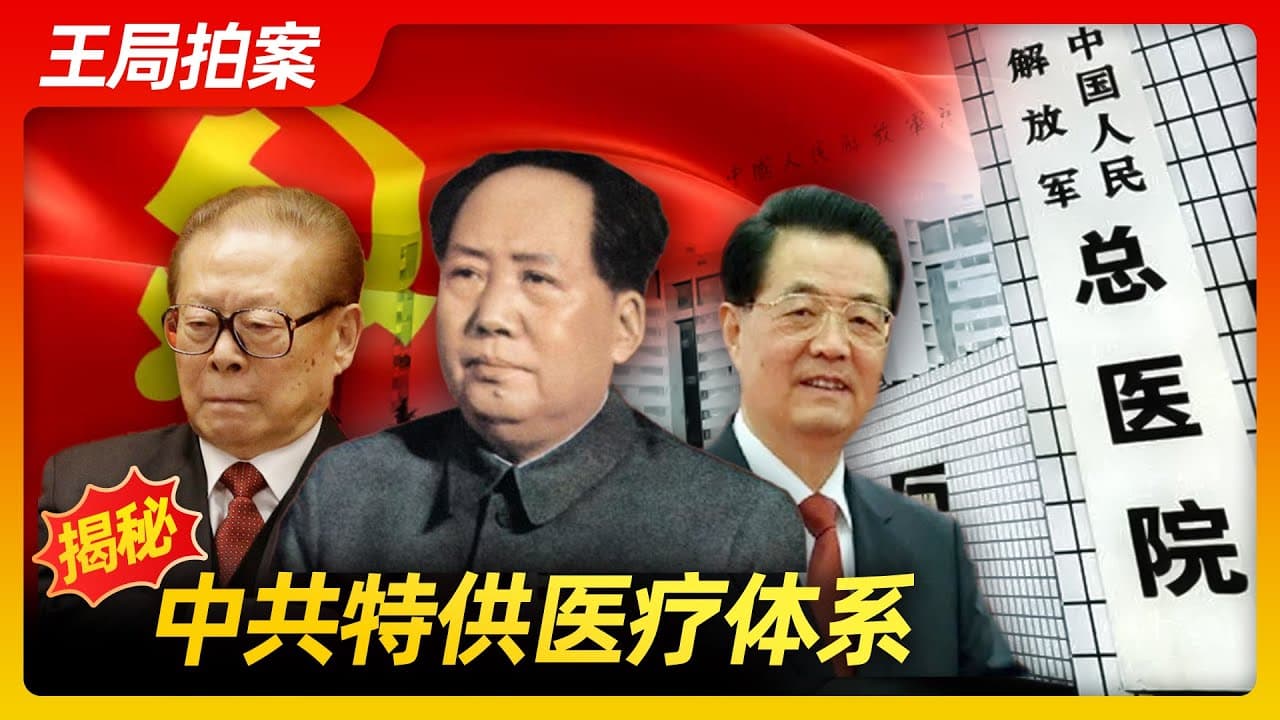
The video explains that China operates an exclusive cadre healthcare system that provides high level officials with superior food, medical care, air, and overall lifestyle advantages. It argues this system creates longevity gaps between officials and ordinary citizens and has historical roots in the Yan’an era, while noting public backlash and inequality.
Transcript
(Since the People’s Republic of China was established) (the healthcare system for cadres has been remarkably developed through 60+ years of practice and exploration) (Prevention, treatment, rehabilitation...) What you are watching right now, is an advertisement on WeChat posted by 301 Hospital (the People's Liberation Army General Hospital) on Sept... Read More
Key Insights
- The cadre healthcare system is portrayed as a parallel system that operates independently of ordinary citizens. It is funded and organized to meet the needs of officials at various levels, ensuring access to top medical resources.
- The ad from 301 Hospital claims leaders live longer due to integrated Chinese and Western medicine, special diets, and exclusive air supply, depicting a deliberate, systemic advantage for elites.
- Historical roots are traced to the Yan’an era and Mao era, featuring private doctors like Li Zhisui who served Mao and helped shape the elite healthcare model.
- The system includes exclusive food supply, with organic provisions for cadres, argued to reduce foodborne disease exposure compared to the general population.
- Air purification and climate control are described as part of the exclusive environment provided to leaders, separating their living conditions from ordinary citizens.
- Post reform, healthcare investment rose but its benefits remained uneven, with a large portion of the population lacking coverage or facing out of pocket costs.
- Inequality is highlighted as a major flaw, with only a minority of the population receiving cadres-level healthcare.
- More videos from this channel:
- More from this channel: 王志安
Install to Summarize YouTube Videos and Get Transcripts
Explore YouTube Video Summarizer or Get YouTube Transcript Extractor
Questions & Answers
Q: How is the exclusive healthcare system described in the video different from civilian healthcare in China?
The video states that the exclusive cadre healthcare system uses massive societal resources to meet the private medical needs of a small group of officials, including access to better doctors, private consultations, and top tier treatments. It contrasts this with ordinary citizens who face out of pocket costs, limited insurance coverage, and longer wait times. The system is portrayed as structured to prolong leaders' lifespans through superior services, which are funded by the state but not equally available to the general public.
Q: What historical roots are cited for the cadre healthcare system?
The video traces the exclusive healthcare system to the Yan’an era, mentioning Mao’s private doctor Li Zhisui who served Mao for years. It suggests the system evolved from that period, expanding under subsequent governance as a formalized aid structure for national leaders, with the aim of providing comprehensive medical care and other privileges away from ordinary citizens.
Q: What examples are given of the exclusive provisions for cadres?
Examples include exclusive food supply, an air purification and climate control system in Zhongnanhai, and a dedicated healthcare bureau under the State Council to provide healthcare services to national leaders. The video argues these provisions insulate officials from common health risks and contribute to longer lifespans compared to the general population.
Q: What does the video say about lifespan comparisons between leaders and others?
The video asserts that Chinese national leaders have a longer life expectancy than Western leaders and attributes this partly to the exclusive healthcare system and lifestyle choices. It presents specific anecdotes about older leaders and their ability to participate in political life, suggesting that such longevity is linked to the privileged medical and living conditions described.
Q: How is the issue of inequality in healthcare described?
The video highlights inequality by noting that while 5.6% of GDP was spent on healthcare in 2006, the investment covered only about 20% of the population, leaving roughly 80% without government coverage. It stresses that peasants and many urban residents faced out of pocket costs and insufficient access to care, leading to a cycle of poverty caused by illness.
Q: Who is Li Zhisui and what is his relevance in the video?
Li Zhisui is described as Mao’s private physician who provided medical care during Mao’s years in Zhongnanhai. His background as a physician who studied Western medicine and his later memoir are used to illustrate how elite medical care developed into a system that prioritized the needs of leaders, serving as a model for the cadre healthcare framework.
Q: What role does diet play in the video’s claim about longevity for leaders?
The video claims that cadres have access to exclusive food supply systems with organic food, avoiding what it calls foodborne diseases common to the general population. It argues that elite meal provisions, unlike the civilian diet, contribute to improved health and longer lifespans for leaders, highlighting dietary privilege as a component of the overall system.
Q: How is the public reaction to the cadre healthcare system described?
The video notes that the release of an ad promoting the cadre healthcare system sparked public anger because ordinary people cannot access similar benefits. It emphasizes the perceived unfairness of resources allocated to elites while many civilians struggle to obtain affordable healthcare, underscoring broader concerns about inequality and access.
Q: What does the video say about air quality for leaders?
The video claims that the cadre system includes an exclusive air supply with an air purifier system in Zhongnanhai that controls temperature, humidity, and oxygen content. It uses this detail to illustrate how leaders live in a controlled environment and are shielded from common public air quality issues, reinforcing the notion of privileged living conditions.
Summary & Key Takeaways
-
The video describes an exclusive healthcare system for government officials that includes tailored food supply, medical services, and environmental controls, suggesting such benefits contribute to longer lifespans for leaders.
-
It traces the system back to the Yan’an era and Mao era, highlighting Li Zhisui and the private doctor model, and contrasts it with the broader public healthcare access issues faced by ordinary citizens.
-
It ends with calls for recognition of inequality and references to post reform improvements that nonetheless left significant gaps between cadres and the general population.
Read in Other Languages (beta)
Share This Summary 📚
Summarize YouTube Videos and Get Video Transcripts with 1-Click
Try YouTube Summary with ChatGPT & Claude or YouTube Transcript Generator
Explore More Summaries from 王志安 📚


Summarize YouTube Videos and Get Video Transcripts with 1-Click
Try YouTube Summary with ChatGPT & Claude or YouTube Transcript Generator