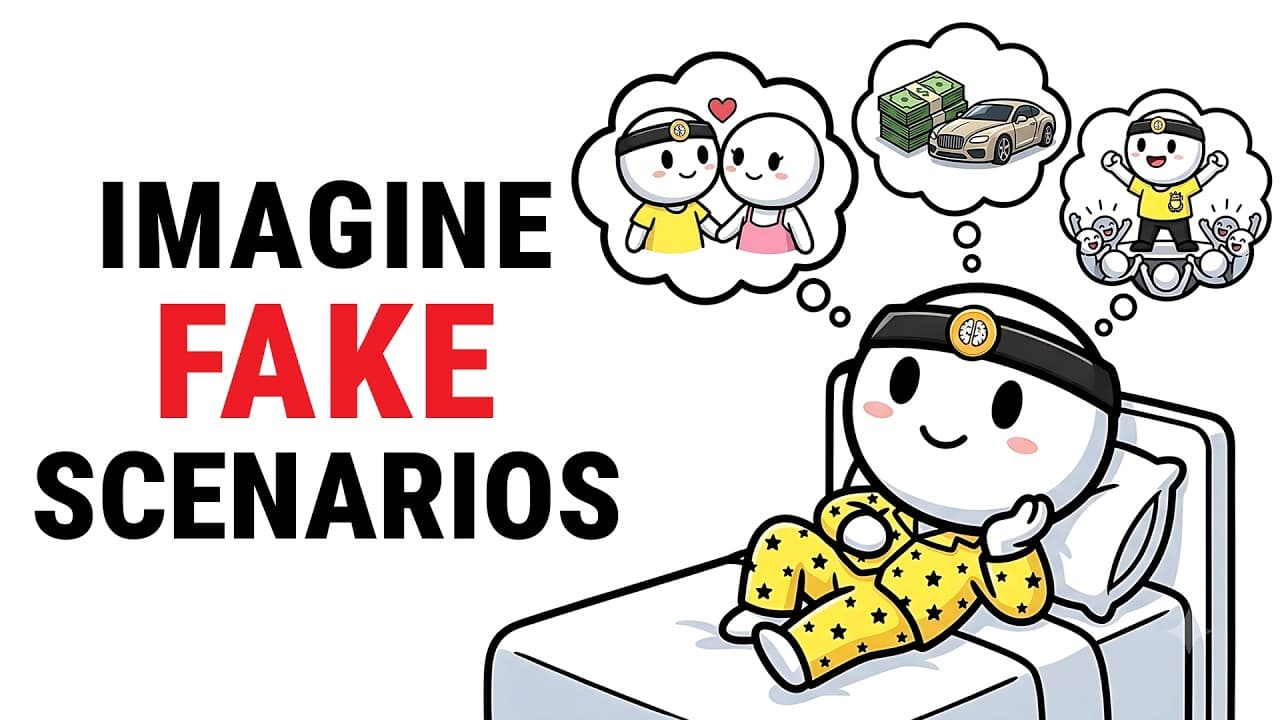
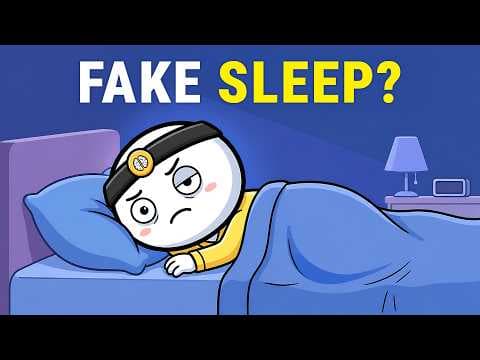
Why Do Fake Scenarios Appear Before Sleep?
TL;DR
Fake scenarios before sleep help the mind process suppressed emotions, seek closure, anticipate rewards, regain control, and rehearse future interactions. They can become a learned habit when the bed, darkness, and silence repeatedly trigger imagination, while the immediate relief reinforces it. Emotionally stimulating stories may then increase pre-sleep cognitive arousal, delay sleep, and create more time for the scenarios to continue.
Transcript
Lights off, eyes closed, and instead of drifting to sleep, your brain immediately yells, "Action!" You're no longer lying in bed. You're back in that morning clash with your toxic co-worker, but this time you fire back with the perfect comeback, the one you completely blanked on in real life. Or maybe you're scripting out a disaster that hasn't eve... Read More
Key Insights
- • The hypnagogic state is the period after the eyes close but before full sleep, when the logical brain begins resting while emotional and memory processes remain active. With outside stimulation removed, attention turns inward toward frustration, unmet desires, and feelings suppressed during the day.
- • Bedtime scenarios are personal stories that translate emotions into images and narratives. Instead of analytically identifying sadness or feeling undervalued, the mind may construct a scene involving recognition, vindication, confidence, or a successful response to someone who caused distress.
- • The need for closure can keep unfinished interactions mentally active. Conversations without an explanation, apology, response, or satisfying ending remain vivid, so imagined replays allow the person to supply a conclusion and gain a temporary sense of emotional relief.
- • The Zeigarnik effect describes the mind's tendency to remember unfinished matters more vividly than resolved ones. In the video's account, this helps explain why an old hurtful remark or incomplete conversation can return repeatedly, even when many ordinary recent experiences have already faded.
- • Reward anticipation can release dopamine before a desired outcome actually occurs. Imagining admiration, romantic acceptance, success, or vindication can therefore feel satisfying, while complete control over every line, reaction, and ending removes the risks of rejection, failure, and unpredictability.
- • Mental simulation is a rehearsal process that tests possible words, reactions, risks, and outcomes before a future event. It can reduce uncertainty around a conversation, interview, or confrontation and familiarize someone with a calmer, more confident, or more assertive version of their behavior.
- • Nighttime can become a learned trigger through cue linkage. When imagination repeatedly begins in bed amid darkness and silence, those environmental conditions become associated with mental storytelling, eventually activating the familiar sequence without a deliberate decision to start imagining.
- • Pre-sleep cognitive arousal creates a self-reinforcing loop. Emotionally charged stories stimulate the nervous system, make relaxation harder, and prolong wakefulness. The additional awake time provides more empty space for imagination, gradually teaching the brain to associate the bed with thinking rather than rest.
Install to Summarize YouTube Videos and Get Transcripts
Explore YouTube Video Summarizer or Get YouTube Transcript Extractor
Questions & Answers
Q: Why do people imagine fake scenarios before sleep?
People imagine fake scenarios before sleep because quiet and reduced external stimulation turn attention inward. The prefrontal cortex, which supports logical thinking and behavioral control, is described as becoming tired, while the limbic system remains active. The mind then processes suppressed emotions, unresolved experiences, unmet desires, anticipated rewards, and future uncertainty through images and storylines rather than purely analytical thought.
Q: What is the hypnagogic state before sleep?
The hypnagogic state is the window between closing the eyes and fully falling asleep. During this period, the video's account says the logical brain begins drifting toward rest while emotional and memory systems remain active. With no screen, noise, deadline, or immediate task demanding attention, the mind turns inward and converts returning feelings and memories into vivid scenes, conversations, and imagined outcomes.
Q: Why does the mind replay unfinished arguments at night?
The mind may replay an unfinished argument because it still lacks closure, such as an explanation, apology, final response, or satisfying ending. The Zeigarnik effect is used to describe why unfinished experiences remain especially memorable. By rewriting the interaction and supplying the response that was unavailable in real life, the imagined scene temporarily completes the emotional narrative and provides some relief.
Q: How do imagined scenarios create a sense of control?
Imagined scenarios provide control because the person determines every statement, reaction, and outcome. A disappointing scene can be revised and replayed until it produces recognition, acceptance, success, or vindication. This offers the desired result without exposure to real-life rejection, failure, or unpredictability. The anticipated victory can also feel rewarding before anything actually happens, which makes the scenario appealing to repeat.
Q: Can bedtime scenarios help prepare for future conversations?
Bedtime scenarios can function as mental simulations of future conversations, including discussions with a boss, job interviews, or difficult exchanges with someone important. The mind tests different openings, predicts possible responses, adjusts replies, and explores several outcomes. This rehearsal can reduce uncertainty and help someone become familiar with responding calmly, speaking confidently, setting limits, or expressing thoughts usually kept inside.
Q: How do fake scenarios become a nighttime habit?
Fake scenarios can become habitual when they repeatedly occur under the same conditions. The bed, darkness, silence, and absence of outside demands gradually become linked with imaginative thinking through cue linkage. The stories also deliver immediate relief from boredom, worry, emptiness, or loneliness by giving the mind an absorbing task. That quick emotional shift rewards the behavior and strengthens its automatic recurrence.
Q: Why can imagined stories make it harder to fall asleep?
Imagined stories can delay sleep because even pleasant victories or fictional arguments generate strong emotions and keep the mind active. This pre-sleep cognitive arousal may slightly increase heart rate and interfere with the relaxed state needed for sleep. Remaining awake then creates more unoccupied time, which encourages the story to continue, producing a loop of imagination, stimulation, and prolonged wakefulness.
Q: When do bedtime scenarios become a problem?
Bedtime imagination becomes a problem when it stops being a voluntary way to release stress and turns into a loop that controls the person. The scenarios fill quiet time but also stimulate the nervous system and steal rest. After repeated nights, the bed itself may become a cue for wakefulness, leaving the person exhausted yet unable to stop extending emotionally engaging mental stories.
Summary & Key Takeaways
-
Before sleep, the exhausted prefrontal cortex begins moving toward rest while the limbic system remains active. With external demands and distractions removed, suppressed frustration, memories, and desires return. Because logical processing is less available, the mind represents these unresolved emotions through personal images, conversations, and stories rather than clear analytical statements.
-
Bedtime scenarios commonly serve three psychological needs. They create imagined endings for unfinished experiences, provide anticipated rewards and complete control over outcomes, and simulate future conversations or challenges. Mental rehearsal also lets people experiment privately with calmer, more confident, and more assertive ways of responding before attempting them in real life.
-
Repeated imagination can develop into a self-reinforcing nighttime habit. The bed, darkness, and silence become cues, while distraction from boredom, worry, or emptiness supplies an immediate reward. Emotionally intense scenarios then increase cognitive and physical arousal, delay sleep, and produce additional unoccupied time in which the mind continues extending its stories.
Read in Other Languages (beta)
Share This Summary 📚
Summarize YouTube Videos and Get Video Transcripts with 1-Click
Try YouTube Summary with ChatGPT & Claude or YouTube Transcript Generator
Explore More Summaries from Apex Psychology 📚
Summarize YouTube Videos and Get Video Transcripts with 1-Click
Try YouTube Summary with ChatGPT & Claude or YouTube Transcript Generator